Fynsa

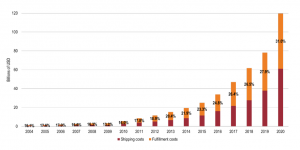
Los costos logísticos son un componente clave y creciente en la expansión del e-commerce. El mayor ejemplo es Amazon, que ha visto cómo el peso de los costos de transporte y entrega han pasado de representar menos del 20% de sus ventas netas en 2012 a más de 30% en 2020. Hay varias razones detrás de esto, como la multiplicación de su red de distribución para ganar participación de mercado y la incorporación de una gran cantidad de productos de bajo margen y que son voluminosos, como electrodomésticos y muebles. Con esta evolución Amazon se está convirtiendo en un competidor en el negocio logístico. Con unos 100.000 contenedores bajo contrato, la empresa de Jeff Bezos es uno de los 10 mayores Non-Vessel-Operating Common Carrier –entidades que realizan todos los servicios de línea naviera, pero sin poseer ni operar buques—en la ruta entre Asia y Estados Unidos y es considerada una fuerza disrupción en el negocio de los agentes navieros en esa ruta. A través de su opción multicanal, Amazon, además de transportar productos vendidos mediante su plataforma, ofrece a las empresas chinas servicios de fullfilment para ventas realizadas por canales distintos al de Amazon.