
Investments
March 26, 2021 - 2 min

How does a Preferred Capital Fund work?

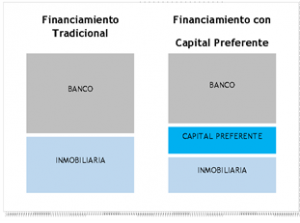
A form of debt structuring for real estate investments

Share

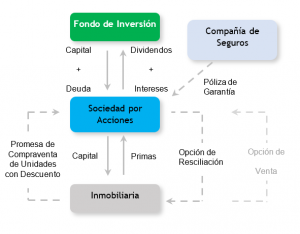
The private debt asset class known as Preferred Capital is considered to be the execution of promises to purchase saleable units in one or more real estate projects. , with advance payment of the price, together with the conclusion of options to rescind such promises, whereby the Fund company and the real estate developer or owner of the assets, while committing to conclude the promised sales, acknowledge the possibility that such commitments may be rendered ineffective ("Project"). These transactions shall be guaranteed by an insurance policy or a bank note, in accordance with the provisions of Article 138 bis of the General Law on Urban Planning and Construction.

The financing structure is as follows:

  • Payment for purchase agreements is made once the building permit has been approved, which allows for the sale of off-plan units to begin, with their respective guarantee policies.
  • The real estate company periodically pays the premium to the fund.
  • As the real estate agency sells units off-plan, it has the option of replacing them with other units of equal or better characteristics.
  • Finally, the real estate company exercises its termination option, paying the entire principal amount to the fund.

It comes with the following warranties:

  • Financial: Off-plan sales guarantee policy, provided by law, covering 100% of the capital in the event that the real estate company goes bankrupt or fails to deliver the units in the agreed manner and within the agreed time frame.
  • Real estate: Promises to purchase units at a discount, allowing properties to be acquired at very low cost if the real estate agency fails to pay the premiums (losing the right of rescission) or if it does not exercise its option of rescission.

Below, you can see the structure graphically: