Fynsa


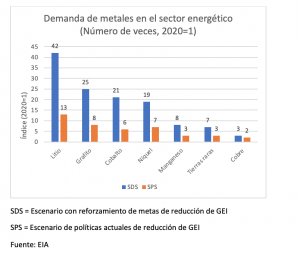
La transición energética que vive el planeta provocará un profundo cambio en el mercado de algunos metales y minerales, incluyendo el cobre y el litio, en cuya producción Chile tiene un peso preponderante, señala un reciente informe (https://www.iea.org/reports/the-role-of-critical-minerals-in-clean-energy-transitions/executive-summary) de la Agencia Internacional de la Energía (IEA). La agencia pronostica un fuerte aumento de la demanda de ciertos minerales claves para el nuevo sector energético. En el llamado escenario de políticas declaradas de la IEA, que refleja las intenciones y objetivos anunciados al día de hoy, la demanda de litio al 2040 del sector energético será 13 veces mayor que la actual y la de cobre dos veces más. En el escenario de desarrollo sostenible, que implica un refuerzo de las políticas e inversiones en el ámbito de las energías limpias, la demanda de litio por parte del sector energético en el 2040 será 42 veces mayor que la de 2020 y la de cobre 3 veces mayor. Estas proyecciones tienen importantes implicancias. La producción de estos minerales –y de otros también críticos, como el grafito, el cobalto, el níquel y las tierras raras—están fuertemente concentradas en pocos productores, lo que generará riesgos importantes en la cadena de suministro. La agencia, entre otras cosas, recomienda a los países crear reservas estratégicas de estas materias primas, incentivar la inversión en proyectos de producción más diversificados geográficamente, promover la investigación e innovación en toda la cadena e incentivar la industria del reciclaje de estos materiales.