Fynsa


Inflation has continued to surprise on the upside recently: the PCE exceeded expectations in the U.S., and inflation has rebounded in Europe. While breakevens have priced in further reflation, nominal and real rates have reacted less recently, partly due to continued dovish signals from the Fed.
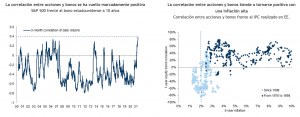
As markets continue to assess the risks of excessive inflation, the correlation between stocks and bonds has become markedly positive, reaching a two-decade high. A shift toward a positive correlation is also consistent with higher levels of realized inflation (see charts).
The correlation between stocks and bonds has been structurally negative over the past two decades, in line with historically low inflation, but we observe that inflation above 2% has generally resulted in a more positive correlation.
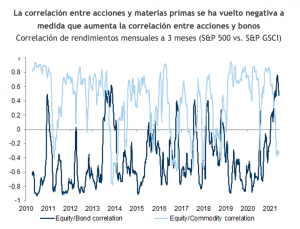
For investors concerned about higher inflation or surprises from a more aggressive monetary policy and the impact on the correlation between stocks and bonds, we believe that commodities continue to offer the best hedge against inflation. The correlation between equities and commodities has been positive during the COVID-19 recovery, but it has recently turned more negative, offering greater opportunities for diversification beyond equities and bonds. We also continue to favor stocks with shorter durations, such as value stocks and markets outside the U.S., which have a more negative correlation with bonds.