Fynsa

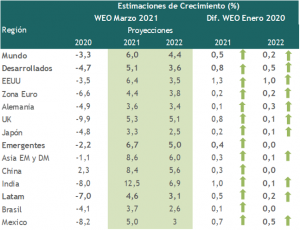
El FMI proyecta un crecimiento global del 6 por ciento en 2021, moderando al 4,4 por ciento en 2022. (ver tabla adjunta). Las proyecciones para 2021 y 2022 son más sólidas que en el informe WEO de octubre de 2020. La revisión al alza refleja el apoyo fiscal adicional en algunas grandes economías, la recuperación anticipada impulsada por las vacunas en la segunda mitad de 2021 y la adaptación continua de la actividad económica a la movilidad moderada. Esta perspectiva rodea a una gran incertidumbre, relacionada con la trayectoria de la pandemia, la eficacia del apoyo político para proporcionar un puente hacia la normalización impulsada por las vacunas y la evolución de las condiciones financieras.
El plan de infraestructura del presidente Biden dará otro impulso a una economía que ya se está acelerando. El aumento de 916 mil empleos en las nóminas en marzo debería preparar el escenario para ganancias mucho mayores en los próximos meses. La mayoría de las otras economías del G10 también parecen estar dejando atrás lo peor de la desaceleración invernal, a juzgar por la mejora en los PMI y otras encuestas comerciales en febrero y marzo.
En Europa y gran parte del mundo emergente, los participantes del mercado subestiman el probable ritmo de mejora tanto de la situación de la salud pública como de la actividad económica en el resto de 2021. Por lo tanto, es esperable que converjan en una situación sólida y relativamente equilibrada de la recuperación económica mundial en los próximos meses.
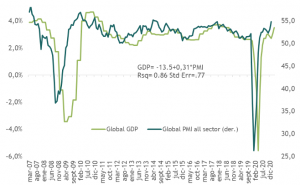
En tanto, los PMIs del mes de marzo señalan riesgos al alza para el crecimiento. Después de una caída sorprendentemente modesta en respuesta a la segunda ola de la pandemia alrededor del cambio de año, el crecimiento de la actividad económica parece haber aumentado rápidamente durante el primer trimestre, terminando a un ritmo sólido. Después de caer solo un punto desde su peak de expansión en octubre a un aún sólido 52.3 en enero, el PMI global de todas las industrias ha vuelto a subir 2.5 puntos a un máximo de casi siete años en marzo. En 54,8, la lectura compuesta es consistente con un crecimiento del 3,5% ar en el PIB mundial, mientras que el promedio trimestral apunta a un crecimiento del 3%. (ver gráfico adjunto)
Estimaciones de crecimiento FMI
PMI vs PIB Mundial