Fynsa


Los altos múltiplos a los que transan las empresas de inteligencia artificial (IA) reflejan las grandes expectativas de crecimiento en el sector. Sin embargo, DeepSeek —el chat chino de IA creado por la empresa homónima— plantea una pregunta crucial: ¿Es necesario destinar tanta inversión a infraestructura de IA para obtener buenos resultados?
Recientemente, la inteligencia artificial ha sido el motor de los mercados accionarios, llevando al S&P 500 a superar los 6.000 puntos, un aumento del 58% desde los 3.800 puntos a comienzos de 2023 (ver imagen 1). El mercado ha visto con optimismo el valor que la IA puede aportar en la optimización de cadenas de valor en diversas industrias.
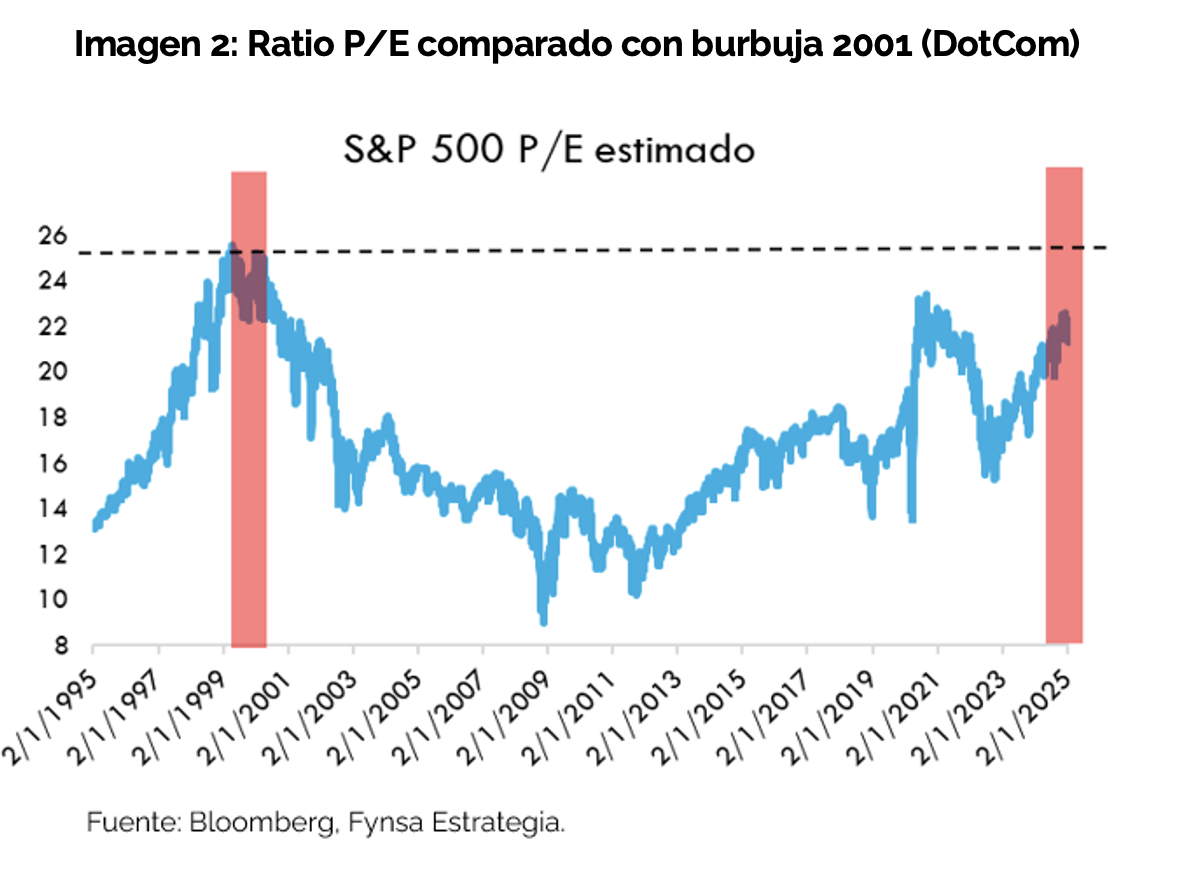
No obstante, este optimismo ha sido acompañado por críticas debido a los altos niveles de valorización —en términos de P/E— de las principales compañías de IA, comparándolos con la burbuja DOTCOM de 2001 (ver imagen 2), época en la que las compañías tecnológicas prometían mucho y generaban poco. Este comparativo, en primera instancia, parece inadecuado, ya que las compañías tecnológicas actuales tienen buenas rentabilidades. Por lo mismo es que las alertas de similitud se han disipado con el tiempo, lo que no significa que el inversionista tenga que estar dispuesto a pagar cualquier tipo de valorización para acceder a esta tecnología.
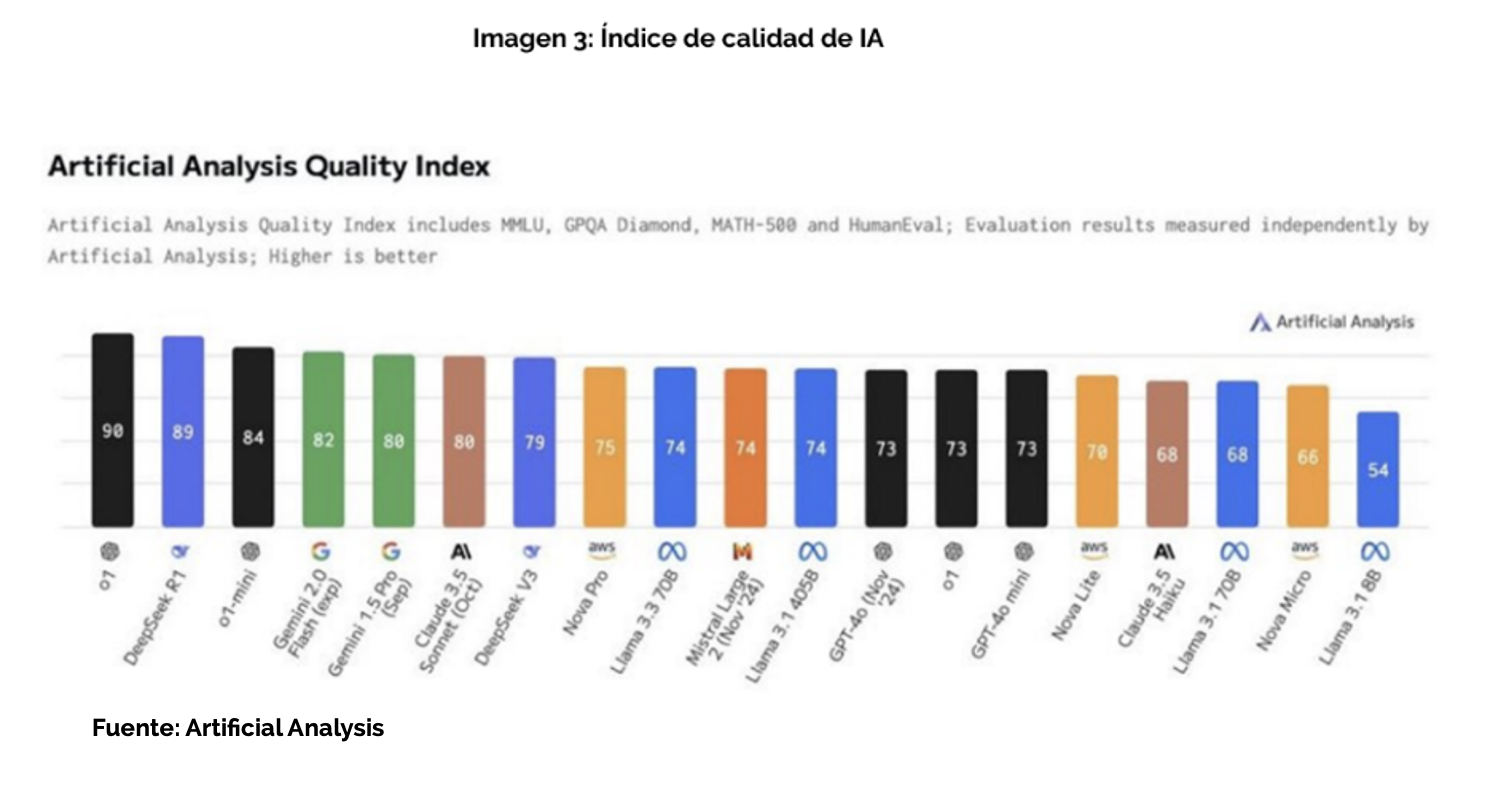
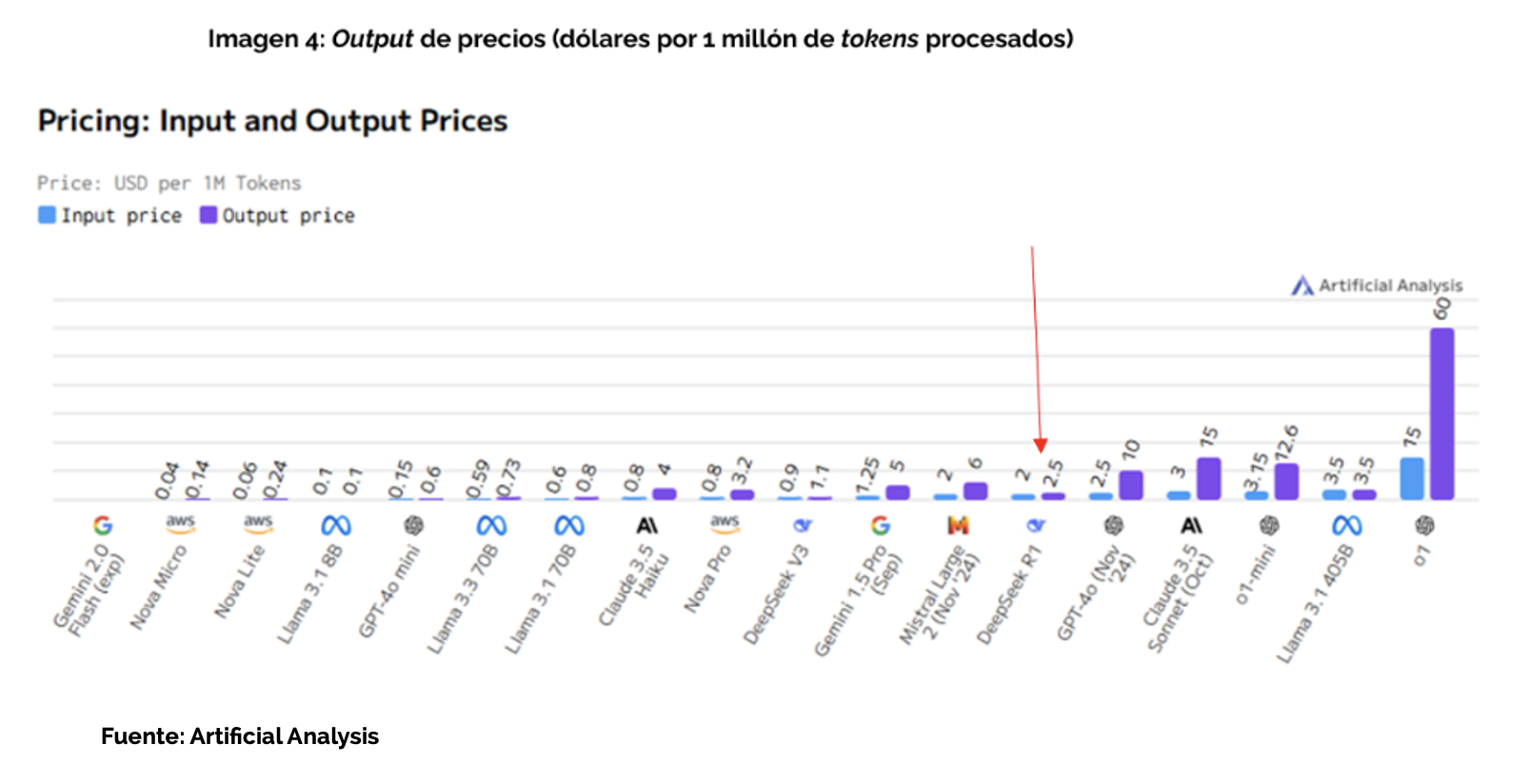
En 2024, a pesar de ser un buen año para las tecnológicas, se cuestionó el alto nivel de CAPEX (gasto en expansión y mejora de activos) destinado al desarrollo de IA, con el ROI (Return on Investment) como indicador clave en los resultados de las “big tech”: Amazon, Meta, Google, Apple, Microsoft, Tesla y NVDA. La inversión en IA volvió al centro del debate cuando DeepSeek demostró que puede realizar tareas con precisión similar a ChatGPT, pero a un costo significativamente menor (ver imágenes 3, 4 y 5). Esto provocó un “deepselling” en el mercado de IA el lunes 27 de enero.
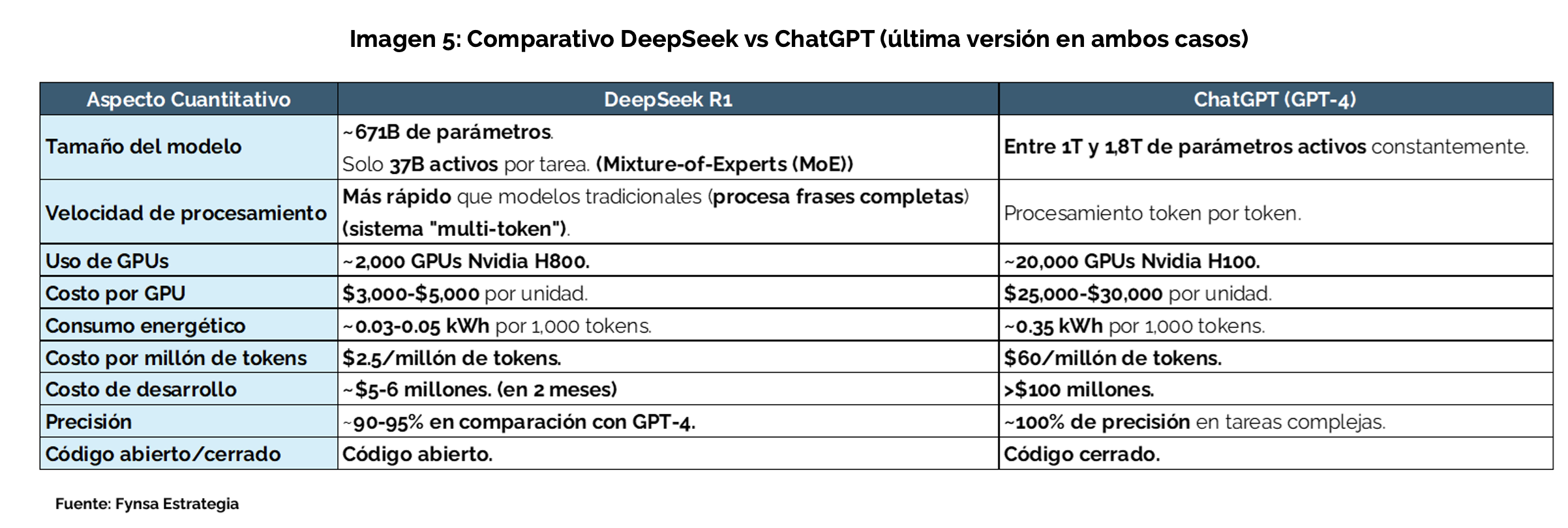
Es crucial investigar la veracidad de los costos reportados por DeepSeek, ya que, al ser una empresa privada china, no está obligada a revelar balances ni detalles operativos. Aunque afirman operar con chips ~2,000 GPUs Nvidia H800, no se puede descartar el uso de la última tecnología NVDA H100, no disponible legalmente para exportación al Gigante Asiático.
El origen chino de esta tecnología también puede afectar las relaciones internacionales, especialmente con Donald Trump protegiendo fervientemente los intereses de Estados Unidos. Este hito podría generar —en el mediano plazo— más restricciones comerciales a la industria de hardware por parte de EE. UU. a China (adicionales a las que puso en su momento el expresidente Joe Biden).
La disrupción de DeepSeek ha generado dudas entre los inversores sobre la sostenibilidad de los CAPEX destinados a IA y la necesidad de procesadores costosos para los chatbots actuales. Con la temporada de resultados corporativos en EE. UU. en curso, los resultados de las big tech estarán bajo mayor escrutinio.
Aunque esto puede agregar volatilidad a corto plazo para los índices accionarios —S&P 500 y Nasdaq, principalmente—, creemos que, a largo plazo, la reducción de costos gracias a DeepSeek aumentará la demanda y la competencia, generando nuevos servicios y haciendo más eficientes las cadenas de suministro en diversas industrias.
Tomás Fernández
Analista de Carteras Discrecionales