Fynsa


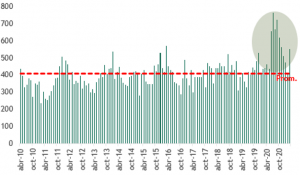
La demanda de cobre por parte de China se mantiene fuerte. Los datos de comercio exterior de China de esta semana mostraron que las importaciones de cobre aumentaron un 25% en marzo respecto al año previo, alcanzando un total de 552.317 toneladas (ver gráfico).
En tanto, las importaciones de cobre en el primer trimestre alcanzaron un total de 1,44 millones de toneladas, un aumento interanual de un 11,9% y la cantidad más alta para el primer trimestre desde al menos 2008.
Esta mayor demanda se da en un contexto, donde la actividad manufacturera se expandió a un ritmo más rápido de lo esperado en marzo después de una pausa durante las fiestas del Año Nuevo Lunar, mientras que la actividad del sector de construcción, que consume grandes cantidades de cobre, también ha crecido a un buen ritmo.
Las perspectivas para las materias primas y en particular para el cobre se mantienen favorables.
Un reciente informe GS plantea que, fundamentalmente, el mercado del cobre actualmente no está preparado para un entorno de mayor demanda derivada de la transición verde. Siendo el material conductor más rentable, el cobre se encuentra en el centro de la captura, almacenamiento y transporte de estas nuevas fuentes de energía.
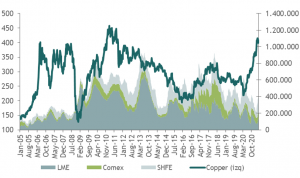
El mercado ya está apretado debido a que los estímulos pandémicos (particularmente en China) que han apoyado un resurgimiento de la demanda cuando existe un estancamiento de las condiciones de suministro, manteniendo los inventarios en niveles históricamente bajos (ver gráfico). Además, una década de bajos rendimientos y preocupaciones de ESG han reducido la inversión en el crecimiento futuro de la oferta, lo que ha acercado al mercado a la oferta máxima.
A pesar de que los precios del cobre se han recuperado un 80% durante los últimos 12 meses, no ha habido aprobaciones materiales de proyectos totalmente nuevos. El coronavirus solo ha agravado esta dinámica, creando suficiente incertidumbre como para congelar las decisiones de inversión de las empresas. Esta combinación de demanda creciente y oferta rígida ha reforzado las condiciones actuales de déficit.
Las estimaciones apuntan a una brecha de suministro de 8,2Mt para 2030, el doble del tamaño de la brecha que desencadenó el mercado alcista del cobre a principios de la década de 2000.
Importaciones China de cobre (miles tn.)
Cobre e inventarios