Fynsa

El desempeño de Perú —al cierre de 2024— marca distancia con los demás países de la región en el control de la inflación y la estabilidad monetaria. En diciembre registró una inflación total anual de sólo 1,97%, posicionándose cómodamente dentro del rango meta del Banco Central de Reserva del Perú (BCRP), que se ubica entre 1% y 3%.
Además, el sol peruano mostró una depreciación aproximada de 1,47% frente al dólar de Estados Unidos, un contraste importante frente a monedas como el real brasileño (27,42%), el peso argentino (27,21%), el peso colombiano (13,65%) y el peso chileno (12,63%). Estos resultados refuerzan la solidez de la política monetaria del país.
Una trayectoria controlada
En los últimos 20 años, la inflación en Perú se ha mantenido como una de las más bajas de América Latina, con un promedio anual inferior al 3%. Esta estabilidad ha sido facilitada por la adopción del régimen de metas explícitas de inflación desde 2002, que ha fortalecido la credibilidad del BCRP al implementar políticas contra cíclicas y modificar la tasa de referencia para mantener las expectativas controladas.
Entre 2004 y 2014, la inflación fluctuó dentro del rango meta, destacándose como un ejemplo regional de estabilidad económica. A partir de 2015, períodos de volatilidad internacional llevaron la inflación ocasionalmente por encima del rango, pero siempre dentro de niveles manejables.
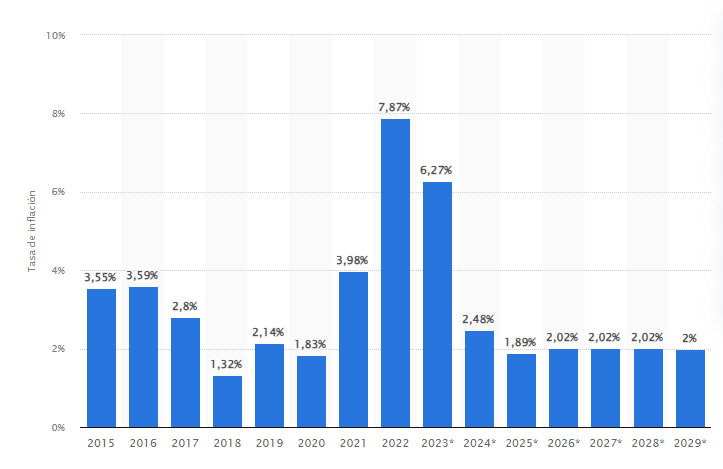
En 2022, en tanto, factores externos, como el alza de precios de alimentos y energía, llevaron la inflación a niveles de 8,46%, aunque desde entonces ha mostrado una trayectoria descendente gracias a ajustes monetarios aplicados de manera oportuna.
Clave de estabilidad
Otro factor clave ha sido la estabilidad del tipo de cambio. Durante la última década, el sol peruano ha demostrado una notable resistencia frente al dólar estadounidense, en comparación con otras monedas de la región. De una tasa promedio de S/ 3,49 por dólar a mediados de 2000, se ajustó gradualmente a un rango actual, cercano a S/ 3,85 en 2024, reflejando un entorno de depreciación moderada, alineado con fundamentos económicos.
En momentos críticos, como la crisis política de 2021 y el periodo de alta inflación global en 2022, el BCRP intervino activamente en el mercado cambiario, amortiguando oscilaciones bruscas y evitando un impacto inflacionario mayor por bienes importados.
Perspectivas de futuro
Con una proyección de 2% para la inflación en 2025, el ente monetario de Perú anticipa la consolidación de la convergencia hacia el rango meta, mientras que se espera que el tipo de cambio permanezca estable, respaldado por las crecientes exportaciones mineras y agrícolas.
Esta combinación de inflación controlada y solidez cambiaria seguirá siendo un pilar crucial para fomentar la inversión extranjera y el crecimiento económico sostenible en el país.
En un contexto donde la volatilidad global persiste, la capacidad de Perú para mantener indicadores macroeconómicos estables no sólo fortalece su economía, sino que también su posicionamiento como una de las más estables y dinámicas de América Latina.
Figura 1: Evolución anual de la tasa de inflación en Perú desde 2015 hasta 2029
Armando Herrera
Gerente general Fynsa Perú