Fynsa

Los datos del IPC de EE.UU. que se publicaron esta semana mostraron fuertes aumentos en la inflación general y subyacente. Con la inflación general subiendo al 2,6% y la inflación subyacente alcanzando el 1,6%, muchos se preguntan si la inflación estadounidense se está saliendo de control.
Sin embargo, estos aumentos son en gran parte esperados y reflejan el “efecto base” – el hecho de que los niveles del IPC general y subyacente cayeron debido al Covid-19 de febrero a mayo de 2020, provocó una caída pronunciada de la inflación en ese momento. Pero a medida que estos descensos de precios se eliminen de los cálculos de inflación doce meses después, la inflación aumentará inevitablemente de forma pronunciada. Sin embargo, es importante destacar que eso no significa que la tasa de inflación actual haya aumentado permanentemente: la inflación se desvanecerá en la segunda mitad de este año a medida que el efecto base desaparezca.
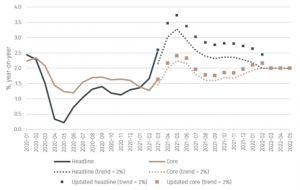
Para mostrar la importancia del efecto base, los cálculos a continuación suponen que la inflación general y subyacente crecen a una tasa de tendencia anual constante del 2% a partir de febrero de 2021. Bajo este supuesto, se pronosticó que la tasa general para marzo sería del 2,2% y la tasa de inflación subyacente del 1,5%. Además, se proyecta que la inflación continuará aumentando, con un peak de inflación general de 3,4% en mayo y una inflación subyacente de 2,4% en el mismo mes (ver las líneas punteadas en el gráfico).
El hecho que la inflación en marzo fuera superior a la prevista implica que las trayectorias inflacionarias actualizadas se sitúan un poco por encima de las trayectorias previstas anteriormente, pero sus formas siguen siendo similares. Ahora se espera que la inflación general alcance un máximo del 3,7% y la inflación subyacente del 2,4% en mayo, antes de comenzar a descender hacia el 2% a medida que desaparece el efecto de la línea de base.
Fuente: EFG