Fynsa


Durante los últimos días, el mercado petrolero experimentó uno de los mayores shocks de oferta de los últimos años tras la escalada militar en Medio Oriente, con el Brent y el WTI acercándose a máximos de US$120, impulsados por la creciente amenaza de interrupciones en el Estrecho de Ormuz, una de las rutas energéticas más críticas del mundo.
Como consecuencia de este conflicto, se prevé que el tráfico marítimo a través del Estrecho de Ormuz probablemente será muy limitado durante el mes de marzo. Este estrecho representa un cuello de botella vital para el comercio mundial de petróleo y gas, ya que aproximadamente el 20% del suministro mundial de petróleo transita por sus aguas.
En este contexto, el mercado comienza a incorporar no solo el riesgo de interrupciones temporales, sino también la posibilidad de escasez efectiva de oferta, elevando el risk premium en los precios del petróleo. De materializarse un escenario de producción restringida en el Golfo, el impacto podría extenderse más allá del corto plazo, reforzando presiones inflacionarias globales y complicando el proceso de normalización monetaria en las principales economías. Si bien este no es nuestro escenario base, es un riesgo que comienza a tomar mayor relevancia en el mercado.
Dicho eso, los mercados financieros suelen tocar fondo en el momento de mayor sentimiento negativo. Considerando lo anterior, no nos sorprendería que esto se materializara en los próximos días (los mercados siguen incorporando un shock de oferta de energía de solo un par de semanas). La historia muestra que en general los mercados suelen tocar fondo entre 5 y 10 días hábiles después del peak de riesgo (asumimos por ahora que eso se materializó con los precios del petróleo en US$120 el barril a inicios de esta semana), seguidos de fuertes recuperaciones.
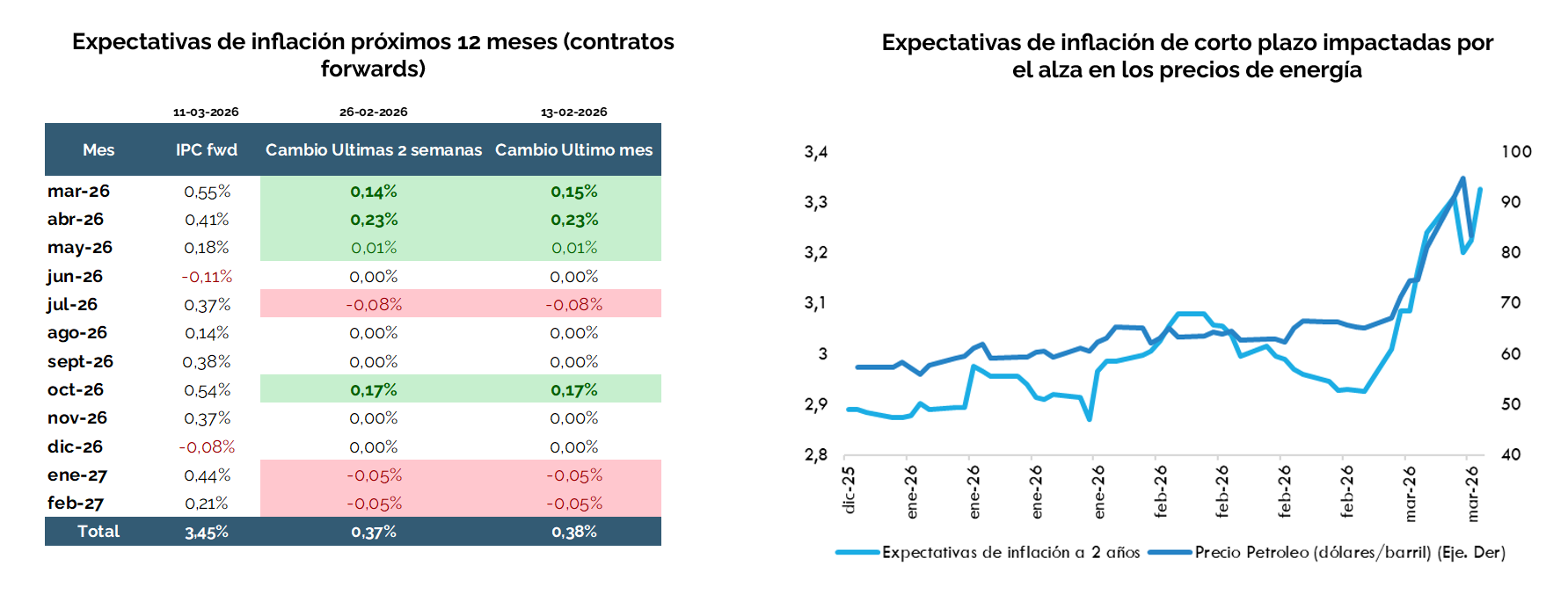
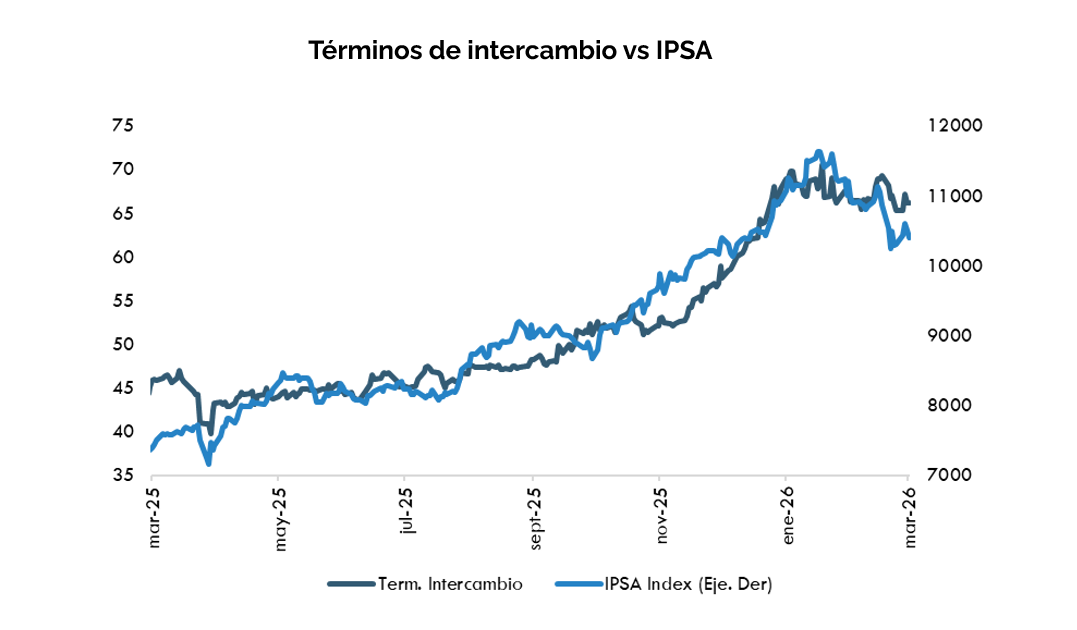
En el plano local, el impacto se ha sentido por varias vías. Una fuerte alza en el tipo de cambio, lo que, sumado al alza de los precios del petróleo, ha elevado las expectativas de inflación al menos para los próximos 2 meses. Sumado a eso, el deterioro de términos de intercambio y un deterioro de las condiciones financieras han propiciado ajustes en la renta variable.
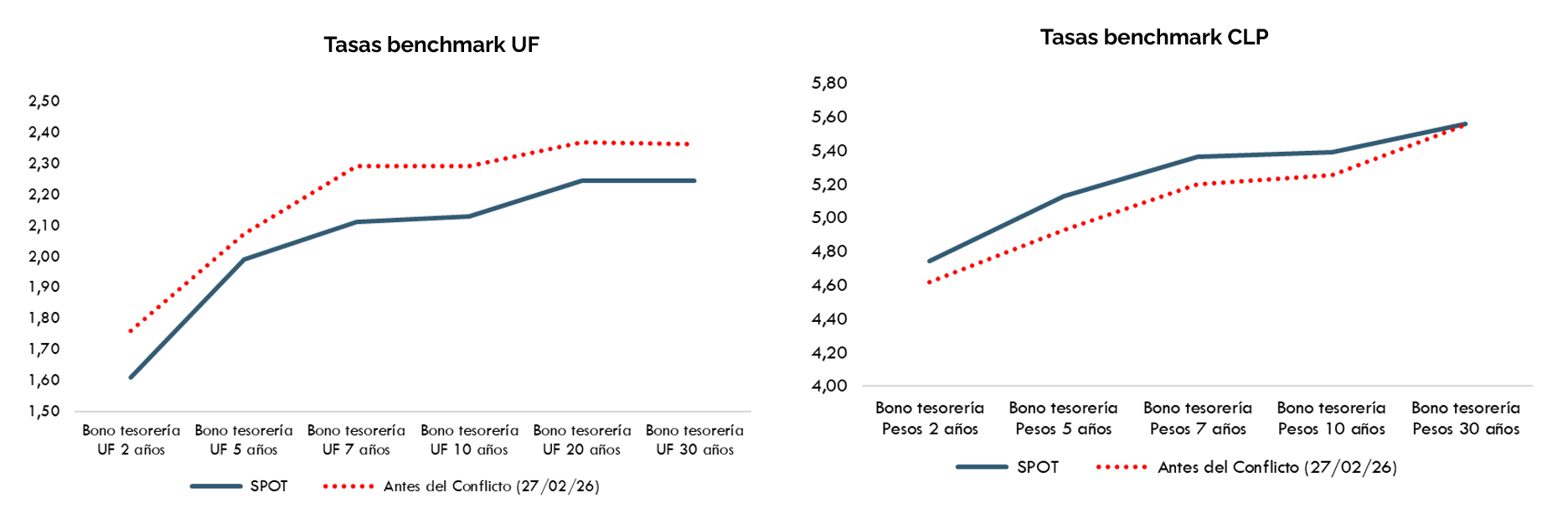
En efecto, a pesar de la sorpresa a la baja en el dato de inflación de febrero, el panorama de corto plazo ha experimentado un cambio de tendencia importante. Un entorno externo adverso, caracterizado por el alza en los precios de la energía y el tipo de cambio, ha elevado las expectativas de inflación para los próximos 2 meses en más de 37 puntos base. Los forwards de inflación se encuentran en torno a 3,2% para 2026, bastante positivo para un posicionamiento en UF, pensando que hasta el momento entre los 2 datos de inflación que se han publicado sumamos 0,4% de devengo durante este año. Además de esto, tenemos que considerar los atractivos por niveles de tasas reales hoy en el mercado en la parte corta/media de la curva.
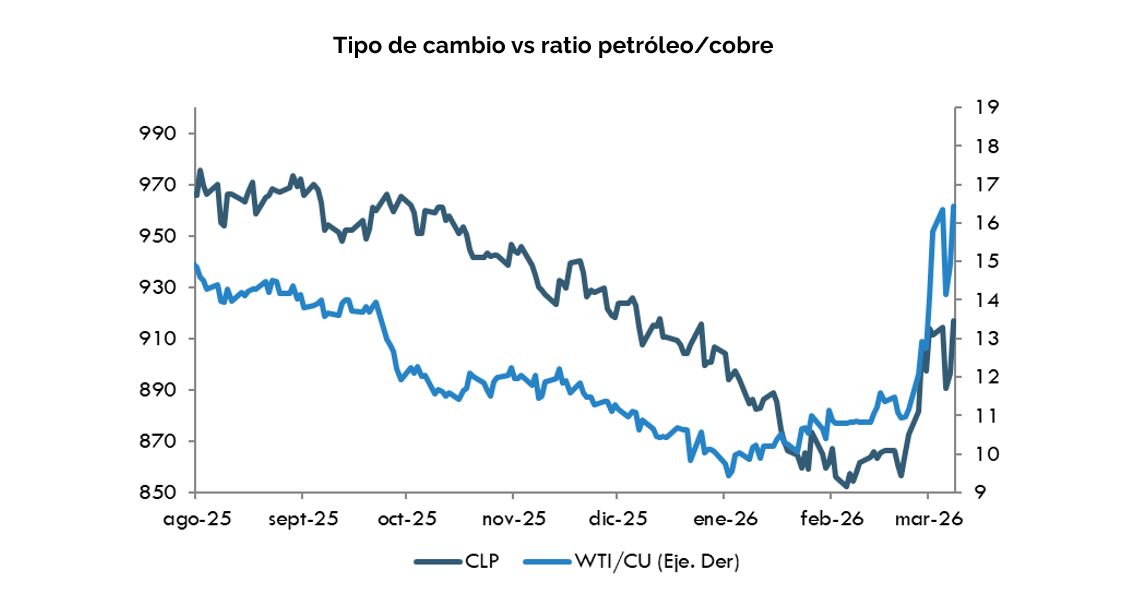
Este reciente shock energético en las cadenas de suministro impacta negativamente la curva nominal local mediante dos formas: por un lado, el contagio desde las tasas de referencia en Estados Unidos y también la presión directa sobre la inflación local, impactando la categoría de transporte a través del alza en precios de bencina y mayores costos de importación, dado un tipo de cambio más depreciado. En consecuencia, el espacio para que el Banco Central de Chile (BCCh) continúe con su flexibilización monetaria durante marzo se ha disipado. Creemos que el BCCh esperará un mayor desarrollo del conflicto antes de recortar nuevamente la TPM, dada la sensibilidad de la canasta local a factores externos. De todas formas, estamos en un nivel de TPM de 4,5% y se espera que el nivel de neutralidad sea de 4,25%, por ende, solo quedaría un recorte de 25 puntos base para finalizar el ciclo de flexibilización.
En términos de rentabilidad, la curva real ha superado en desempeño a la nominal en lo que va del año. Una estrategia indexada a la UF en la parte corta/media de la curva y de buena calidad crediticia (principalmente bonos bancarios) ha rentado en torno a +2.0% YTD, mientras que una estrategia nominal tan solo 1%). Hacia adelante, mantenemos una alta convicción en estrategias indexadas a la UF ante una inflación que se recalibra algo por sobre el 3% para 2026. Si bien las tasas base en UF han caído entre 15-20 puntos base en el último mes, los niveles actuales se mantienen en torno a promedios históricos.
En renta variable, la positiva temporada de resultados del IPSA ha sido opacada por el conflicto geopolítico en Medio Oriente en las últimas semanas, pero creemos que más allá del impacto de corto plazo asociado a un deterioro de términos de intercambio, y asumiendo una desescalada gradual del conflicto, las recientes correcciones han generado atractivos niveles de entrada en acciones locales para el resto del año.
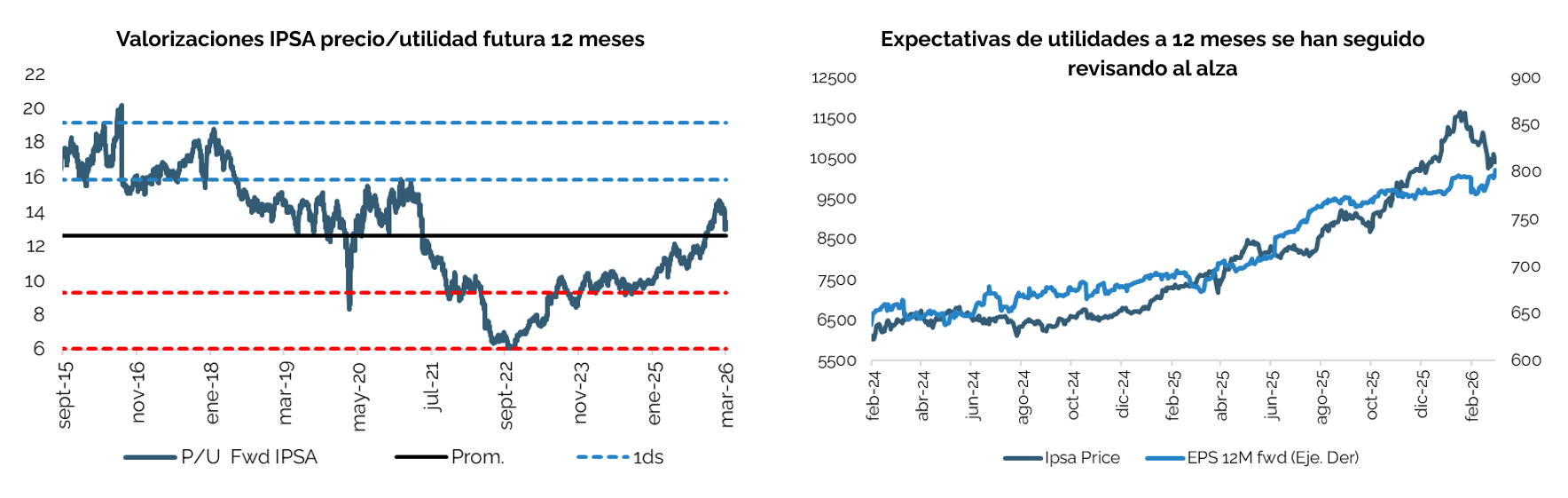
Actualmente, las acciones locales están transando en niveles P/U Forward (Precio/Utilidad futura 12 meses) cercano a 13 veces, que si bien está bastante cerca del promedio de los últimos 10 años, nos parece atractivo, considerando que en estos últimos 10 años vivimos un estallido social y una pandemia que evidentemente castigó las valorizaciones del índice. Así entonces, apuntar a los promedios históricos antes de estos 2 eventos nos parece razonable (más cercanos a 16x), considerando niveles de inflación convergiendo a la meta (a pesar de las alzas recientes), y reformas más por inversión del nuevo gobierno, que deberían traducirse en mejores expectativas de crecimiento y resultados corporativos positivos (actualmente, el mercado tiene implícito un crecimiento de utilidades de +15% para 2026).
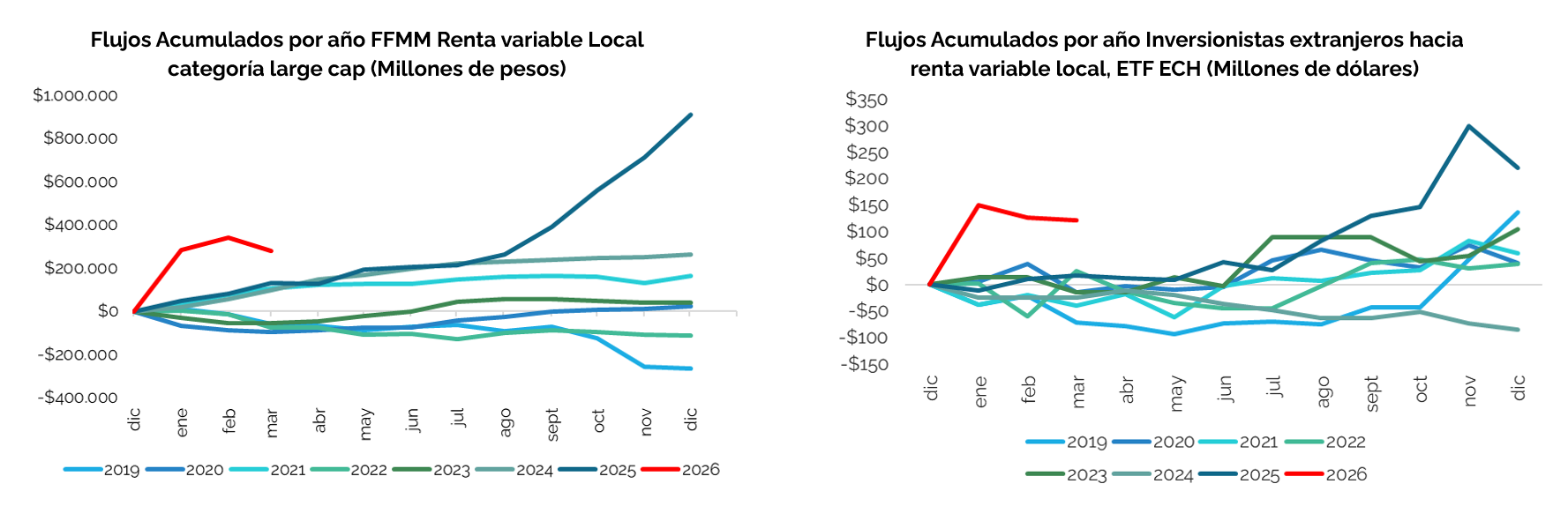
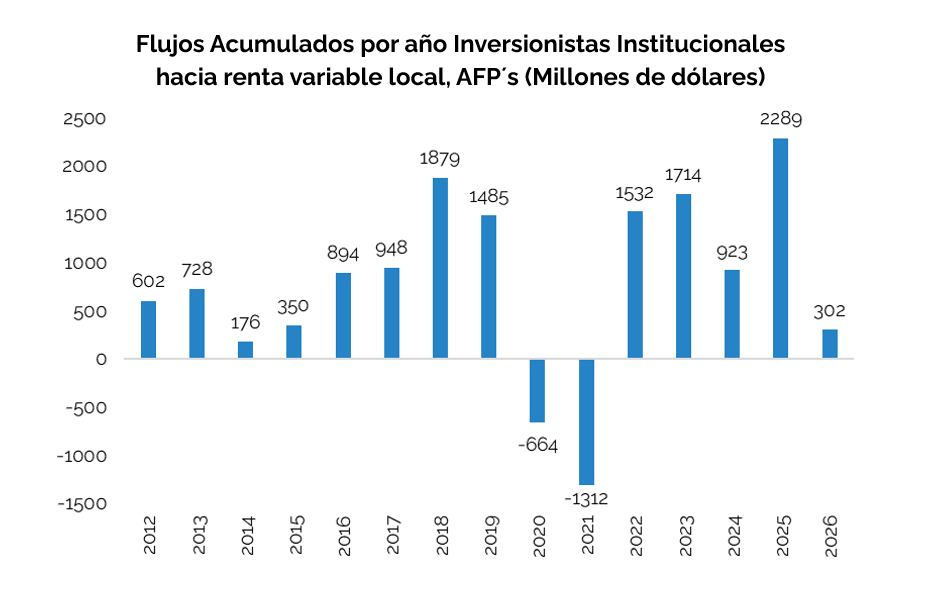
Si bien, durante últimas semanas ha habido salidas de flujos tanto de inversionistas retail locales como extranjeros, aún en el año se pueden ver niveles acumulados de flujos muy por sobre comienzos de años anteriores. Sumado a esto, los inversionistas institucionales han continuado comprando acciones durante febrero, lo que refleja una visión positiva sobre el asset. Hacia adelante, creemos que los flujos extranjeros debiesen continuar su tendencia positiva en la medida que el dólar retome su tendencia bajista.
Tomás Fernández
Analista de Administración de Carteras