Fynsa


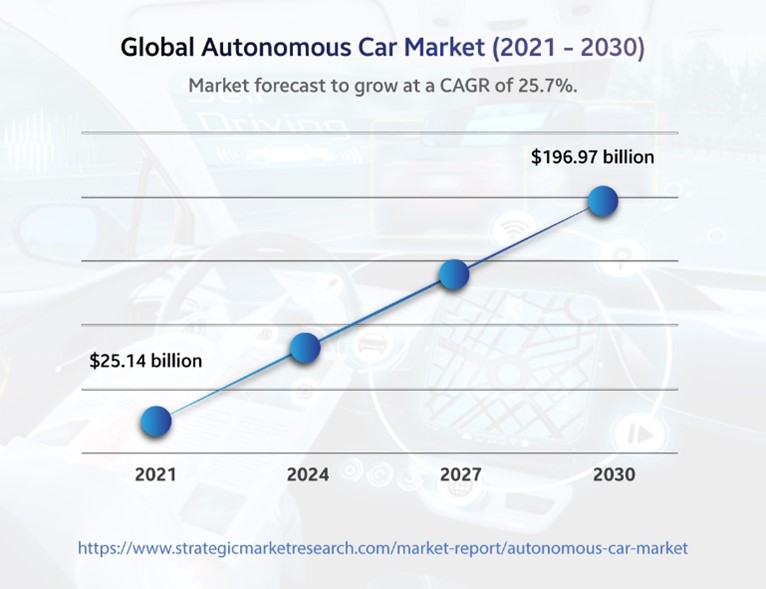
En octubre del año pasado, la consultora Strategic Market Research estimaba que el mercado global de vehículos autónomos y semi autónomos llegaría a los US$197.000 millones para el 2030, con un crecimiento anual compuesto de 25,7% a partir de los US$25.000 millones estimados en 2021.
Ese año, el sector transportes, con varias ciudades permitiendo la circulación de taxis autónomos y algunas marcas ofreciendo vehículos semiautónomos, era el principal motor de este negocio. Y EE.UU. representaba el 45% de las ventas. Para los próximos años, sin embargo, Strategic Market Research estima que el segmento de mayor crecimiento será el de defensa.
Estas optimistas proyecciones, sin embargo, contrastan con la clara pérdida de interés de los fabricantes de automóviles y, más importante, de los inversionistas, en el desarrollo de vehículos autónomos.
Según Bloomberg, en el Show de Electrónica de Consumo (CES) de Las Vegas, la mayor del mundo y que marca las tendencias en productos avanzados, la presencia de vehículos autónomos era muy reducida respecto a la de 2021. Este año, en este segmento, la estrella fue un tractor autónomo de John Deere, poco glamoroso, pero muy atractivo para los agricultores.
¿La razón de este enfriamiento del entusiasmo por los autos autónomos? La aversión al riesgo de los inversionistas y la falta de un horizonte claro en el que se alcanzaría la rentabilidad. El show, incluyendo el CES de Las Vegas, se lo están llevando los vehículos eléctricos. ¿Cambiará el panorama cuando superemos la actual desaceleración de la economía global?