Fynsa


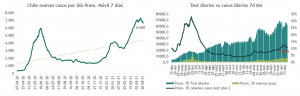
After several months of worsening infection trends amid a second wave of COVID-19, the numbers appear to be stabilizing, reflecting the successful vaccination campaign and reduced mobility. The 7-day moving average of new daily cases had recently risen to record highs in recent weeks, exceeding 7,300. This week, that figure has fallen by 10% to approximately 6,700 as a result of the decline in new daily cases, and it should continue its downward trend given the high vaccination rate.
On a similar note, the 7-day moving average of positive tests out of the total number of tests has risen steadily over the past few months, reaching 12% last week. This figure has begun to trend downward in recent days and currently stands at 11%. The worsening infection trends observed during the second wave had led to increases in the ICU bed occupancy rate, which rose to a record 96% just over a week ago. We expect this figure to decrease in the coming weeks, assuming the number of new daily cases continues to decline.
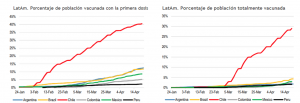
Chile has already vaccinated nearly 8 million people, which is equivalent to 40% of the population. Similarly, a total of more than 5.5 million people have received both doses, meaning that 29% of the country has been fully vaccinated.
Chile continues to receive vaccine shipments at a rapid pace, with the latest shipment consisting of 266,175 doses of Pfizer. To date, the country has received 15,826,101 doses, the vast majority of which are Sinovac. In fact, 90.1% of those vaccinated have received the Sinovac vaccine, and the rest have received the Pfizer vaccine.
This week, the Ministry of Health released the results of the Sinovac vaccine efficacy study. According to these results, the vaccine protects against symptomatic COVID-19 infection, as well as the most severe forms of the disease. The vaccine is 67% effective in preventing COVID-19 symptoms, 85% effective in preventing hospitalization, 89% effective in preventing ICU admission, and 80% effective in preventing death.