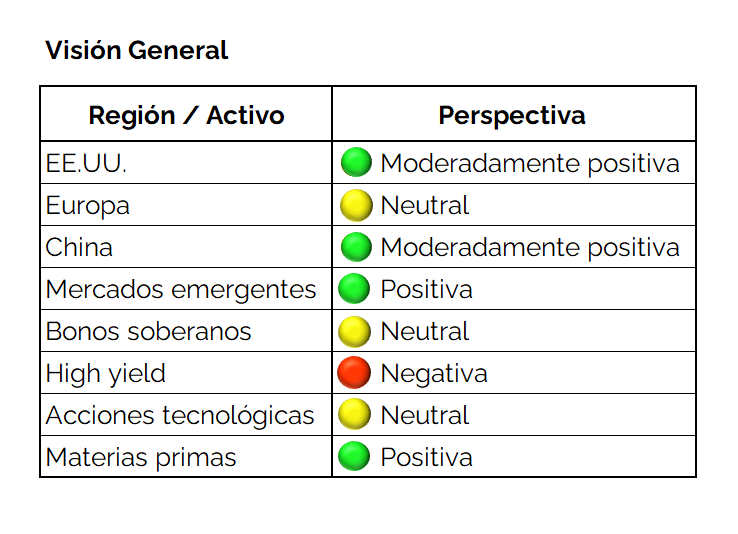
El consenso general es que la economía global, especialmente la de EE.UU., muestra resiliencia pese al tema de las tarifas, la presencia de un proceso de desaceleración laboral y algunas tensiones geopolíticas.
- Nuestro escenario base es que no hay recesión para 2025–2026, En este sentido, el desempeño superior de mercados ex – US de este año, se extendería a 2026, apalancado también en una mayor debilidad del dólar y valorizaciones relativas más atractivas
- El crecimiento se sostiene básicamente por:
- Inversión masiva en IA y centros de datos.
- Política fiscal activa.
- Consumo, básicamente en segmentos altos.
- China se estabiliza y Europa sigue rezagada pero con señales positivas.
- En términos sectoriales preferimos Tecnología, Utilities, Bancos y Health Care.
- Las materias primas también nos parecen atractivas para 2026. Las restricciones de oferta y la mayor demanda respaldan a energía y metales.
IA: la fuerza dominante del ciclo
La inteligencia artificial es el motor estructural más importante para la economía y los mercados. El crecimiento de EE.UU. está apalancado en la IA.
- No estamos en una burbuja de IA, aunque sí en un ciclo de exuberancia donde el liderazgo tecnológico sostiene los múltiplos elevados.
- El capex en infraestructura de IA seguirá acelerándose hasta 2027, y será un impulsor de productividad, pero también de disrupción laboral
- Políticas energéticas y regulatorias se volverán cada vez más relevantes.
- Los mayores riesgos estructurales son:
- Energía eléctrica.
- Infraestructura.
- Agua para data centers.
- Financiamiento.
- Riesgo Circular
Renta Fija: Preferimos el devengo que la duración
- Dado las tensiones fiscales, creemos que debemos mantener una duración intermedia, para no enfrentarnos a volatilidad
- Recortes de la Fed serán lentos y dependientes de datos.
- En nuestra opinión, creemos que debemos estar invertidos en Corporativos de alta calidad (investment Grade), y ser cuidadosos con las grandes emisiones del sector tecnológico.
- Volver a bonos chilenos o Emerging Markets.
Renta Variable: Seguimos positivos
- Tecnología.
- Resultados revisándose al alza.
- Sobre ponderar calidad y fortaleza de balance.
- Ampliar posiciones en Asia y emergentes.
- Incorporar activos reales y commodities.
- Integrar exposición directa e indirecta a infraestructura de IA, evaluar China
Inflación
La inflación ya no es como la conocemos, ósea no sigue los mismos patrones, esto porque:
- Existe escasez de energía y limitaciones de oferta, estamos en una transición energética, por lo que debemos asegurarnos.
- El aumento en las tarifas hoy es en promedio del 14%
- Salarios.
- Inversión masiva en IA.
- Commodities: Cobre | Litio
Por lo mismo, creemos que la inflación puede ser más volátil.
El dólar | Fragmentación
El dólar atraviesa una transición importante, influenciado por los temas fiscales, bajas de tasas y mayor crecimiento fuera de los EE.UU., creemos seguirá a la baja, pero su hegemonía no está en riesgo.
En el largo plazo el mundo pasa a un régimen monetario multipolar:
- Más uso de otras monedas, pero ninguna puede competir como reserva.
- Este proceso de fragmentación impulsa el uso de nuevas monedas regionales, o emergentes, y los commodities (oro, petróleo, cobre) pueden beneficiarse de un USD levemente más débil.
- Sin embargo, en tecnología, energía, finanzas y capitales:
- EE.UU. mantiene su liderazgo.
- La IA refuerza el dominio del USD en el mundo.