La combinación de una menor demanda por larga duración y una mayor oferta (para cubrir déficits presupuestarios masivos), está afectando las valorizaciones en el extremo largo de las curvas de rendimiento.
Comparte
La combinación de un menor viento en contra proveniente de los aranceles y una reversión de las condiciones financieras más restrictivas desde su punto más alto en abril ha reducido los riesgos para el crecimiento en Estados Unidos. Dado que la inflación aún es probable que se reacelere, el escenario base para nuevos recortes de tasas por parte de la Reserva Federal (FED) se ha desplazado hacia un ritmo más tardío y pausado que lo pronosticado anteriormente, con una reanudación probable de los recortes hacia fines de 2025.
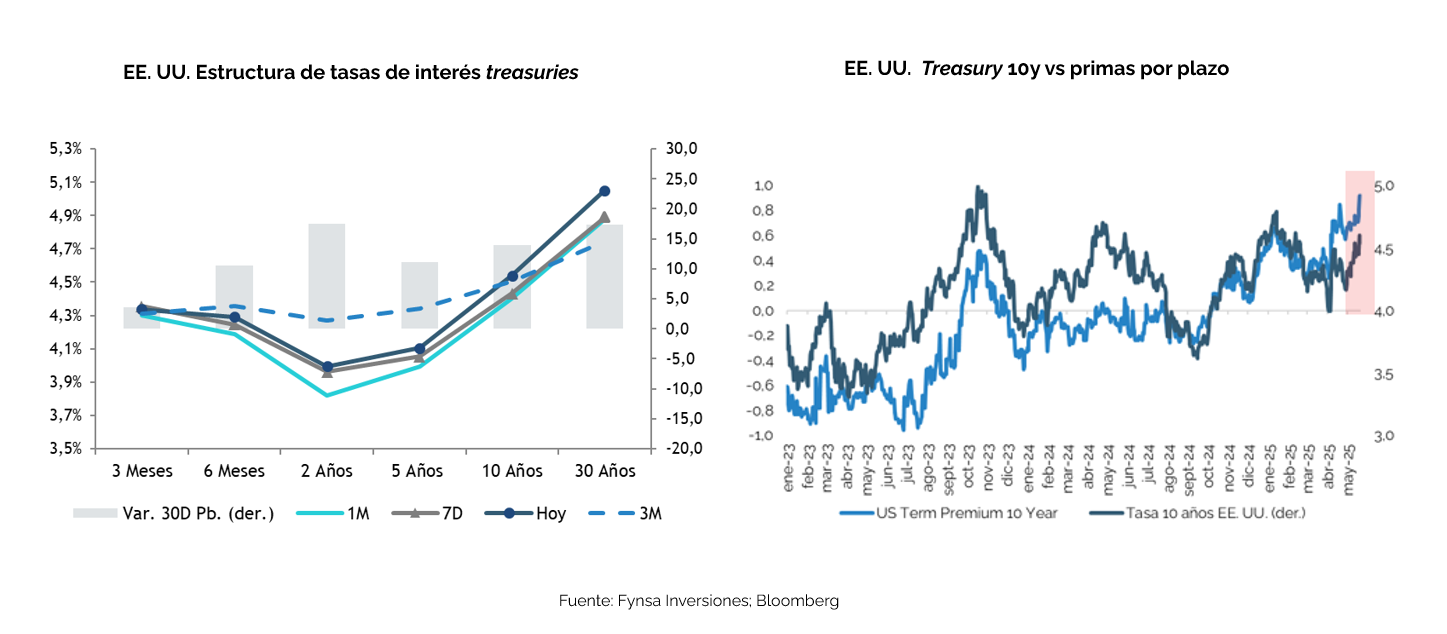
Esta combinación de un crecimiento positivo (aunque por debajo del potencial), una inflación por encima del objetivo de la FED y un margen reducido para un mayor alivio monetario a corto plazo ha contribuido al aumento de las tasas de interés en las últimas semanas.
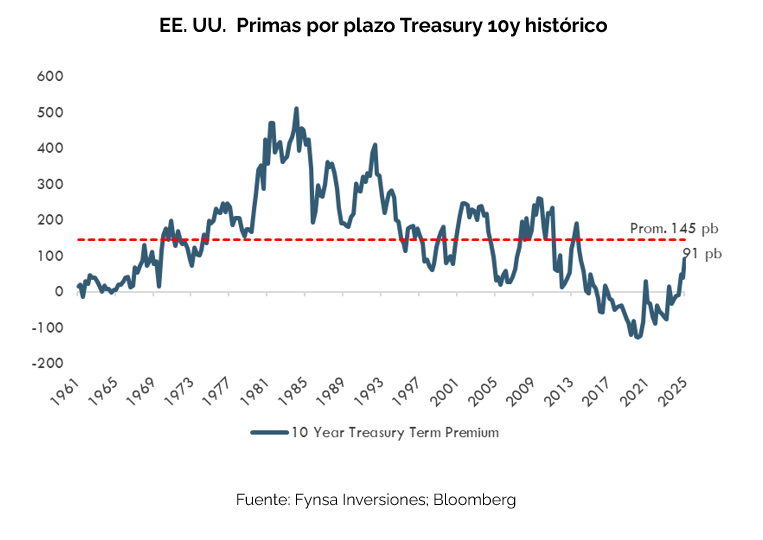
Sin embargo, creemos que esta explicación “más convencional”se “queda corta” y no alcanza a explicar la fuerte alza de los rendimientos en la parte más larga de la curva ni el mayor empinamiento de ella.
El problema de fondo son los elevados déficits fiscales
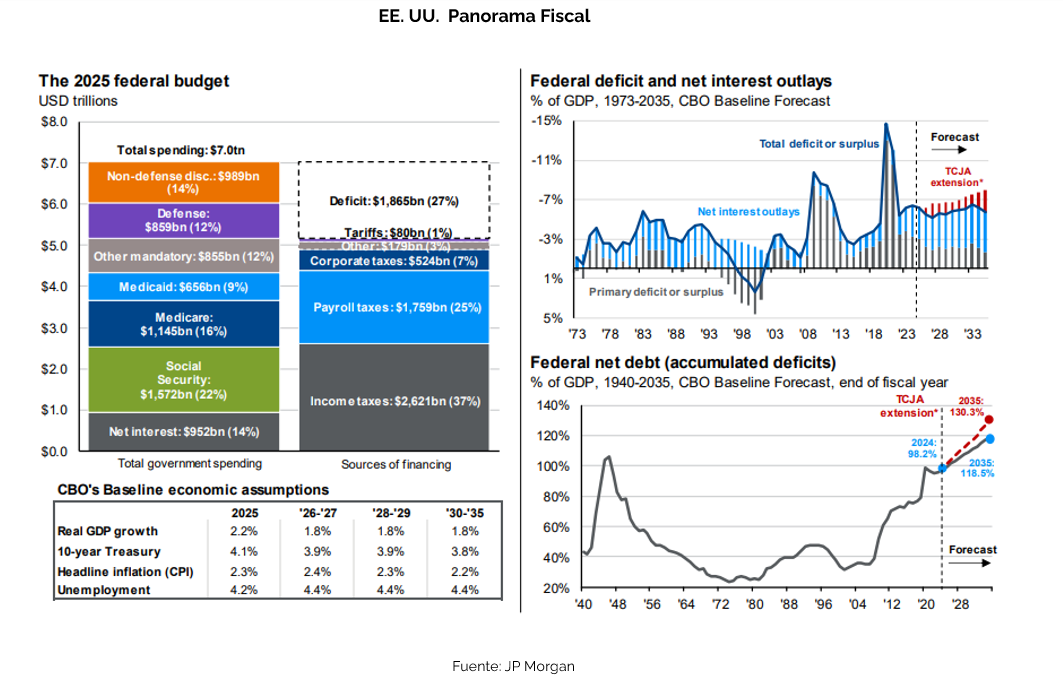
Estados Unidos acumula un enorme déficit presupuestario, ya que los costos por intereses de la deuda del Tesoro han seguido aumentando debido a una combinación de tasas más altas y un mayor endeudamiento principal. El déficit fiscal en lo que va del año fiscal ya asciende a US$ 1,05 trillones, un 13% más que el año anterior. Los ingresos por aranceles ayudaron a reducir parte del desequilibrio el mes pasado.
Esto llevó a que, a fines de la semana pasada, Moody’s redujera la calificación crediticia soberana de EE. UU. en un nivel, desde Aaa (la más alta posible) a Aa1, citando la creciente carga de financiar el déficit presupuestario del gobierno federal y el creciente costo de renovar la deuda existente en un entorno de altas tasas de interés.
Con esto, EE. UU. ha perdido su última calificación triple A restante, siguiendo los pasos de Fitch en 2023 y de S&P en 2011. Si bien podríamos decir que era algo relativamente esperado por el mercado y, por tanto, incorporado, lo importante para el mercado de bonos es el mensaje de fondo: la preocupación por mayores déficits estructurales en EE. UU., en un contexto de elevada incertidumbre política, podría provocar que la curva de los bonos del Tesoro continúe empinándose en el corto plazo. Esta rebaja respalda una prima por plazo más alta a largo plazo.
La atención se centra ahora en Washington, ya que el proyecto de ley fiscal podría presentarse al pleno de la Cámara de Representantes para su votación en los próximos días. Al respecto, Moody’s señala que “si se extiende la Ley de Reducción de Impuestos y Empleos de 2017, que es el caso base, agregará alrededor de US$4 trillones al déficit fiscal primario federal (excluyendo los pagos de intereses) durante la próxima década”.
Como resultado, se prevé que los déficits federales se amplíen, alcanzando casi el 9% del PIB para 2035, frente al 6,4% en 2024. Este aumento estaría impulsado principalmente por el alza en los pagos de intereses de la deuda, el incremento del gasto en prestaciones sociales y una generación de ingresos relativamente baja. Moody’s proyecta que la carga de la deuda federal ascenderá a aproximadamente el 134% del PIB en 2035, en comparación con el 98% en 2024, cifras que están bastante en línea con algunas estimaciones que hemos revisado previamente.
Además, es importante destacar que, según el texto del proyecto de ley publicado esta semana por la Cámara de Representantes, los nuevos préstamos se concentran al inicio, mientras que las compensaciones al final. Por lo tanto, se proyecta que el impacto del déficit será mayor en el corto plazo y menor a partir de 2029.
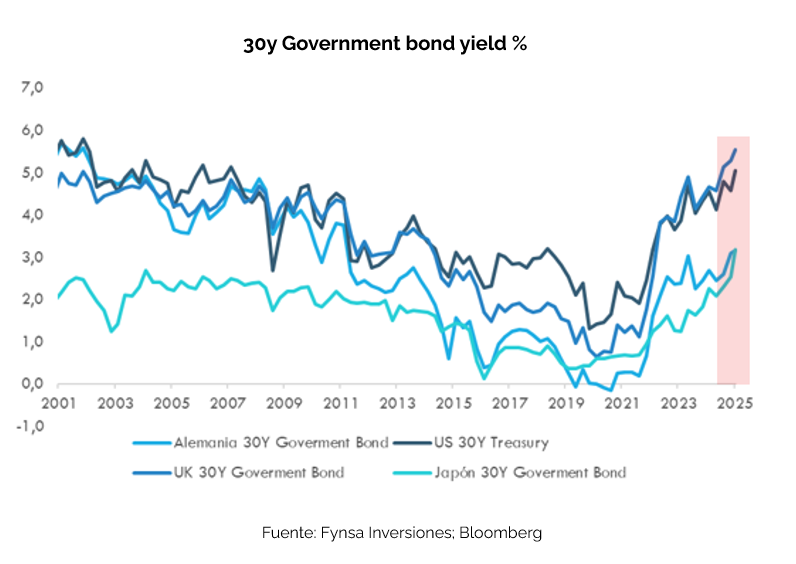
Pero el problema no es sólo de Estados Unidos. Los costos de financiamiento a largo plazo también están al alza en otras economías importantes, ya que la combinación de una menor demanda por larga duración y una mayor oferta —destinada a cubrir déficits presupuestarios masivos—, particularmente en Japón, EE. UU. y el Reino Unido, parece estar afectando las valorizaciones en el extremo largo de las curvas de rendimiento.
Los rendimientos de los bonos a treinta años en EE. UU. se negociaron esta semana por encima del 5%, no muy lejos de su nivel más alto desde 2007, mientras que los de Japón alcanzaron su mayor nivel desde que se iniciaron los registros en 1999. En ambos países, las subastas de esta semana reflejaron una débil demanda.
La liquidación de los bonos japoneses de largo vencimiento es particularmente aguda. El Banco de Japón está reduciendo sus compras de bonos a medida que la inflación se acelera, pero los compradores tradicionales —como las compañías de seguros— no están cubriendo el vacío que esto deja. Este deterioro de la liquidez del mercado de bonos japoneses, que podría derivar en “aumentos desordenados” de los rendimientos a más largo plazo, no es sólo un problema para Japón: también deja a los activos estadounidenses y globales expuestos a correcciones.
El aumento de los costos de endeudamiento público también repercute en las empresas y los hogares, que se enfrentan a tasas de interés más elevadas, limitando así su capacidad de endeudamiento o gasto. Esto genera un círculo vicioso en el que los déficits presupuestarios aumentan aún más debido a la caída en los ingresos fiscales. Los bancos centrales podrían verse obligados a decidir si deben desviar su atención de la inflación hacia al crecimiento económico.
Pero es precisamente este “potencial círculo vicioso” el que podría ponerles un cierto techo a los bonos del tesoro, ya que tasas más altas, al final del día, se traducen en condiciones financieras más restrictivas que merman el crecimiento y las ganancias corporativas. Creemos, sin embargo, que ese “techo” podría ubicarse algo más cercano al 5% para el Tesoro a 10 años. Mientras tanto, mantenga una estrategia de renta fija en la parte corta – media de la curva en bonos corporativos Investment grade.
¿Y qué pasa con las acciones? Como planteamos la semana pasada, dado el ya optimista precio del mercado respecto a las perspectivas de crecimiento económico y de utilidades corporativas, así como la incertidumbre en torno a la magnitud de una posible desaceleración tanto del crecimiento como de las ganancias corporativas —a lo que se suman tasas de descuento más elevadas—, creemos que esto probablemente mantendrá un techo en los múltiplos de acciones durante los próximos meses (ver análisis). Además, este escenariopodría perfectamente ser el desencadenante de nuevas correcciones, ya que el aumento en el rendimiento exigido por los inversionistas para adquirir deuda del Tesoro estadounidense, como reflejo de un mayor riesgo, podría debilitar el apetito por activos estadounidenses, incluidas las acciones.