Fynsa


En 2024, la tasa de fertilidad global ha alcanzado niveles históricamente bajos, con varios países enfrentando desafíos demográficos significativos. Con menos niños nacidos, ha surgido la preocupación de que pronto pueda haber “muy pocas” personas para sostener las economías.
La tasa de fecundidad se refiere al número medio de hijos nacidos de una mujer en edad fértil en un país determinado. Por lo general, se considera que las mujeres de entre 15 y 45 años están en edad fértil.
En este sentido, entre los países con las tasas más bajas se encuentran Taiwán y Corea del Sur, ambos con una tasa de 1,1 hijos por mujer, seguidos de cerca por Singapur, Ucrania y Hong Kong, con tasas de 1,2 hijos por mujer.
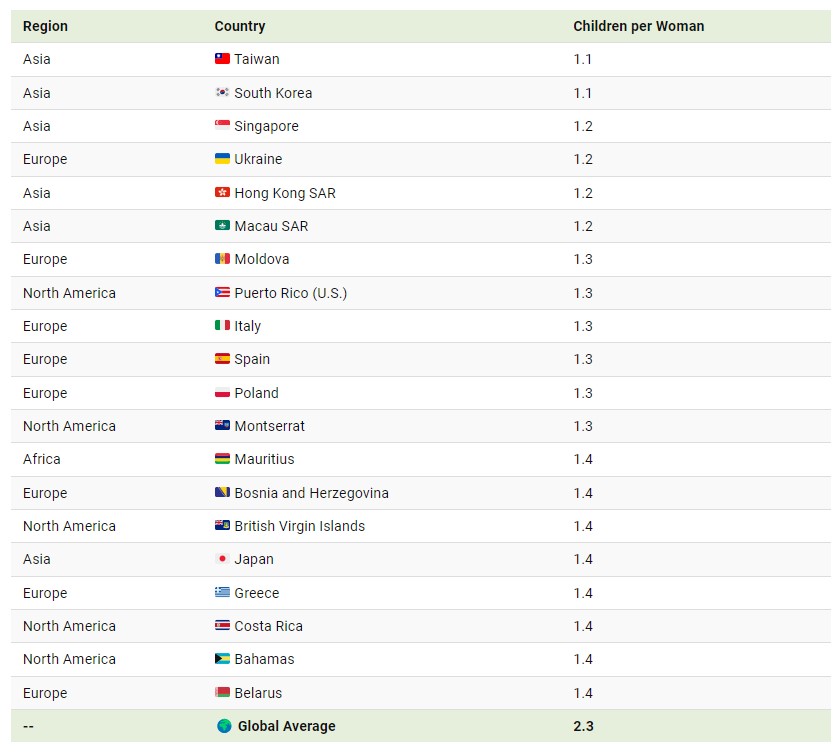
La disminución de la fertilidad plantea preocupaciones sobre el futuro económico y social de estas naciones. Con una población envejecida y una fuerza laboral en declive, los gobiernos están buscando soluciones innovadoras para mantener el equilibrio demográfico y asegurar el crecimiento económico.
Varios países están implementando una serie de estrategias para contrarrestar las bajas tasas de natalidad. Corea del Sur, por ejemplo, ha comenzado a permitir que las familias contraten niñeras extranjeras. Mientras que Japón ha destinado hasta 3.6 billones de yenes anuales (US$ 22.300 millones) en esfuerzos para revertir esta situación.
En Europa, países como Italia y España también enfrentan tasas de fertilidad bajas, con 1,3 hijos por mujer. Esta tendencia se observa en otras regiones como América del Norte, donde Puerto Rico y Montserrat presentan cifras similares. Incluso en África, Mauricio se destaca con una tasa de 1,4 hijos por mujer.
En cuanto a Chile, la tasa de fertilidad en 2024 es de 1.593 hijos por mujer, lo que representa una disminución del 0.31% respecto al año anterior. Aunque no está entre los países con las tasas más bajas, Chile sigue experimentando una tendencia a la baja en su tasa de fertilidad, similar a muchos otros países desarrollados.
La baja fertilidad no sólo afecta la estructura poblacional, sino que también tiene implicaciones profundas en la economía y la sociedad. Las políticas de apoyo a la familia, incentivos económicos y la integración de tecnologías avanzadas son algunas de las medidas que estos países están adoptando para enfrentar este desafío.
Revisa las estadísticas de Statista AQUÍ.