Fynsa


En los mercados existe una anomalía llamada “efecto lunes”. Esta teoría sugiere que las bolsas suelen empezar la semana con el pie izquierdo y se van entusiasmando a medida que se acerca el fin de semana. Pero ¿es esto un mito urbano o una realidad en Chile?
Para evaluar si algo similar ocurre, analizamos los retornos diarios del IPSA y calculamos algunas estadísticas básicas según el día de la semana: la probabilidad de que el día sea positivo, el retorno promedio, la mediana y la volatilidad diaria.
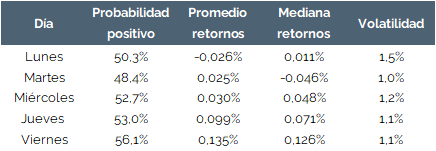
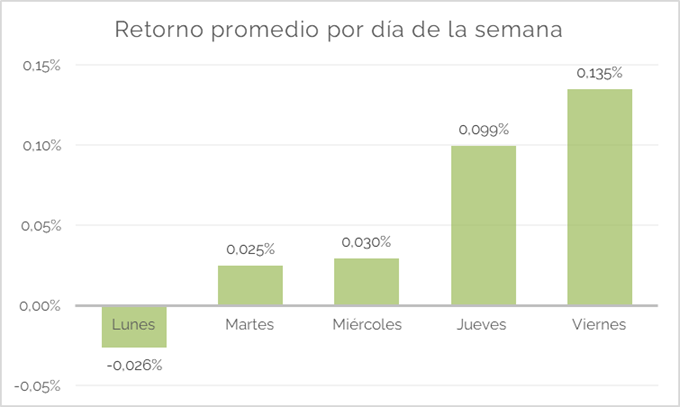
El primer resultado que llama la atención es que el viernes aparece como el día con mejor desempeño promedio, con un retorno medio de 0,135% y además la mayor probabilidad de registrar retornos positivos (56,1%). En contraste, el lunes es el único día con retorno promedio negativo, aunque marginal (-0,026%). Esto es consistente con el llamado “efecto lunes” documentado en varios mercados internacionales.
También es interesante observar que la volatilidad tiende a ser mayor al inicio de la semana, con una desviación estándar de 1,5% los lunes, superior a la del resto de los días. Sin embargo, aunque estos patrones existen, su magnitud es relativamente pequeña. Las diferencias entre días son de apenas unas pocas décimas de punto porcentual, mientras que la volatilidad diaria del mercado ronda el 1%.
¿Por qué ocurre esto?
No hay una única causa clara, pero existen algunas explicaciones probables. Una de las más mencionadas es que el lunes el mercado debe procesar noticias que se acumulan durante todo el fin de semana como anuncios políticos, eventos internacionales, movimientos en commodities o decisiones corporativas, mientras que durante la semana la información suele incorporarse con mayor rapidez, reaccionándose generalmente al día siguiente.
Otra explicación posible, es que algunas empresas publiquen sus malas noticias al cierre del día viernes para evitar una volatilidad en el precio con el mercado abierto, aminorando así una posible fuerte caída.
Otros sugieren que los inversionistas despiertan con peor ánimo el lunes. Entre el cambio de rutina del fin de semana y en ocasiones la falta de sueño, nuestro cerebro llega al lunes menos preparado para tomar decisiones complejas. Se ha comprobado que cuando estamos cansados o de mal ánimo, nuestra aversión al riesgo se dispara: preferimos la seguridad hoy que la ganancia mañana [1]. En el mercado, este cansancio colectivo genera una “fuga hacia la seguridad”, donde el optimismo del IPSA se apaga momentáneamente mientras todos esperamos recuperar el ritmo.
En cualquier caso, este tipo de patrones puede entenderse como una simple curiosidad estadística del mercado. Nos muestra que los retornos no necesariamente se comportan de la misma manera todos los días y que, al analizar los datos con una mirada más amplia, pueden aparecer ciertos sesgos temporales.
Matías Márquez
Analista Fondos Financieros Fynsa AGF
[1] https://www.researchgate.net/publication/233411853_The_Financial_Costs_of_Sadness