Fynsa

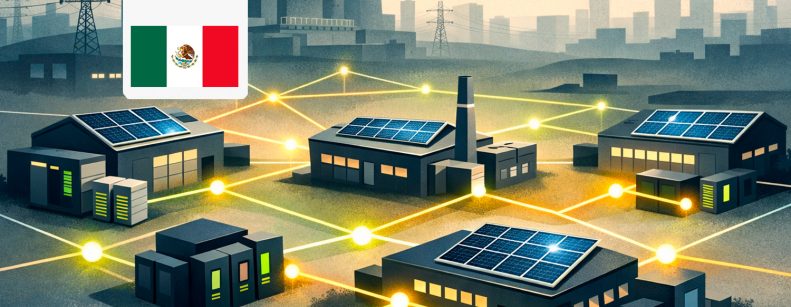
La generación distribuida consiste en producir electricidad a pequeña escala, cerca o en el mismo lugar donde se consume, en lugar de depender exclusivamente de grandes centrales eléctricas. Este tipo de generación, generalmente basada en energías renovables, permite a las empresas abastecerse directamente, reducir sus costos eléctricos e incluso inyectar excedentes a la red.
En México, de acuerdo con el marco regulatorio establecido por la Comisión Reguladora de Energía (CRE), la generación distribuida corresponde a instalaciones con una capacidad menor a 0,5 MW (500 kW) conectadas a redes de distribución, y no a transmisión. En la práctica, los sistemas más utilizados bajo este esquema son los fotovoltaicos en comercios e industrias, seguidos por pequeñas turbinas eólicas y soluciones híbridas, como solar con almacenamiento en baterías.
La generación distribuida es especialmente importante para las empresas mexicanas porque impacta directamente en costos, competitividad y sostenibilidad. No es solo un tema ambiental, es una decisión estratégica.
Actualmente, este método ha mostrado un crecimiento significativo en México. Al cierre de 2024, el país alcanzó una capacidad instalada de 4,4 GW, y se proyecta que para 2025 esta cifra llegue a 5 GW, equivalente a cerca del 8% de la demanda máxima del sistema eléctrico. De esta capacidad, aproximadamente el 99% corresponde a energía solar fotovoltaica, con más de 500 mil contratos de interconexión registrados (fuente: AMIF – PV Magazine Latam).
1. Reducción de costos energéticos: la electricidad es uno de los principales gastos operativos en muchas empresas.
En industrias con alto consumo, esto puede significar millones de pesos al año.
2. Mayor independencia y confiabilidad: en México, algunas zonas pueden tener
Con energía distribuida:
3. Cumplimiento ambiental y ESG: cada vez más empresas deben cumplir con estándares de sostenibilidad.
Muchas cadenas globales ya exigen proveedores con energía limpia.
4. Aplicación ideal para México: tiene condiciones muy favorables.
Esto hace que el retorno de inversión (ROI) sea rápido (3–6 años en muchos casos).
La oportunidad en generación distribuida en México se basa en un mercado en expansión, aún con baja penetración y alta demanda, lo que configura un potencial significativo. Este escenario resulta especialmente atractivo para el sector industrial, así como para soluciones solares con almacenamiento y modelos financieros como los PPA.