Fynsa

Los BRIC; el grupo de países emergentes formado por Brasil, Rusia, India y China (con la adición de Sudáfrica en 2010), que fueron puestos en el tapete en 2001 por Jim O’Neill, en ese entonces economista jefe de Goldman Sachs, prometían convertirse en las mayores economías del planeta, pero han tenido una evolución más compleja que la esperada. Sin embargo, el grupo viene a la carga nuevamente.
El grupo inició esta semana una cumbre en Johannesburgo con una agenda orientada a reforzar su influencia geopolítica y económica frente al G-7 (grupo de países desarrollados) y a Estados Unidos en particular. En esa línea, en la cumbre sudafricana se reunirán 40 jefes de estado con el trasfondo de una veintena de países interesados en integrarse formalmente al grupo.
Según analistas de GZERO/Eurasia Group y de Bloomberg, es difícil que se logren grandes acuerdos durante la reunión, dada la diversidad de sistemas políticos e intereses de los países que integran el grupo, pero su potencial ampliación tendría implicancias importantes.
De acuerdo con Bloomberg Economics, si los países interesados en integrarse a los BRIC, como Indonesia y Arabia Saudita, lo hacen, para el 2040 el grupo podría representar el 50% del PIB global, frente a un 25% que representaría el G-7, y también la mitad de la población del mundo.
China, Rusia y Sudáfrica son los socios del grupo que están impulsando con más entusiasmo la expansión, mientras que India ve con cierto grado de recelo el protagonismo que busca lograr China con el crecimiento del grupo.
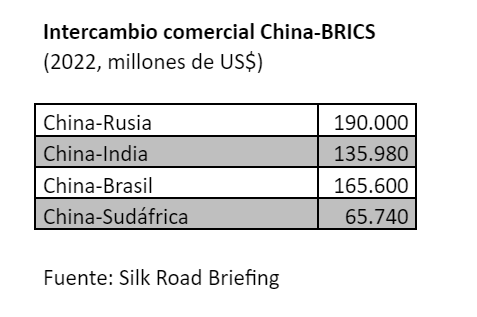
El gigante asiático ya es el principal socio comercial de los otros países miembros de los BRIC (con la excepción de India), y su intercambio comercial con estos países aumentó en un 12% en la primera mitad de 2022 respecto al mismo periodo del año anterior.