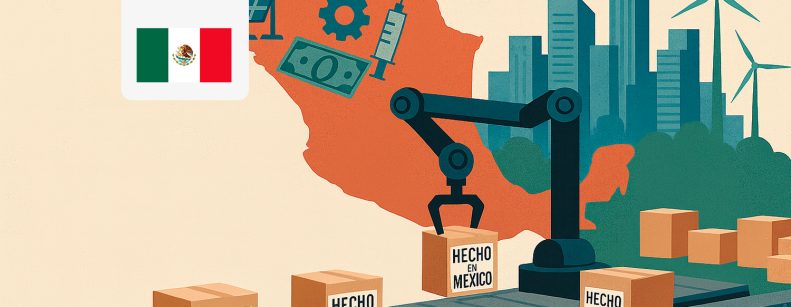
En febrero de 2025, el gobierno de Claudia Sheinbaum anunciaba el Plan Nacional de Desarrollo (PND) o más conocido como “Plan México”, con el objetivo de crear una estrategia integral y de largo plazo impulsada por el gobierno para transformar la economía y el desarrollo social de México, con objetivos claros hasta 2030. Los objetivos centrales del Plan México incluyen:
- Impulsar la industrialización e innovación, para lograr una economía más competitiva.
- Relocalización de industrias, elevar el contenido nacional en cadenas productivas estratégicas como automotriz, aeroespacial, electrónica, farmacéutica, entre otros, con un sostenido nivel de inversión nacional y extranjera.
- Generar 1,5 millones de empleos bien remunerados en sectores de manufactura y servicios especializados.
- Aumentar la proporción de inversión respecto al PIB a más del 25% para 2026 y más del 28% para 2030.
- Incrementar el consumo nacional a un 50% en sectores estratégicos y que el 50% de las compras públicas sean de producción nacional, usando la compra pública como palanca de desarrollo, como parte del programa “Hecho en México”.
- Fomentar la formación de 150 mil profesionales y técnicos anuales con educación acorde a sectores estratégicos.
- Aumentar acceso a financiamiento para 30% de las PYMEs, versus el 23% actual.
- Impulsar la sostenibilidad ambiental empresarial con prácticas ASG (Ambientales, Sociales y de Gobernanza), energías limpias y manejo responsable de residuos.
- Avanzar hacia la autosuficiencia alimentaria y la producción de vacunas y medicamentos con biotecnología avanzada en México.
- Posicionar a México entre las 10 principales economías mundiales y como uno de los 5 países más visitados a nivel global.
PYMEs y su importancia para México
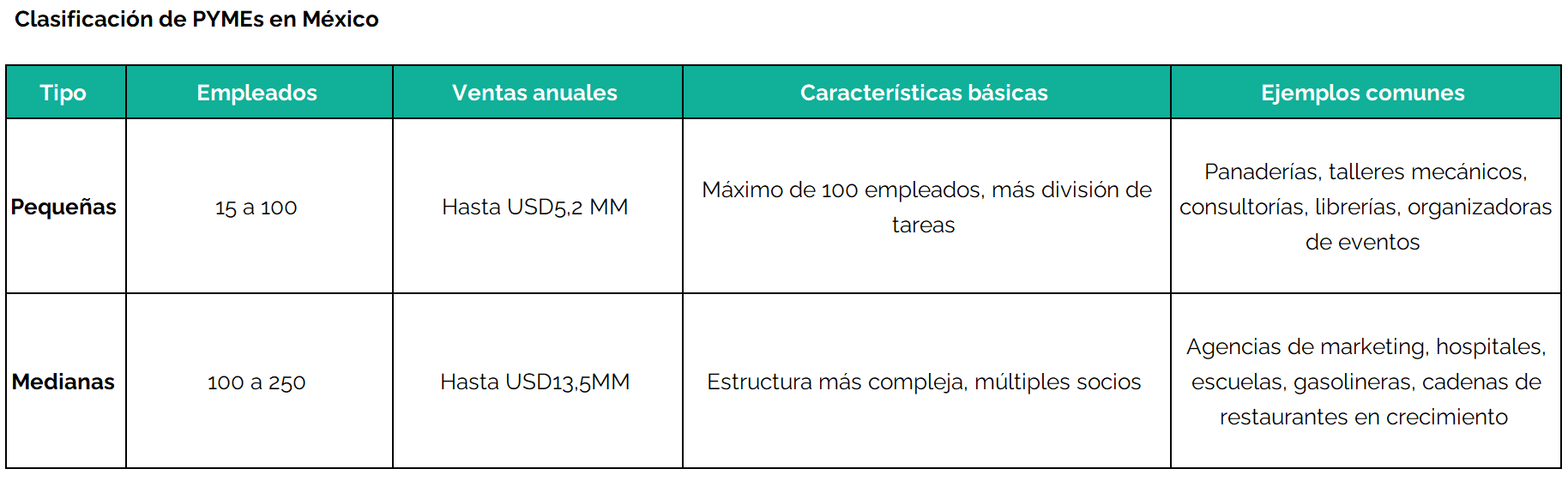
Las PYMEs son la columna vertebral de la economía mexicana, con cerca de 4,9 millones de este tipo de empresas (99,8% del total de empresas en México), las que generan cerca del 55% del PIB y más del 72% del empleo formal, según cifras del Instituto Nacional de Estadística y Geografía (INEGI). El Plan México reconoce esta realidad y busca revertir algunas tendencias mundiales y locales para este tipo de empresas, con la creación de políticas integrales que apuntan a facilitar el acceso al crédito, capacitar talento, integrarlas a las cadenas productivas nacionales, y avanzar en la digitalización y sostenibilidad, con el fin de consolidar un crecimiento económico inclusivo y sostenible para el país.
Situación actual y retos de las PYMEs
Aunque las PYMEs mexicanas representan la mayor parte del tejido empresarial y empleo, enfrentan distintos desafíos, tales como:
- Baja productividad y falta de actualización tecnológica.
- Limitado acceso a financiamiento formal y capital para crecimiento.
- Alta informalidad en muchas micro y pequeñas empresas.
- Competencia con grandes empresas y retos para acceder a mercados internacionales.
- Necesidad de capacitación en aspectos administrativos y de mercado.
¿Qué factores contribuyen al crecimiento de las PYMEs en México?
- Acceso a financiamiento: La disponibilidad de créditos y apoyos financieros formales permite a las PYMEs invertir en infraestructura, tecnología y capital de trabajo, facilitando su expansión y profesionalización.
- Capacitación y formación: Programas de capacitación en gestión empresarial, administración, marketing digital y tecnología les ayudan a mejorar su productividad y competitividad.
- Innovación tecnológica: La adopción de nuevas tecnologías facilita la eficiencia operativa, la mejora en procesos y la apertura a nuevos mercados, especialmente en sectores como el comercio electrónico.
- Políticas públicas y apoyo gubernamental: Iniciativas que facilitan trámites, ofrecen asesoría y fomentan la inclusión financiera y digital contribuyen significativamente a desarrollar el sector PYME.
- Integración a cadenas productivas y mercados internacionales: La vinculación con grandes empresas y la participación en exportaciones amplían las oportunidades de crecimiento para las PYMEs.
- Condiciones macroeconómicas favorables: Estabilidad económica, inversión extranjera y fenómenos como el nearshoring generan un entorno propicio para que las pequeñas y medianas empresas aumenten su producción y competitividad.
- Diversificación y profesionalización: Pasar de estructuras simples y artesanales a modelos organizativos con más división de tareas y socios contribuye a un crecimiento sostenible.
Estos factores, combinados, impulsan la capacidad de las PYMEs mexicanas para crecer, generar empleo y contribuir al desarrollo económico del país.
En resumen, las PYMEs en México son múltiples, diversas y esenciales para el desarrollo económico y social, con un gran impacto en la generación de empleo y la actividad económica, aunque enfrentan importantes retos que requieren de un apoyo continuo e innovador.
Cristian Rodríguez P.
Country Head Fynsa México
Previo
El sofá de don Otto
Julio 25, 2025 - 2 min
Siguiente
La importancia de un buen consejo
Julio 25, 2025 - 2 min