


Fynsa

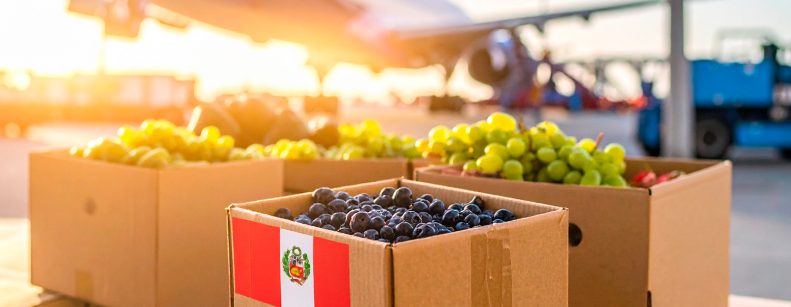
El sector agrícola exportador del Perú cerró 2024 con un récord histórico de ventas por US$ 12.784 millones, lo que representa un crecimiento del 22,1 % en comparación con el año anterior. Sólo en diciembre, la balanza comercial agraria alcanzó un superávit de US$ 6.483 millones, un 50,7 % más que en el mismo periodo de 2023. Este sólido desempeño consolida al Perú como uno de los principales exportadores mundiales de frutas, con un liderazgo destacado en arándanos, paltas y uvas.
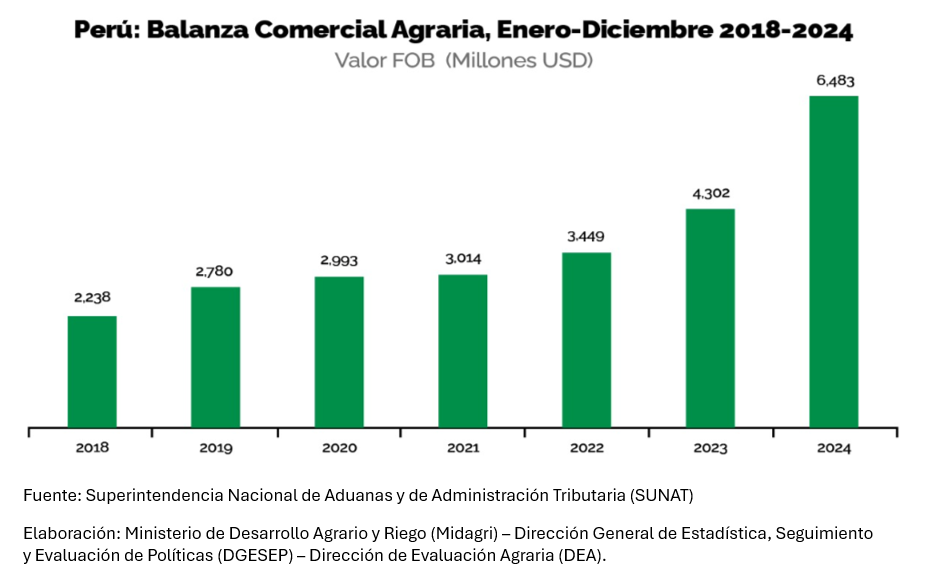
Aunque para 2025 se anticipa un crecimiento más moderado del 5 %, el sector agro exportador peruano enfrenta desafíos clave. Entre ellos, destaca la necesidad urgente de una nueva Ley de Promoción Agraria que incentive la inversión, fomente la formalización laboral y brinde herramientas para enfrentar los recientes cambios en el entorno comercial internacional, en particular los nuevos aranceles impuestos por el gobierno de Donald Trump.
Impacto arancelario
Desde el 5 de abril de 2025, Estados Unidos aplica un arancel base del 10% a todas las importaciones, incluidos los productos agrícolas peruanos, como parte de su iniciativa denominada “Día de la Liberación”. Esta medida impacta directamente en las exportaciones de arándanos, el principal producto agro exportador del país, cuyo 55% tuvo como destino el mercado estadounidense en 2024. Le siguen los Países Bajos (21%) y Hong Kong (9%), que en conjunto concentraron el 85% del volumen exportado.
No obstante, el impacto real del arancel aún está en evaluación. No queda claro cómo se distribuirá el sobrecosto del 10% a lo largo de la cadena de valor. La presión sobre los precios se origina, en gran medida, en el propio mercado peruano, donde tanto el volumen disponible como el momento de salida del producto influyen significativamente en los precios locales.
El impacto final del nuevo arancel aún no está completamente definido. Dado que los arándanos no son un bien de primera necesidad y su consumo se concentra en los segmentos socioeconómicos medios y medio-altos, se prevé que la demanda se mantenga relativamente estable. En este escenario, es probable que el sobrecosto del arancel del 10% sea asumido de manera compartida entre importadores y exportadores.
Estrategias frente al nuevo entorno
El sector agro exportador peruano ha demostrado una notable capacidad de adaptación, pero el contexto actual exige nuevas estrategias centradas en la diversificación de mercados y en políticas que fortalezcan su resiliencia frente a escenarios comerciales adversos. Según el ministro de Desarrollo Agrario y Riego, Ángel Manero, Estados Unidos sigue siendo el principal destino de las agroexportaciones peruanas, seguido por Europa. No obstante, el país busca avanzar en la firma de un tratado de libre comercio con la India y expandir su presencia en el sudeste asiático, lo que abriría nuevas oportunidades y sería clave para reducir la exposición a riesgos geopolíticos y comerciales.
Armando Herrera
Gerente General Fynsa Perú


