


Fynsa


Últimamente hemos escuchado constantemente en los medios sobre una posible recesión y una inflación que está siendo difícil de controlar por parte de las grandes potencias del mundo. Pero la pregunta es cómo esto nos afecta y cómo podemos protegernos frente a estos escenarios en término de inversiones.
Una de las formas más tradicionales para combatir la inflación siempre ha sido alzar las tasas de interés, lo que tiene consecuencias directas en el aumento del costo de vida y la caída en el precio de las acciones, bonos y toda clase de activos.
A pesar de las ya conocidas consecuencias, Estados Unidos nos ha mostrado un tipo de inversión que no se ha visto afectado en periodos de alzas de interés y ha mostrado ser sumamente resiliente en tiempos turbulentos, llamado deuda privada, y en particular aquella deuda que incorpora como tasa de interés la conocida floating rate (tasa flotante).
Antes de entrar a la deuda privada propiamente tal, es crítico aclarar que la deuda privada es parte de un mercado distinto a los ya conocidos High Yield Bonds y Syndicated Loan Banks, debido a que su estructura está orientada a financiar empresas pertenecientes al mercado medio en USA. La principal ventaja que tienen las inversiones de deuda privada es que, al ser deuda, tienen mayor prioridad de pago antes que el equity (menor riesgo y retorno). A su vez, dentro de los tipos de deuda podemos encontrar distintas categorías y prioridades de pago, que consisten típicamente en senior, mezzanine y subordinada.
Las principales características de la deuda privada son que es un instrumento de inversión sumamente utilizado en los mercados de SME (Small and Medium Enterprises) y, en segundo lugar, que son emitidos a floating rate. Por consiguiente, la deuda privada es hecha o formada para las SME basadas en sus flujos de caja y securitizadas por deuda senior en su estructura de capital.
¿Qué significa esto? Significa que los cupones de efectivo de esta deuda privada se reestablecen con mayor periodicidad a medida que aumentan las tasas (cada 30 o 90 días) y que, a su vez, tienen vencimientos más cortos que los bonos corporativos (los bonos corporativos tienen duración de 5- 7 años, mientras que los bonos en los SME tienen una de 2- 4 años).
Al tener menor duración y tasas flotantes que se actualizan cada 30 días, se tiene como resultado que la deuda privada tiene desempeños más estables que los High Yield Bond y los Syndicated Loan Banks, debido a que los retornos crecen frente al alza de tasas a través de las mismas tasas flotantes. Otro factor que afecta el desempeño es el hecho que la deuda senior tiene covenants que proveen mayor protección estructural que los bonos corporativos.
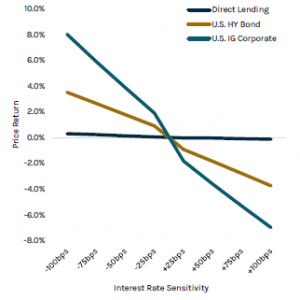
Si se quiere seguir invirtiendo de una manera más segura, pero que a su vez se obtengan buenos retornos, la deuda privada puede ser la mejor herramienta frente al escenario que estamos viviendo actualmente, dada su estructuración con tasa flotante y su orientación hacia las SME’s.
Diego Covarrubias
Equipo AGF
1 Private Credit: Differentiated performance in the midst of rising interest rates. Acres Capital Management


