Fynsa

En las últimas semanas, Estados Unidos ha vivido una gran lección, sobre quién tiene el verdadero poder en el sistema económico global. No es la Casa Blanca. No es Wall Street. Es el mercado de bonos.
Todos están atentos a la ofensiva comercial de Trump contra China y el mundo, con aranceles que buscaban reindustrializar el país y reducir la dependencia estratégica de Beijing. El argumento parece muy válido, ya que Estados Unidos ha perdido terreno en varios sectores clave.
Sin embargo, el error no está en el fondo, sino en la forma. Los aranceles se implementaron con desorden, sin coordinación con el resto de la política fiscal o monetaria. El mercado accionario reaccionó primero, con una caída significativa. Pero el verdadero problema vino desde los bonos del Tesoro.
En apenas tres días, la tasa del Treasury a 10 años subió desde un 4.20% a 4.50%. Esto no es una simple corrección, es un mensaje de los tenedores de bonos, aquellos inversionistas institucionales que exigen mayor rentabilidad cuando detectan políticas fiscales o monetarias más expuestas.
¿Por qué fue tan grave? Porque los bonos del Tesoro son el ancla del sistema financiero global. Bancos, fondos, aseguradoras y gobiernos construyen sobre ellos sus balances y decisiones. Cuando los bonos caen de precio (y suben los rendimientos), todo el sistema empieza a crujir: se encarecen las hipotecas, se frenan las inversiones, los márgenes de las empresas se deterioran y los flujos de capital se tensionan. Y esto ocurre justo cuando el Tesoro enfrenta un calendario de vencimientos intensivo, y cuando sus dos mayores tenedores extranjeros —China y Japón— han comenzado a reducir sus posiciones. El mercado lo sabe. Y reacciona.
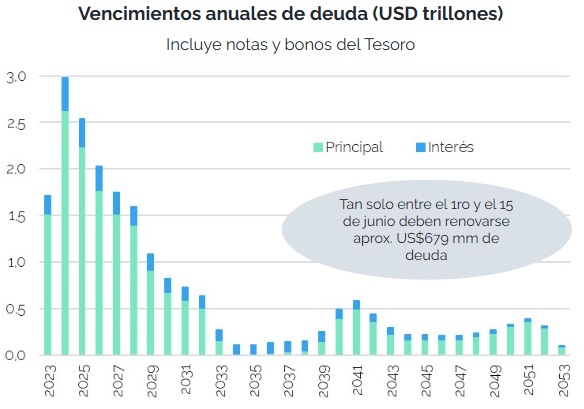
Por eso hoy se habla de recesión: el déficit fiscal de EE.UU. se proyecta en $1.9 trillones para el año fiscal 2025, con una tendencia al alza en los años siguientes. Un déficit creciente implica que el gobierno debe emitir más deuda para financiar sus gastos, lo que podría aumentar las tasas de interés y, en consecuencia, los costos de financiamiento. Esto crea un círculo vicioso: tasas más altas ➝ mayor costo de servicio de deuda ➝ más déficit ➝ más exigencia de tasa por parte de los inversores.
Este episodio nos deja una lección: el verdadero poder no está en Washington ni en Nueva York. No puedes desafiar al mercado de bonos sin consecuencias.
Y en un mundo de déficits fiscales superiores a los US$1,9 trillones, con inflación y una economía financiera apalancada, ese poder seguirá creciendo.
Trump pensó que controlaba la narrativa, pero la narrativa la dicta quien controla el costo del capital. Y ese, hoy, no está en la Casa Blanca.