Fynsa


Colaboración nuam
En los últimos años, nuestro país ha tenido el crecimiento más bajo desde el retorno a la democracia. Las cifras han sido inferiores al 3%: 2,2% en 2022; 0,5% en 2023; y 2,6% en 2024.
Atrás quedó ese ciclo virtuoso que vivió Chile entre 2000 y 2014, cuando el crecimiento económico sostenido coincidió con una profunda transformación de nuestro sistema financiero. El ingreso per cápita aumentó, el PIB creció a un promedio real del 4,5% anual y el ahorro en los fondos de pensiones pasó de representar un 40% del PIB a cerca de un 70%. En términos absolutos, los fondos administrados por las AFP saltaron de US$ 30 mil millones a más de US$ 160 mil millones.
En ese mismo período, la capitalización bursátil superó el 100% del PIB y más de 30 empresas se abrieron a bolsa, muchas de las cuales iniciaron procesos de expansión internacional gracias al financiamiento disponible en el mercado local. Fue una época de visión estratégica y sentido de futuro. Como país, apostamos por construir una economía moderna, conectada al mundo y capaz de canalizar el ahorro hacia inversiones de largo plazo. Y como empresarios, se asumieron riesgos relevantes, se innovó, se escaló.
Este impulso no fue casual. Estuvo estrechamente vinculado a la existencia de un mercado de capitales robusto, con profundidad, liquidez y confianza. Porque cuando el sistema financiero funciona, también lo hace la economía real: las empresas pueden crecer, invertir, contratar y exportar. En otras palabras, el crecimiento económico requiere de un mercado de capitales dinámico que actúe como motor de un desarrollo sostenible.
Sin embargo, desde 2019, ese motor se ha detenido. No se ha registrado ni un solo IPO en el mercado principal y se ha instalado una lógica de aversión al riesgo que frena la inversión y debilita el crecimiento. Sin nuevos emisores, sin nuevos proyectos, sin apetito por financiar el futuro, el mercado pierde profundidad y el país, oportunidades. La consecuencia es clara: menos empleo, menos innovación, menos productividad.
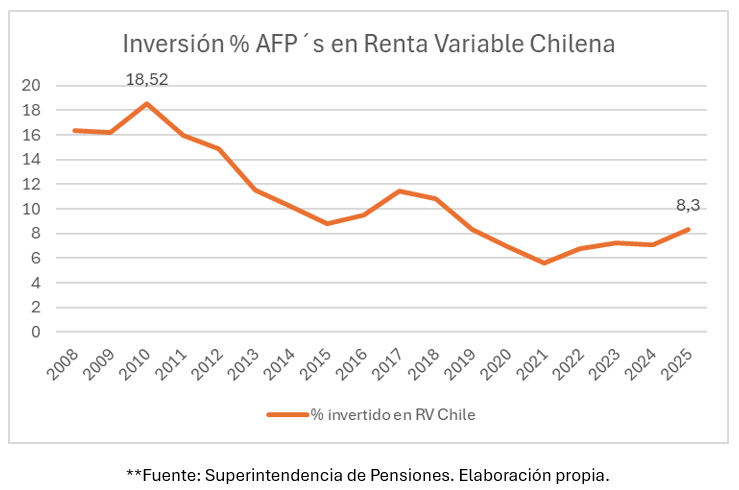
Esa falta de apetito se refleja claramente en la baja sustancial que ha tenido la inversión en renta variable por parte de las AFP en Chile. Según cifras de la Superintendencia de Pensiones, en 2010 las AFP tenían un 18,52% de inversión en renta variable nacional (ver gráfico), una cifra que sólo ha decrecido con el tiempo. Si bien se han observado algunos aumentos puntuales, estos son mínimos y muy inferiores al récord histórico. En la actualidad, el dato no alcanza ni siquiera los dos dígitos, situándose con apenas un 8,3%.
La buena noticia es que aún estamos a tiempo. Iniciativas como ScaleX, un segmento diseñado para empresas emergentes, muestran que existe un camino para recuperar la senda del dinamismo. Pero para lograrlo, necesitamos una política pública decidida a fortalecer el mercado accionario, a valorizar el riesgo bien asumido y a generar las condiciones necesarias para que más inversionistas quieran participar del desarrollo del país.
Volver a crecer requiere volver a creer. En el talento que tenemos, en los proyectos que pueden nacer y en la capacidad del mercado de capitales para canalizar ese potencial hacia el futuro.
Jaime Herrera
Gerente de Unidad de Negocios de Emprendimiento – nuam