Fynsa


El índice S&P 500 es uno de los índices bursátiles más importantes del mundo, compuesto por las 500 empresas más grandes de los EE. UU. Estas empresas están seleccionadas en función de su capitalización bursátil; es decir, mientras más grandes, tienen más influencia.
La estrategia Equal Weight, o de ponderación igualitaria, es una estrategia de inversión que asigna el mismo peso a cada una de las acciones que componen un índice. Esto se hace independientemente del tamaño o capitalización de mercado de cada empresa. Entonces, ¿por qué tiene sentido en las actuales condiciones del mercado estadounidense?
En los últimos años, el mercado en Estados Unidos ha estado dominado por un grupo selecto de gigantes tecnológicos, conocidos como “Magnificent 7” (Mag 7). Estas empresas han sido las principales impulsoras del S&P 500, representando alrededor de un tercio de su capitalización total y explicando cerca del 54% del desempeño del índice en 2024.
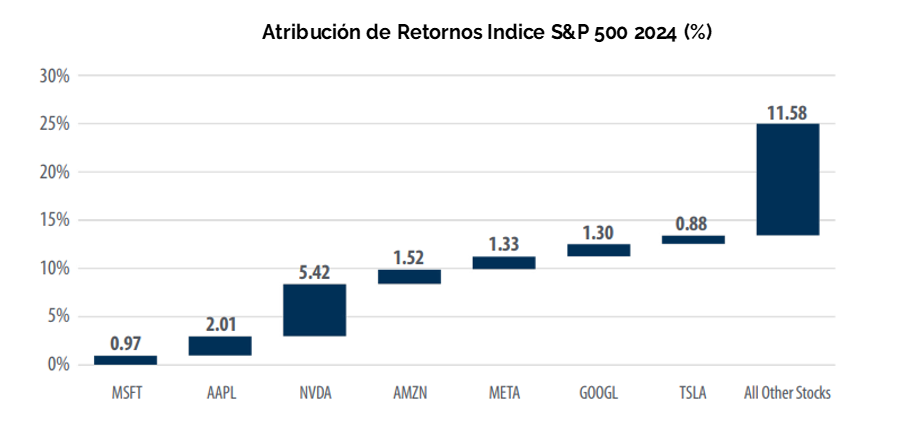
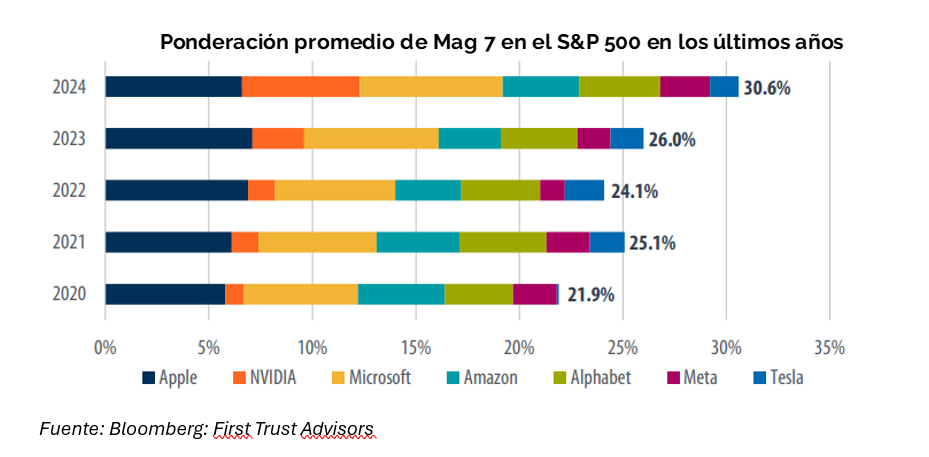
Sin embargo, esta concentración también ha traído consigo riesgos importantes. A medida que las Mag 7 han crecido en valor, el mercado ha pasado a depender de su desempeño, lo que ha aumentado la posibilidad de una sobrevaloración y de una corrección en sus precios. Esta dependencia genera vulnerabilidad ante cualquier cambio en el panorama.
De momento, lo que tenemos es una incipiente rotación del mercado, desde sectores de crecimiento (tecnología) a sectores value, que —sin duda— contribuyen a darle una mayor sustentabilidad al rally del mercado norteamericano. Este cambio se debe a la desaceleración en el crecimiento de las utilidades de las grandes tecnológicas, mientras que el resto del S&P 500 empieza a mostrar signos de fortalecimiento.
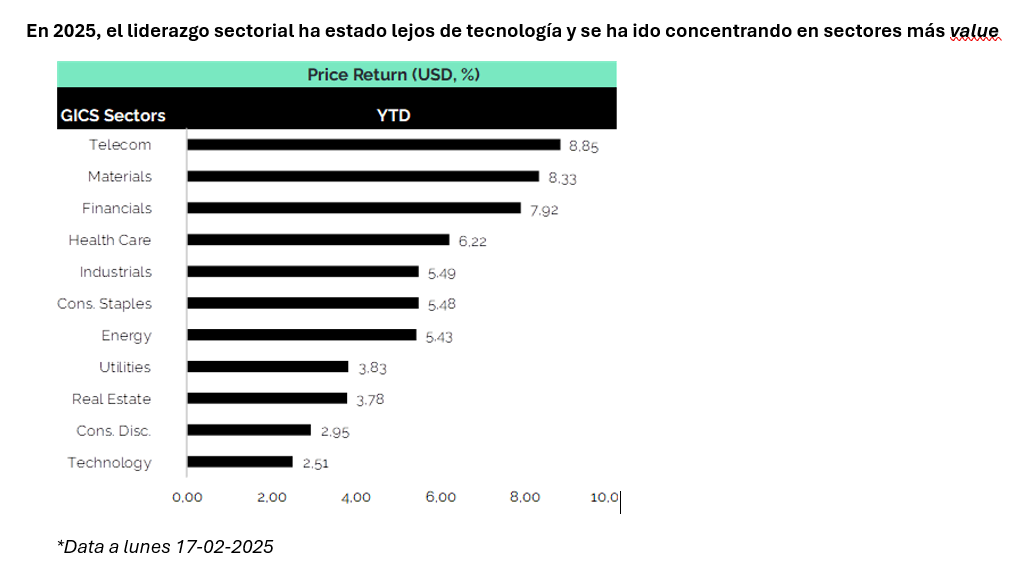
Ante esta situación, una forma de mitigar estos riesgos y aprovechar la recuperación de los sectores más rezagados es tomar una exposición al mercado americano a través de un instrumento que pondere las compañías por igual capitalización: Equal Weight vs el mercado general que pondera por capitalización de mercado.
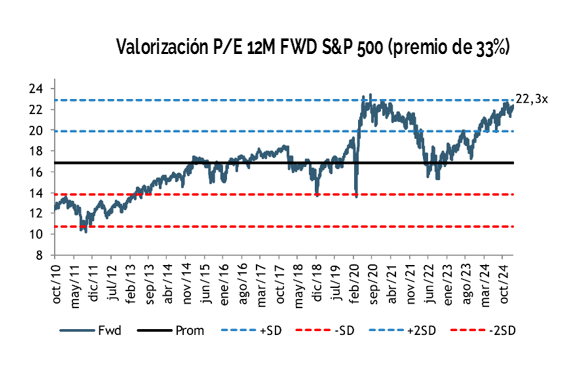
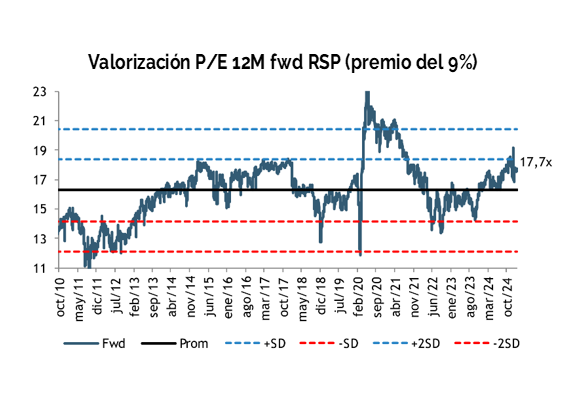
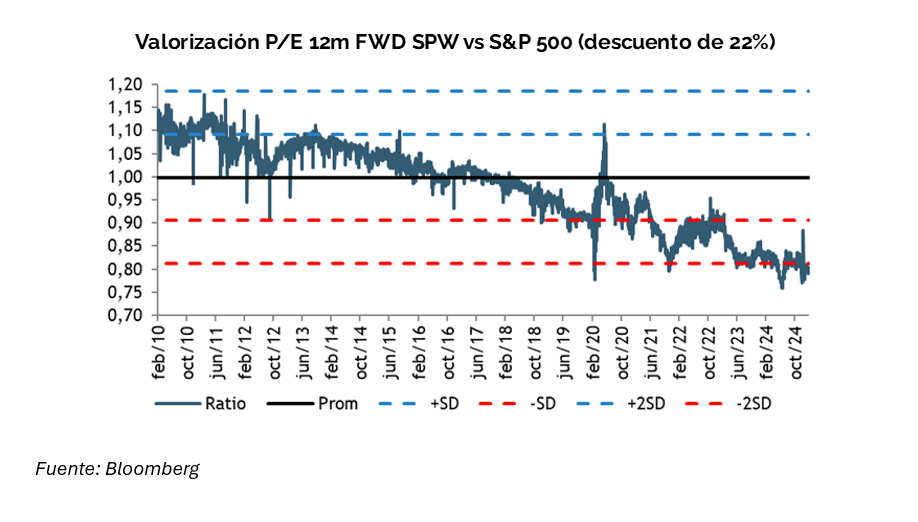
Con todo, proponemos cambiar la exposición a Estados Unidos desde una estrategia ponderada por Market Cap a una de Equal Weight. Actualmente, el S&P 500 transa a ~22x P/U 12m fwd, mientras que el S&P 500 Equal Weighted (SPW) lo hace en ~17x, lo que representa un descuento del ~22%.
Esta estrategia además de reducir la valorización de la exposición a EE. UU., en caso de una reversión del mercado, limitaría el drawdown potencial significativamente.
Ventajas de un cambio táctico de SPY a RSP (ETF):
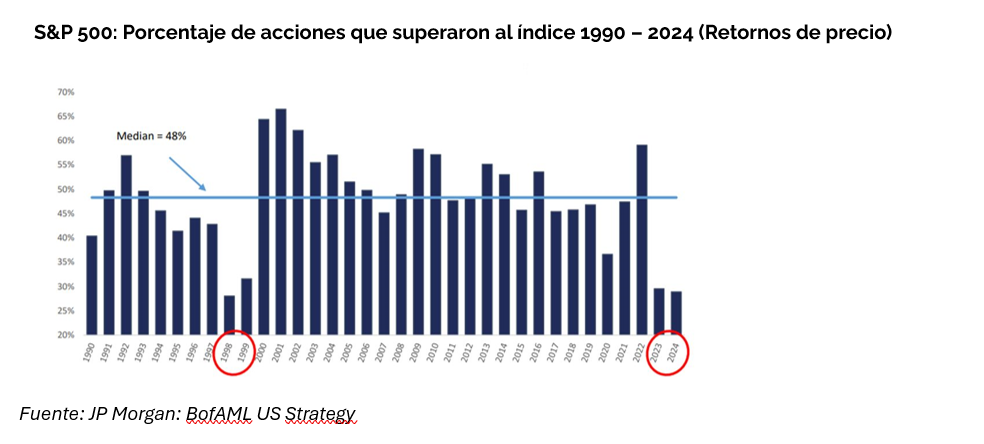
Las 7 empresas más grandes representan más del 30% del S&P 500, un nivel de concentración que no se veía desde la burbuja puntocom de 2000. La rotación en el liderazgo del mercado sugiere una mayor amplitud de retornos en el futuro. En 2023 y 2024, menos del 30% de las acciones del índice superaron su rendimiento, lo que es significativamente inferior a la mediana histórica del 48%, por lo cual este contexto favorece a una estrategia de igual ponderación.
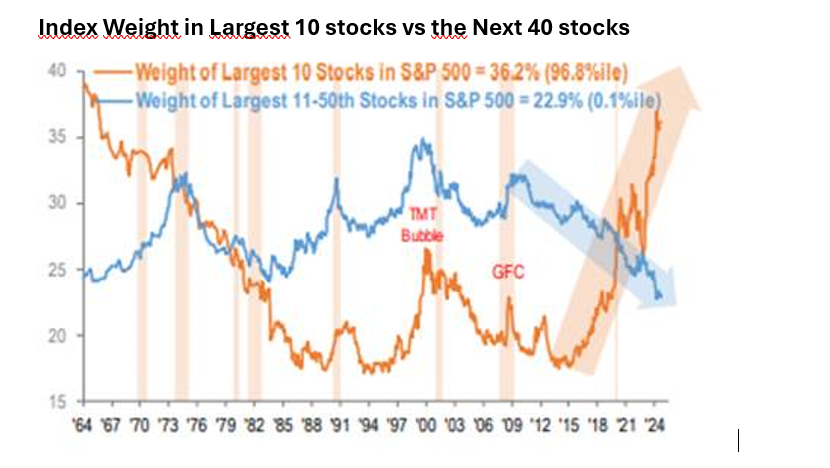
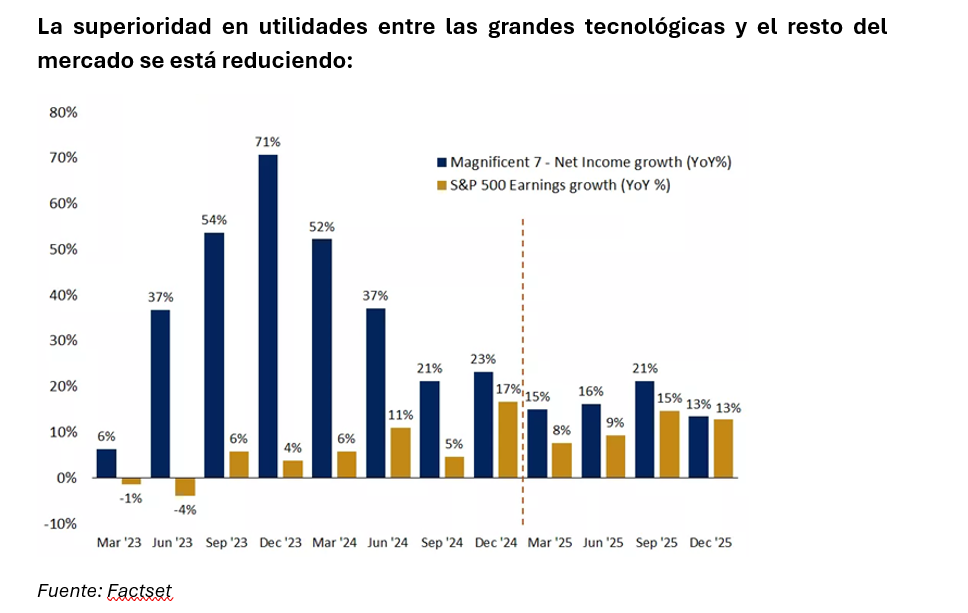
En el 4T24, las “Mag 7” crecieron sus utilidades en un 23%, pero el resto del S&P 500 mostró una aceleración significativa después de dos años rezagados.
Para los próximos trimestres, las expectativas de crecimiento del EPS para el resto del índice han mejorado, mientras que las grandes tecnológicas muestran una desaceleración.
En el pasado, cuando el liderazgo del mercado se ha ampliado y las valuaciones han alcanzado extremos, el S&P 500 Equal Weighted ha superado al S&P 500 tradicional. Casos anteriores incluyen la recuperación post-2000 y el ciclo de mercado de 2021-2022, cuando los retornos de las acciones de igual capitalización en el S&P 500 se fortalecieron.
RSP presenta un menor nivel de concentración y más diversificación sectorial, lo que reduce la dependencia en un solo segmento del mercado. Además, sus valorizaciones, en relación con el S&P 500, están en niveles históricamente atractivos (descuento de ~22%), lo que sugiere un mayor potencial de apreciación en el mediano plazo.
Tomás Haase
Analista de Inversiones Finanzas y Negocios Corredora de Bolsa