Fynsa


En la mayoría de las carteras, la exposición a renta variable estadounidense se canaliza a través de ETF’s que replican el índice de Standard & Poor’s. No es casualidad: son eficientes, líquidos y baratos. Y, sobre todo, representan el estándar contra el cual se mide casi todo lo demás.
A simple vista, parece un rival imbatible. El S&P 500 no solo agrupa a las 500 empresas más relevantes de Estados Unidos, cubriendo cerca del 80% de su capitalización bursátil, sino que además ofrece una diversificación inmediata y costos competitivos. Por eso, la gran mayoría de las carteras globales prefieren ETF’s: son vehículos que capturan el dinamismo del mercado de forma simple y eficiente.
Intentar vencer al S&P 500 ha sido, históricamente, una tarea ingrata. El informe SPIVA (S&P Indices Versus Active), publicado regularmente por S&P Dow Jones, muestra que, en un horizonte de 20 años, menos de un 9% de los gestores activos estadounidenses logra superarlo de forma consistente.
Los números son igual de duros a diez años: solo el 15% vence al benchmark. En Europa, el panorama no es muy distinto: menos del 3% supera al índice en una década.
Las razones son bien conocidas:
En resumen, el S&P 500 es un benchmark exigente: un índice difícil de vencer y, paradójicamente, también difícil de no tener en las carteras.
Sin embargo, hay estrategias que logran hacerlo. Un ejemplo es el T. Rowe Price U.S. Equity Research ETF (TSPA), basado en la estrategia Structured Research de la gestora.
Su propuesta es distinta: mantener neutralidad sectorial respecto al S&P 500, de modo que cualquier diferencia de retorno provenga únicamente de la selección de acciones (stock picking). En la práctica, más de 30 analistas sectoriales gestionan subportafolios independientes dentro del ETF, cada uno con sus propias reglas de riesgo y exposición.
¿El resultado? Desde 1999, la estrategia ha generado un alfa promedio cercano a +1% anual, con un hit ratio de 77%. Incluso en mercados bajistas, ha mostrado un 84% de éxito relativo, con una volatilidad apenas superior en 0,2% al S&P 500. En otras palabras, ha logrado generar exceso de retorno con un nivel de riesgo prácticamente idéntico.
Pero vale la pena poner las cifras en contexto. Ganarle al S&P 500 es posible… pero a un costo enorme. El alfa obtenido, aunque positivo, suele ser modesto (algunos puntos básicos al año) y requiere una estructura analítica y operativa sofisticada: analistas, controles de riesgo, disciplina y consistencia a lo largo de los años.
Además, parte del “premio” se explica por valoraciones algo más exigentes: los múltiplos del TSPA son, en promedio, 0,6 más altos que los del índice. Es decir, existe alfa, pero su captura exige recursos, visión y constancia que solo unas pocas gestoras globales pueden sostener en el tiempo.
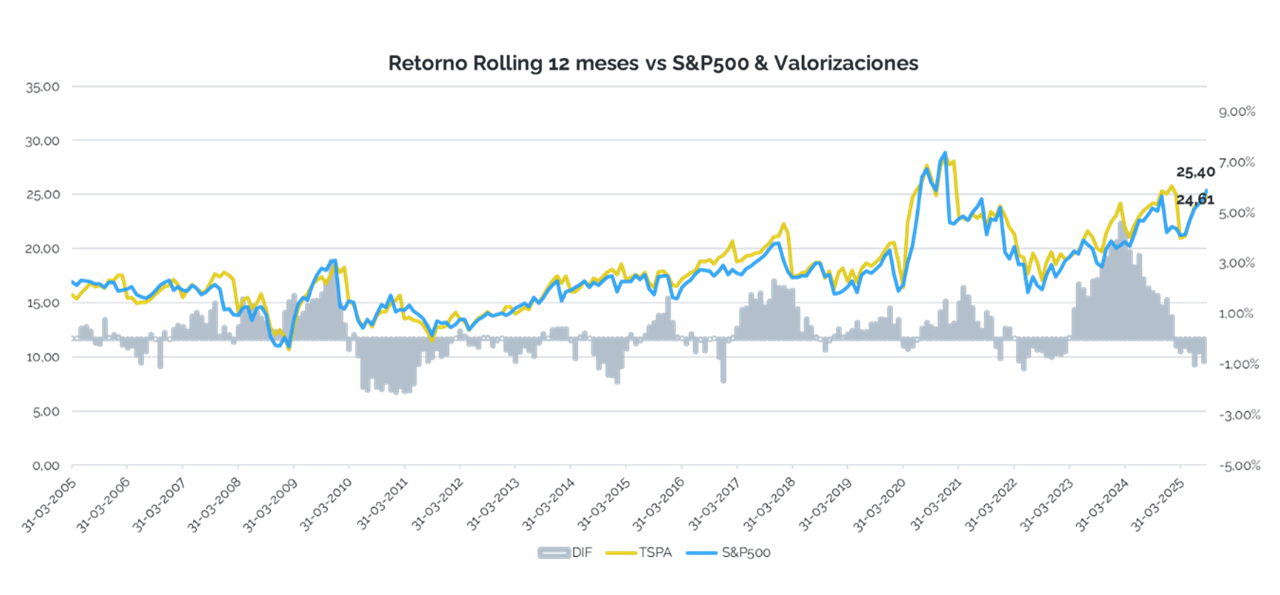
La gran conclusión: primero, sí se puede ganar, pero rara vez de forma sostenible y con el mismo riesgo; segundo, el auge de la indexación no es casualidad: el S&P 500 se ha vuelto tan competitivo que, para la mayoría, replicarlo sigue siendo la mejor decisión. En definitiva, el S&P 500 sigue siendo el rival más difícil de vencer.
La verdadera pregunta no es si se puede ganarle, sino si realmente vale la pena intentarlo.
Ismael Pulido
Family Office Solutions Advisor