Fynsa


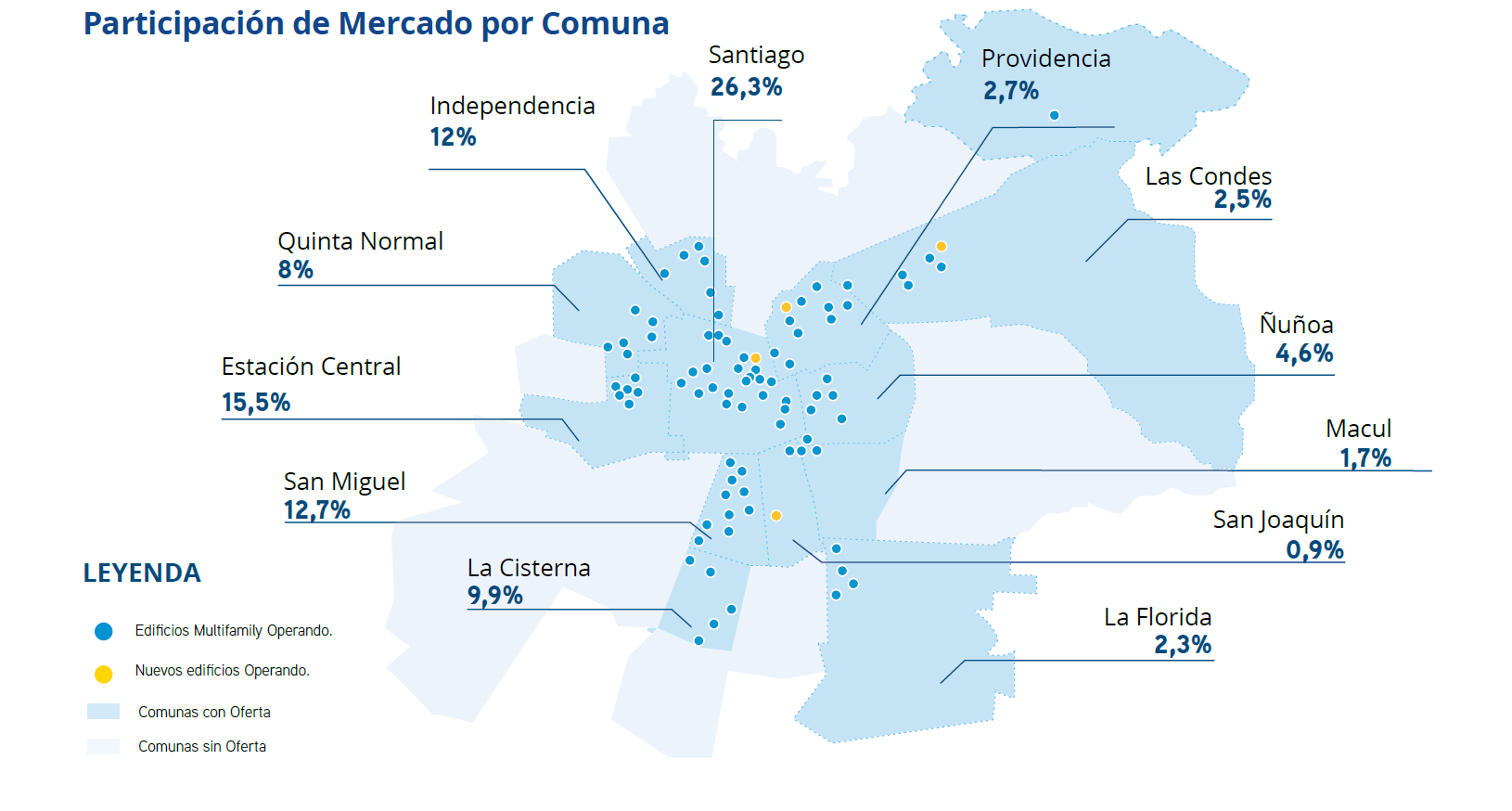
En Chile, el arriendo de vivienda ha ganado protagonismo como solución habitacional, especialmente en zonas urbanas densas como Santiago. En los últimos años, el mercado de renta residencial ha vivido un crecimiento notable, impulsado por factores económicos, demográficos, e incluso regulatorios. El aumento sostenido de precios de las viviendas, el alza en tasas de interés hipotecarias y mayores exigencias para acceder a créditos han empujado a muchas familias a optar por el arriendo como solución habitacional.
En Santiago, el fenómeno se ha hecho especialmente visible. Hoy vemos mayor densidad urbana, migración interna y extranjera, y cambios en estilos de vida (hogares más pequeños, flexibilidad laboral, búsqueda de ubicaciones céntricas). Todo esto ha generado una demanda creciente por viviendas en arriendo, particularmente en formatos multifamily (arriendo profesionalizado).
El cambio hacia el arriendo no responde solo a la imposibilidad de comprar, sino también a una transformación cultural y de prioridades:
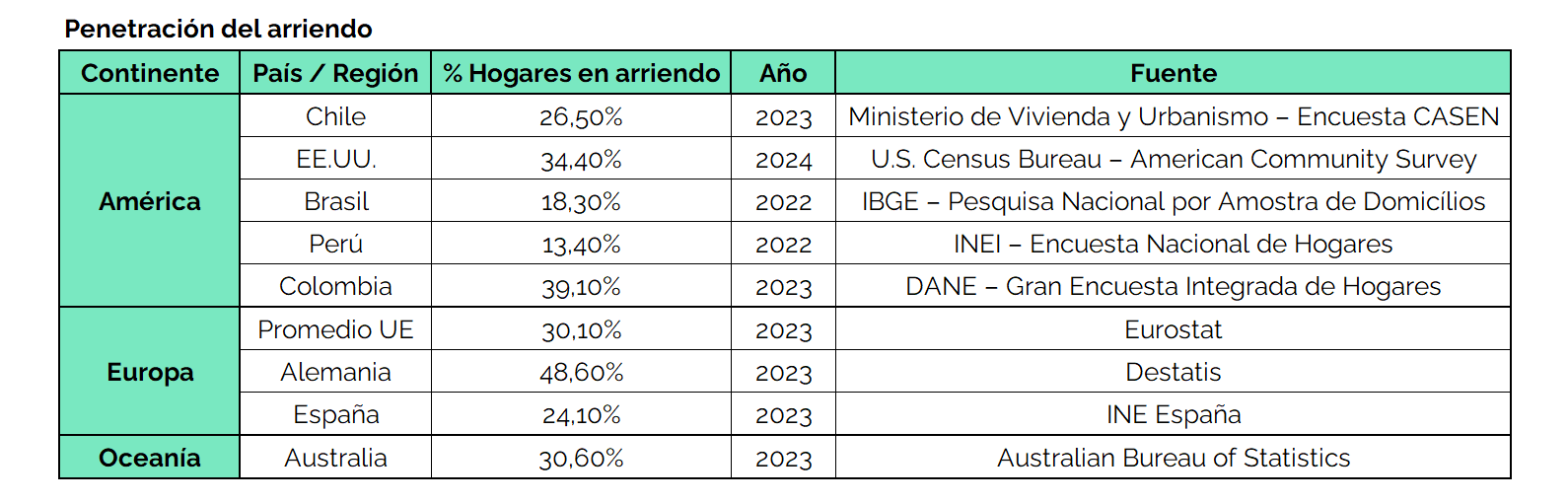
Si bien en Chile el 26,2% de los hogares arrienda, solo alrededor del 5% de ese mercado corresponde a proyectos bajo el modelo multifamily, lo que refleja una participación aún incipiente. En contraste, en Estados Unidos el multifamily concentra cerca del 47% (National Multifamily Housing Council) de las viviendas arrendadas, evidenciando el amplio potencial de crecimiento de esta clase de activo en nuestro país. Actualmente, la oferta chilena de multifamily se concentra mayoritariamente en el segmento medio, por lo que el segmento medio-alto presenta una oportunidad relevante para su desarrollo y consolidación.
El modelo americano se caracteriza por:
Los activos multifamily en Chile, de acuerdo con los últimos informes de mercado, muestran cap rates en el rango de 5,0% a 6,0% en zonas de alta demanda, con variaciones según ubicación, nivel de ocupación y calidad del activo. En comparación con otras clases de activos inmobiliarios, el multifamily ofrece:
Las condiciones actuales sugieren que el mercado de renta residencial seguirá expandiéndose en Chile:
Pese a que Chile aún está lejos de los niveles de arriendo observados en economías desarrolladas, esperamos que se den las condiciones para seguir invirtiendo.