Fynsa

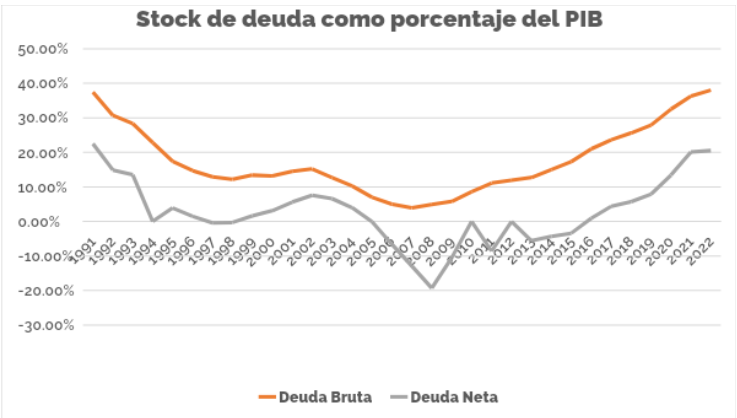
In Chile, gross government debt has risen from 37.4% of GDP in 1991 to 38% of GDP in 2022. However, although it has not changed significantly, the trends are different: as shown in the graph, in 1991 debt was on the decline, whereas today it is on the rise:
This increase in debt can be explained, in simple terms, by the interest the government has paid on the debtand the primary balances (deficits or surpluses) it has maintained as a percentage of GDP:
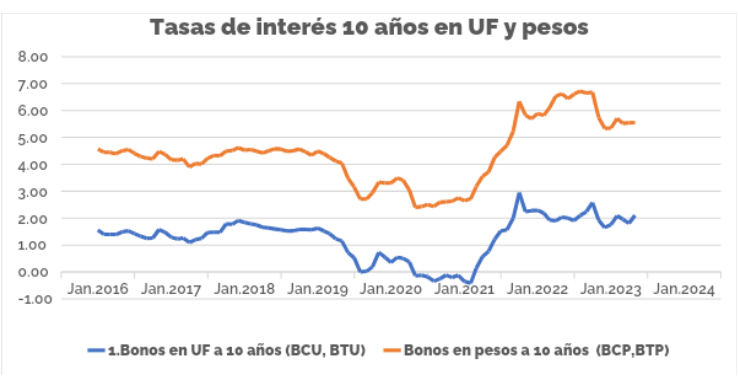
These two indicators are measured as a percentage of GDP, so if the economy grows rapidly, the debt-to-GDP ratio could decline even in the presence of a primary deficit and higher borrowing rates.
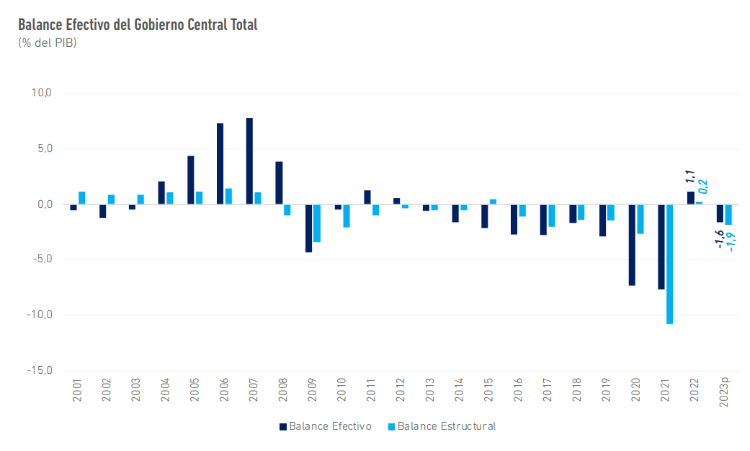
The result of the above is reflected in the government’s actual budget balance, which, as shown below, has remained in deficit in recent years, with the exception of 2022. This indicates that the government’s debt, as a percentage of GDP, has increased throughout most of the decade.
Since debt is a key indicator in assessing a country’s credit risk—and because it affects the day-to-day economy—it is important to keep it at “healthy” levels. To assess it, there are a variety of factors that influence it, the main ones being the interest rate, the primary balance, and economic growth. For this reason, special attention must be paid to these factors in order to understand the dynamics of a country’s debt.
Vicente Dourthé
Fynsa AGF Private Debt Team