Fynsa

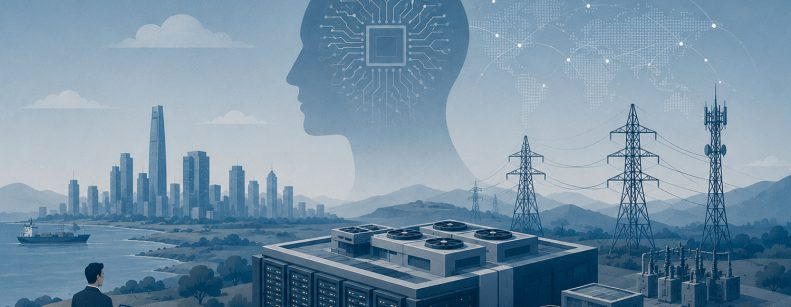
Cuando se habla de inteligencia artificial, la conversación suele girar en torno a modelos, algoritmos y competencia entre gigantes tecnológicos. Pero detrás de cada consulta a un modelo de lenguaje, cada imagen generada o cada predicción automatizada, hay algo mucho más concreto: servidores, cables, electricidad y espacio físico. La infraestructura que hace posible la IA ha pasado a ser un recurso estratégico, y la demanda está creciendo más rápido que la capacidad de construirla.
El tamaño del ciclo de inversión que se viene es difícil de dimensionar. Según McKinsey, estamos ante uno de los mayores despliegues industriales en décadas. Las estimaciones más recientes, recogidas por el Foro Económico Mundial, proyectan que la inversión global en data centers podría superar los US$7 billones hacia 2030, impulsada en gran medida por la adopción masiva de IA y el crecimiento del cloud computing. No se trata sólo de construir más edificios: el desafío incluye el equipamiento eléctrico, los sistemas de refrigeración y la conectividad de alta velocidad que cada centro requiere.
Uno de los efectos más visibles —y menos anticipados— es el impacto sobre los sistemas energéticos. Goldman Sachs proyecta que la demanda eléctrica asociada a los data centers podría aumentar cerca de un 165% hacia 2030. Para ponerlo en perspectiva: los centros de datos ya son el principal motor de crecimiento del consumo eléctrico global en esta etapa de expansión digital, por encima de la industria manufacturera tradicional. Esto está forzando inversiones urgentes en generación, transmisión y almacenamiento de energía, incluyendo un renovado interés en fuentes como la energía nuclear de pequeña escala.
Este fenómeno está redibujando la cadena de valor de la IA. Los beneficios del ciclo no se concentran sólo en las grandes tecnológicas: empresas de infraestructura eléctrica, fabricantes de semiconductores, proveedores de fibra óptica y operadores de centros de datos están capturando una porción creciente del gasto. En la práctica, invertir en IA hoy puede significar tanto apostar por un modelo de lenguaje como por la empresa que construye las instalaciones que lo alimentan.
El desafío que sigue no es de visión, sino de ejecución. La velocidad de construcción, la disponibilidad de energía y la capacidad de coordinar sectores muy distintos se han vuelto variables críticas. Que Google y Blackstone anunciaran recientemente una alianza para desarrollar capacidad conjunta de data centers —según reportó Reuters— es una señal clara: la competencia por infraestructura ya no es secundaria. Es el eje del ciclo.
Fynsa