


Fynsa


Durante este año, el sector healthcare se ha quedado rezagado en comparación a otros sectores del S&P 500, debido a expectativas negativas por parte de inversionistas por posibles medidas del gobierno de EE.UU., tales como recortes presupuestarios y medidas arancelarias hacia este sector. A pesar de esto, las compañías han continuado reportando buenos resultados en general y se encuentran estables en términos de solvencia.
Grandes farmacéuticas como Merck y Pfizer cotizan en apenas 8–9 veces P/E forward, mientras que el índice Healthcare en su conjunto opera con un descuento cercano al 30% respecto al S&P500. Esta infravaloración no responde a fundamentos de demanda, sino a presiones coyunturales. Históricamente, estas fases de compresión de múltiplos han anticipado rebotes importantes. A medida que se despejen incertidumbres regulatorias y se normalice la inversión en innovación, el sector podría revalorizarse hacia múltiplos más alineados con su crecimiento esperado. Esto convierte a healthcare en una clara oportunidad de “value play” defensivo con catalizadores de mediano plazo, en momentos en que las valorizaciones del mercado americano están altamente cuestionadas.
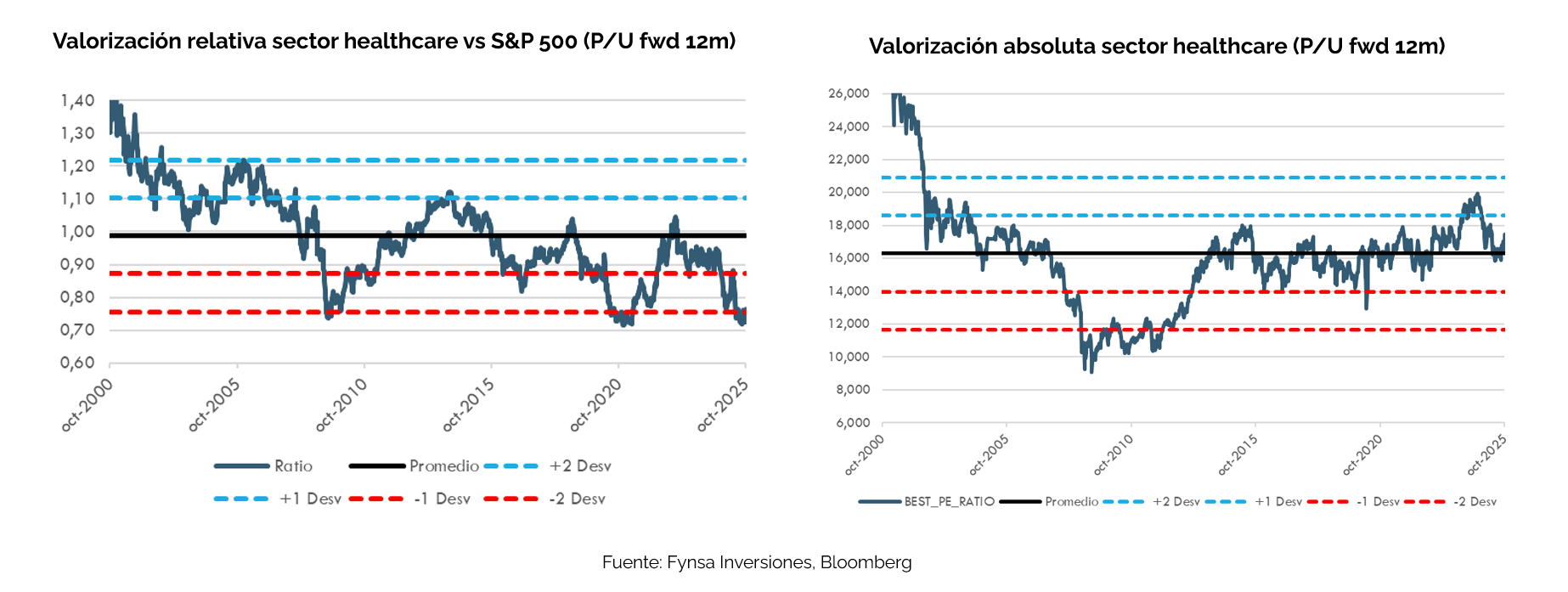
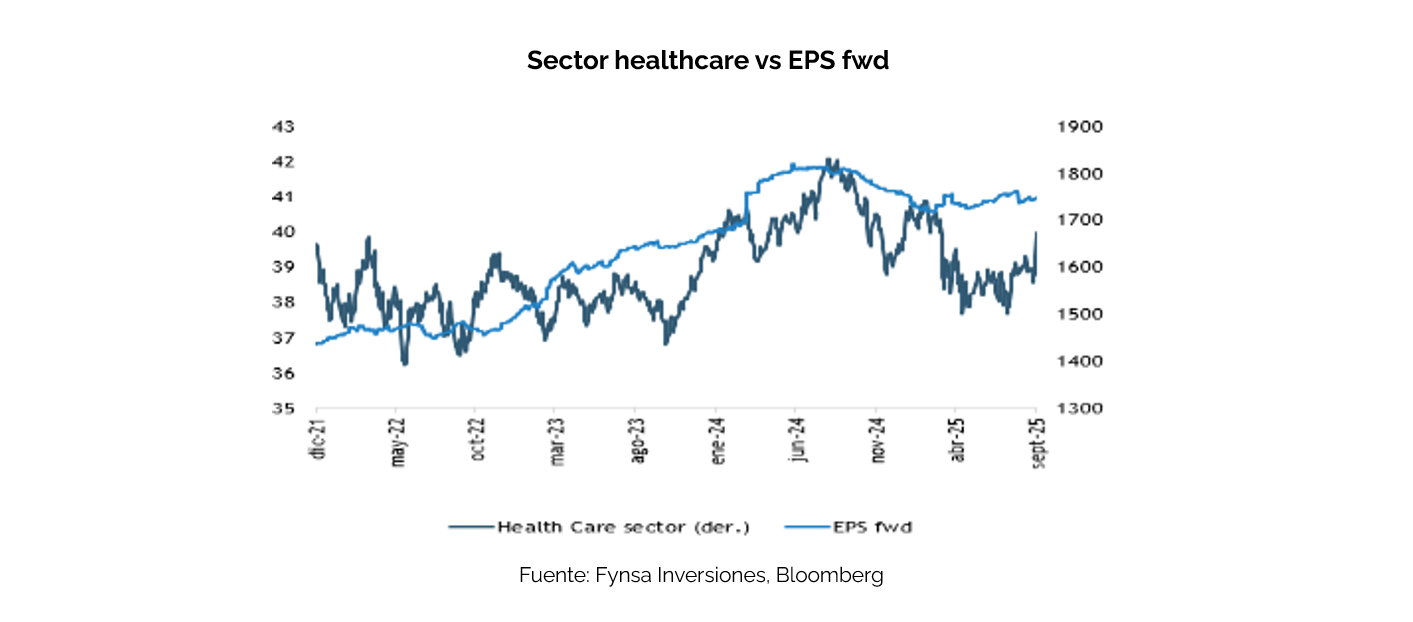
Esta incertidumbre y sentimiento negativo en el sector debiese irse disipando luego de un importante anuncio durante esta semana. El acuerdo de Pfizer con el gobierno de EE.UU. en el marco del programa MFN, que limitó el ajuste de precios en medicamentos únicamente a Medicaid y a nuevos lanzamientos, reduciendo el impacto en ingresos actuales de las compañías. Además, otorgó un período de gracia de 3 años sin tarifas de importación a cambio de mayor inversión en manufactura local. Este marco se interpreta como manejable y replicable para el resto de la industria, disminuyendo el riesgo político que presionaba las valoraciones del sector.
Más allá de la coyuntura, la demanda por servicios y productos de salud sigue sustentada en factores estructurales muy sólidos. El envejecimiento poblacional global incrementa la incidencia de enfermedades crónicas como diabetes, cáncer, Alzheimer y cardiovasculares, asegurando un crecimiento constante de la demanda. Además, los avances científicos abren espacio para terapias dirigidas, medicina personalizada y nuevos tratamientos de alto valor. En este contexto, el sector combina resiliencia defensiva con un pipeline de crecimiento estructural sostenido.
Adicionalmente, creemos que los cambios que se están impulsando en la FDA (Food and Drug Administration) debiesen ser positivos para la innovación en el sector, con foco en agilizar procesos de patentes farmacéuticas. Con esto, la FDA pasa de ser percibida como un obstáculo a convertirse en un catalizador de innovación y valor para las grandes farmacéuticas.
El sector de salud atraviesa una ola transformacional impulsada por innovación tecnológica y científica. La aplicación de IA acelera diagnósticos, descubrimiento de moléculas y diseño de ensayos clínicos, reduciendo tiempos y costos de I+D. En biotecnología, terapias génicas, inmunooncología y los GLP-1 para obesidad y diabetes están marcando un nuevo paradigma terapéutico. En el horizonte emergen áreas como longevidad y edición genética. Este conjunto de innovaciones, sumado al capital riesgo que sigue fluyendo (USD ~8 mm en healthtech solo en H1 2025), convierten al sector en un polo de disrupción con altos retornos potenciales a largo plazo.
Tomás Fernández
Analista de Carteras Discrecionales


