Fynsa

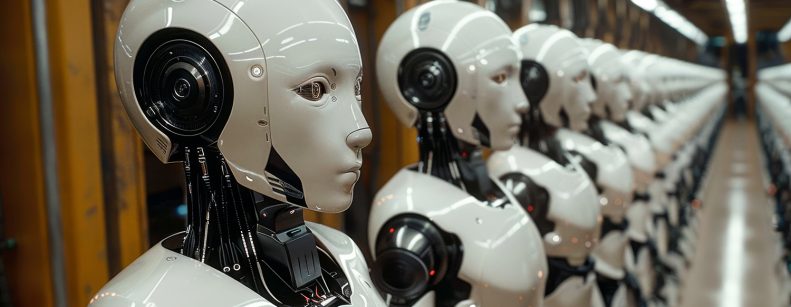
En notas anteriores hemos revisado la historia y el potencial de la inteligencia artificial. Hoy la pregunta que vale la pena hacerse es ¿qué viene ahora?
El futuro de la inteligencia artificial va más allá de los chatbots. Estamos evolucionando hacia agentes de IA que no solo procesan información, sino que también ejecutan tareas complejas y toman decisiones. La próxima fase, que ya está comenzando, es unir estos cerebros digitales con cuerpos físicos: los robots humanoides. La combinación promete un impacto económico profundo y de largo plazo.
Aunque la evolución de esta nueva industria pueda parecer utópica y lejana, lo cierto es que ya existen desarrollos de prototipos y estudios que señalan el impacto que podría tener en distintas áreas de la economía. Una que genera bastante discusión por su mayor impacto es el mercado laboral.
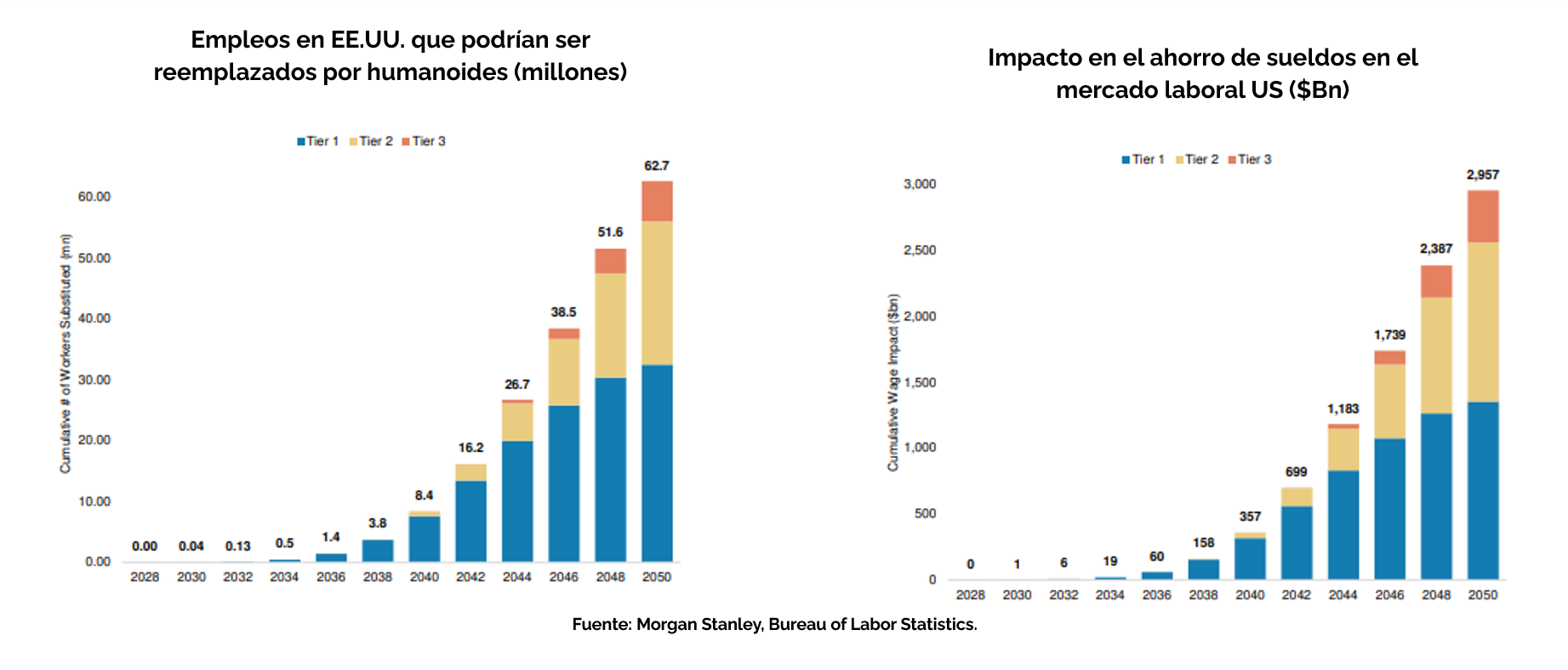
Según estimaciones de Morgan Stanley con datos del Bureau of Labor Statistics, de aquí a 2050 los humanoides podrían reemplazar hasta 62 millones de puestos de trabajo en Estados Unidos, en mayor medida reemplazando trabajos de manufactura y logística (Tier 1) y en menor medida trabajos que requieran de mayor capacidad analítica (Tier 3).
En términos regionales, China lidera el número de patentes y lanzamiento de nuevos proyectos relacionados a humanoides, aprovechando su gran capacidad de producción masiva, EE.UU. mantiene su enfoque en desarrollo de chips y modelos de inteligencia artificial, y Europa y Japón se enfocan en la automatización industrial y precisión.
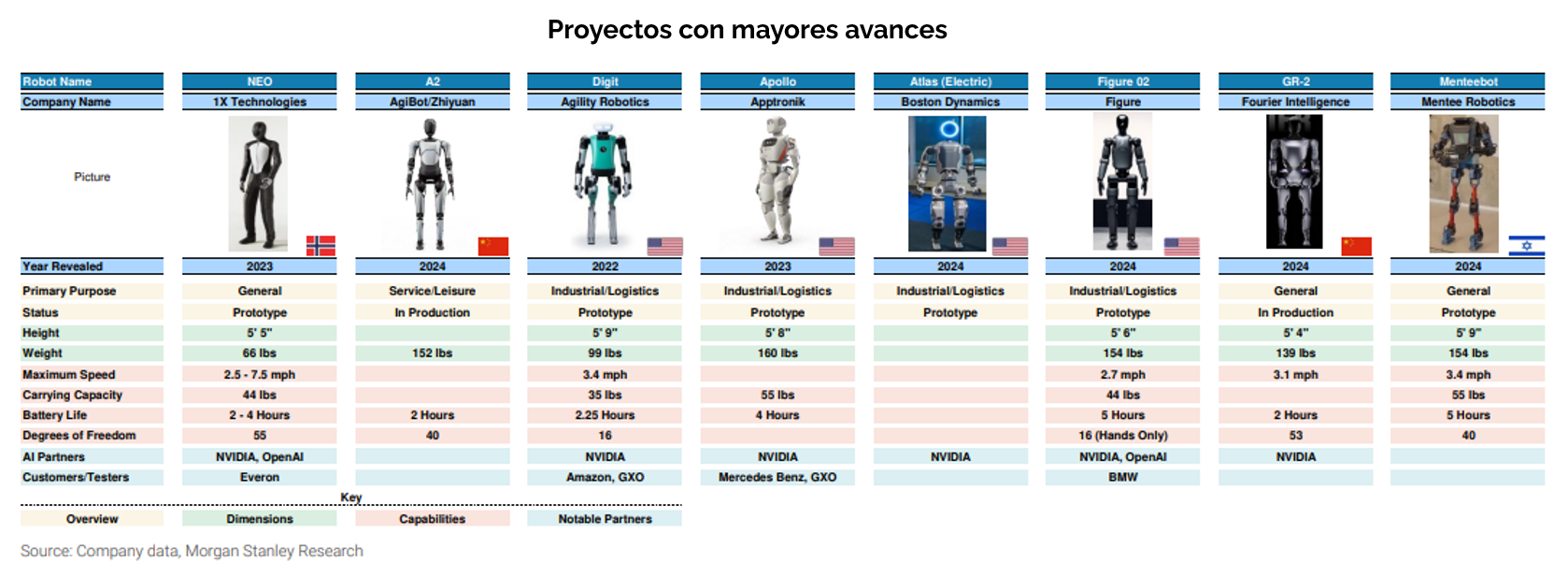
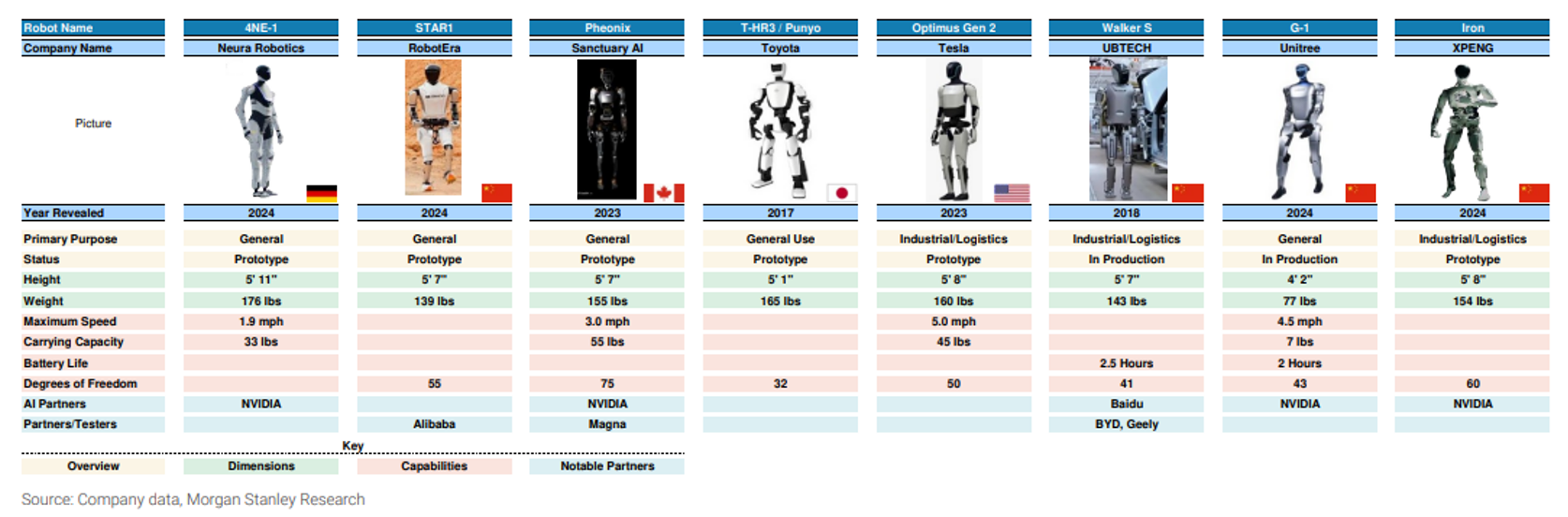
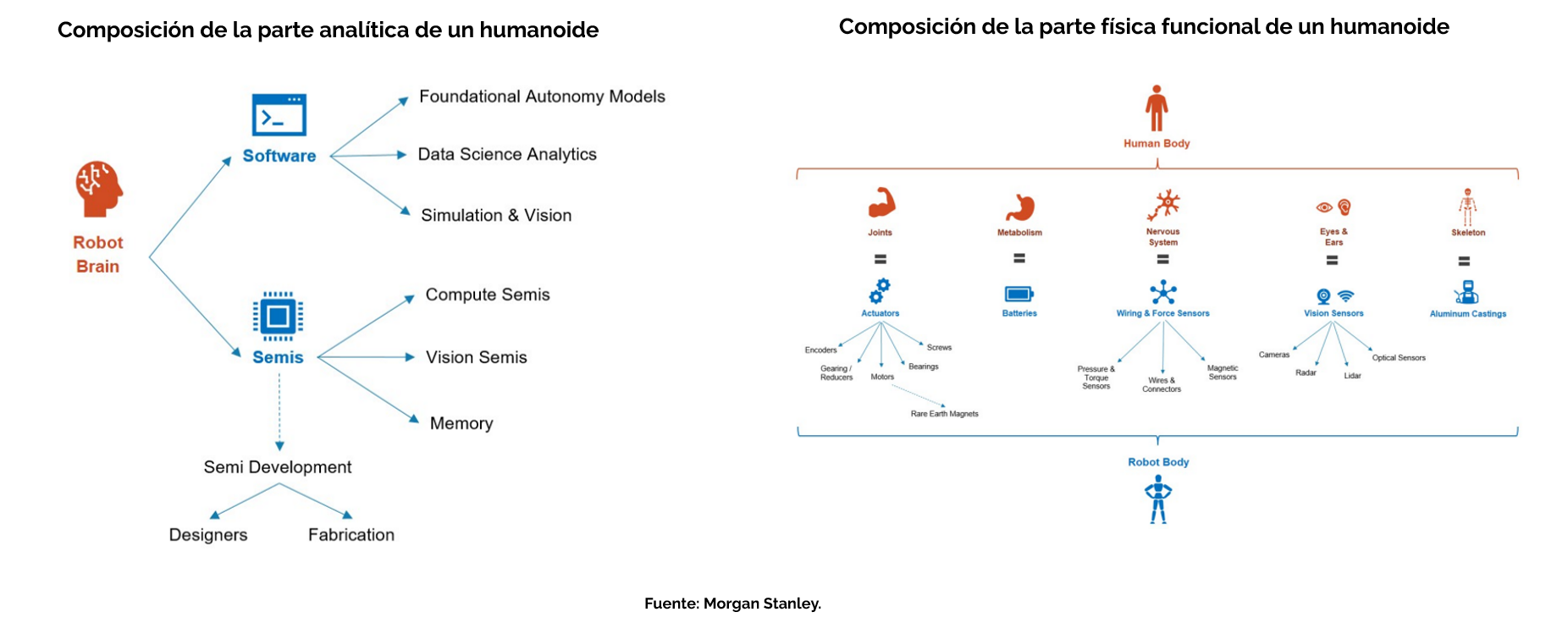
Un humanoide se compone de dos partes clave:
El cerebro, que se compone de sistemas de IA avanzados, software de control y semiconductores de alto rendimiento que procesan información, planifican y toman decisiones.
El cuerpo, en el cual se desarrolla la parte mecánica que entrega la capacidad física: motores, engranajes, actuadores, sensores y baterías.
La integración entre el cuerpo y el cerebro permitirá pasar de resolver problemas en el computador a resolverlos físicamente en el mundo real. El potencial es enorme, pero también hay que considerar que el desafío técnico y de inversión será alto.
Posibles riesgos que podrían frenar la masificación de esta nueva industria:
En cuanto a oportunidades de inversión, el atractivo de esta nueva industria no se queda solo en compañías dedicadas a la fabricación de humanoides, sino que también en otras partes de la cadena de valor, por un lado, semiconductores y software de IA para potenciar el cerebro del humanoide, y por otro lado, los componentes tanto mecánicos como sensoriales para un funcionamiento óptimo del cuerpo del humanoide.
Factores como DeepSeek a comienzos de este año, que reducen drásticamente los costos del uso de IA, actúan como catalizadores para acelerar la adopción.
Estamos frente a una industria en etapa temprana, pero con un potencial de crecimiento que puede redefinir sectores completos de la economía. La convergencia de IA autónoma y robótica humanoide puede aumentar la productividad, reconfigurar el mercado laboral y abrir nuevos espacios de negocio.
Tomás Fernández
Analista de Carteras Discrecionales