Fynsa


En junio de 2025 compartimos nuestra visión sobre la oportunidad en deuda corporativa chilena en dólares (VER), en un contexto donde veíamos spreads atractivos, fundamentos sólidos y un entorno macro en proceso de normalización. A casi un año de esa recomendación, vale la pena volver sobre esta tesis, no solo porque los resultados la validan, sino porque sus principales drivers siguen plenamente vigentes. En este período, la estrategia no solo superó al mercado, sino que lo hizo con menor riesgo, consolidándose como una de las exposiciones más eficientes dentro de la renta fija en USD.
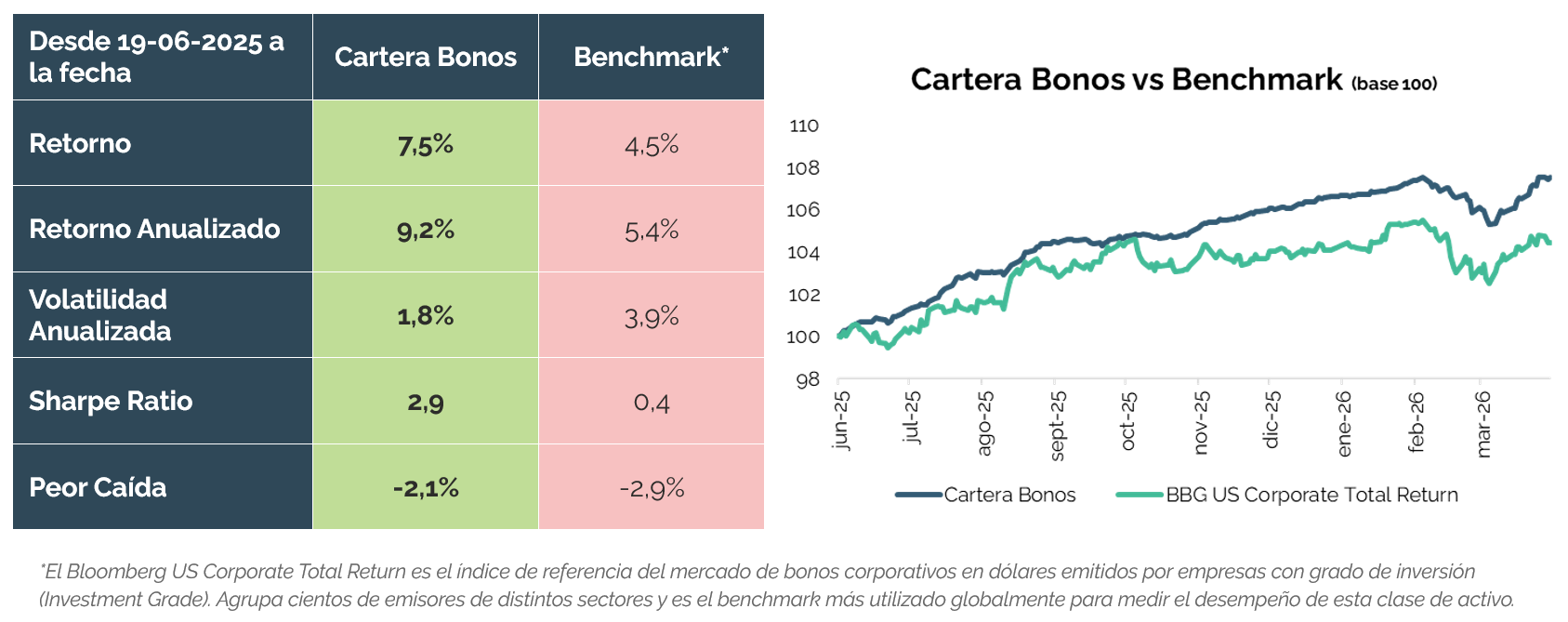
Desde el envío original, la cartera recomendada ha mostrado un desempeño superior al mercado de deuda corporativa global en USD, tanto en términos de retorno como de riesgo. En este período, la estrategia acumuló un retorno de 7,5% vs. 4,5% del benchmark, con una volatilidad significativamente menor (1,8% vs. 3,9%) y un Sharpe ratio de 2,9 vs. 0,4. En simple: se rentó más, con caídas menos pronunciadas y un comportamiento mucho más estable, validando el enfoque selectivo sobre crédito corporativo chileno.
Este desempeño no fue casual. Parte importante de la tesis original descansaba en que los spreads ofrecían un punto de entrada atractivo frente a comparables regionales, algo que efectivamente se ha ido materializando. A esto se sumó un comportamiento sólido de los emisores, con resultados en línea o superiores a lo esperado, balances sanos y buena capacidad de pago, factores que sostuvieron tanto el carry como la estabilidad de la cartera.
En paralelo, el escenario macro ha comenzado a alinearse con lo anticipado. La discusión fiscal hoy muestra un cambio relevante. La semana pasada, el presidente Kast firmó el Proyecto de Reconstrucción Nacional y Desarrollo Económico-Social, que articula un ajuste fiscal estructural tras reconocer explícitamente el deterioro de las cuentas públicas en los últimos años —con déficit estructural en 16 de los últimos 18 años y una deuda que alcanza los USD 155.000 millones.
Más importante aún, el ajuste ya está en marcha: Hacienda ha cifrado en cerca de USD 2.000 millones el recorte del gasto fiscal para 2026, dentro de un paquete total comprometido de USD 3.000 millones. Si bien la tramitación legislativa será el principal foco en los próximos meses, la señal de fondo es clara: se refuerza el ancla fiscal y mejora la percepción de riesgo país, un elemento clave para la valorización de activos en USD.
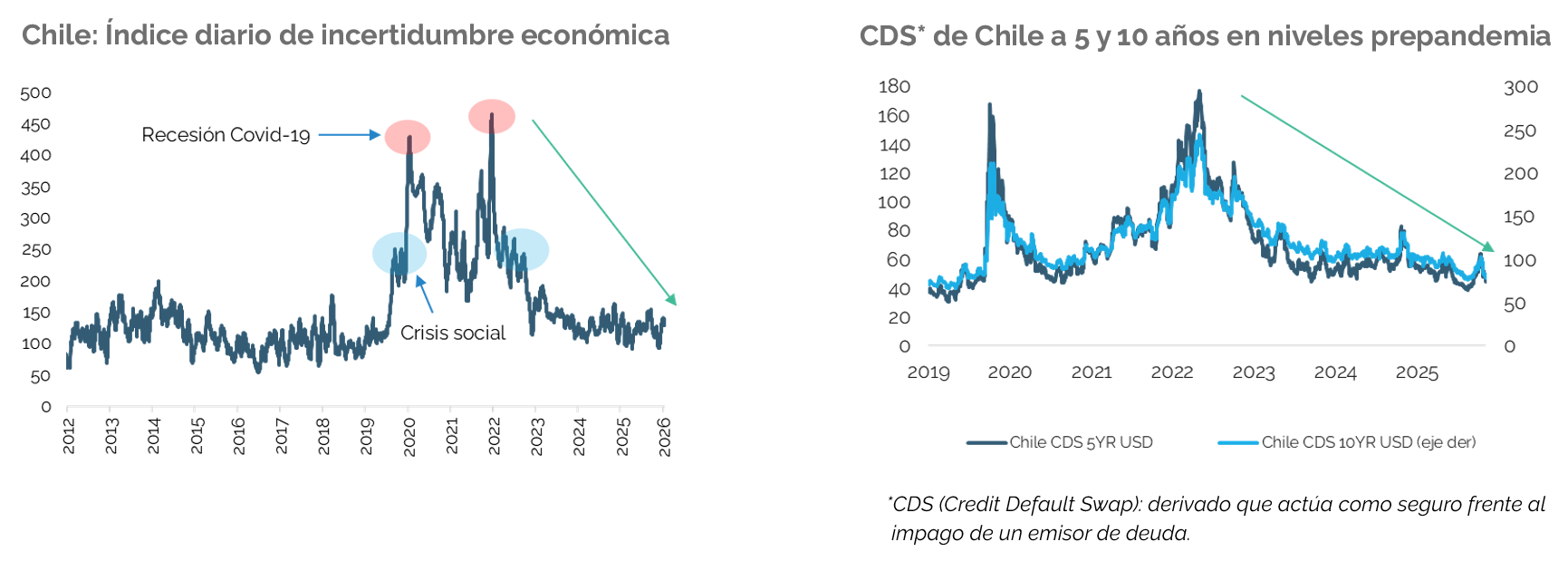
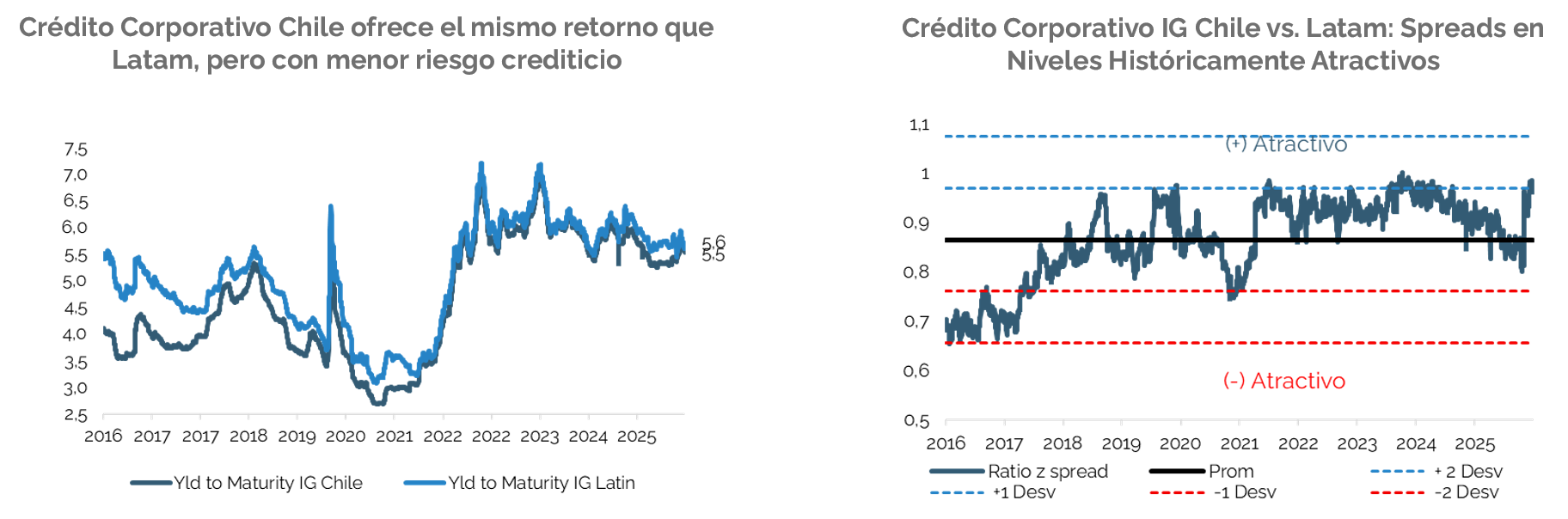
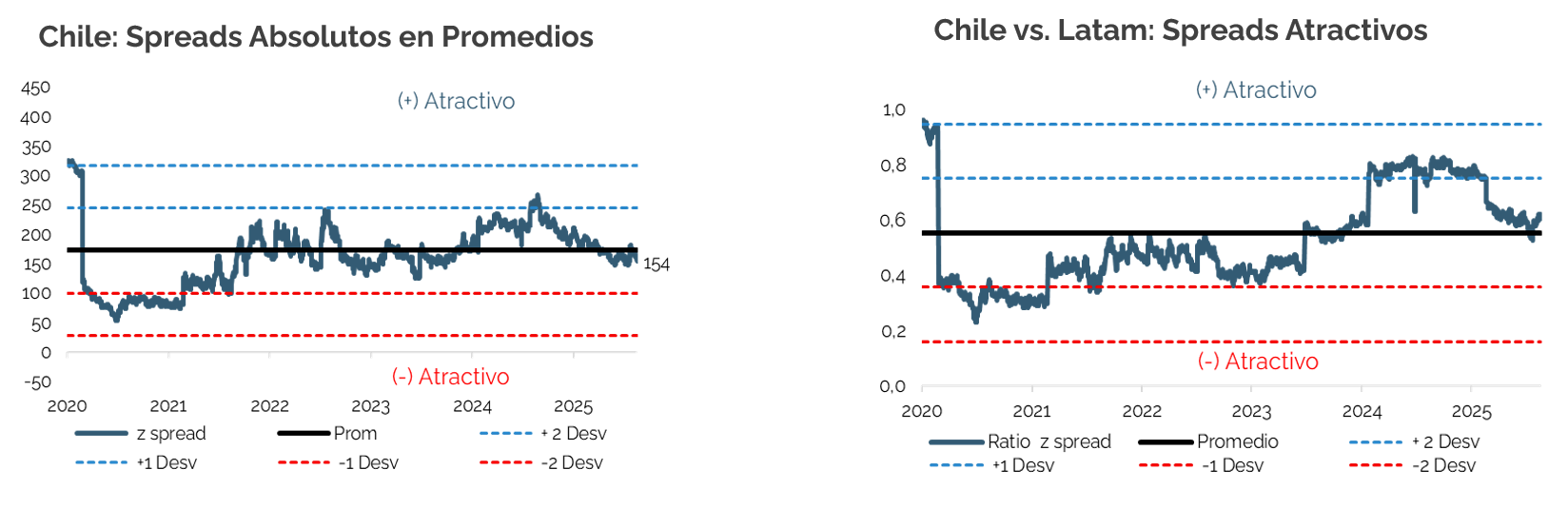
Pero probablemente lo más relevante es que los fundamentos de mediano plazo siguen intactos. El crédito corporativo chileno continúa transando con spreads por sobre sus comparables en Latam, lo que sugiere que aún existe espacio de compresión en un entorno que gradualmente se vuelve más constructivo. En un mundo donde los spreads globales se encuentran comprimidos, este tipo de carry ajustado por riesgo se vuelve cada vez más escaso.
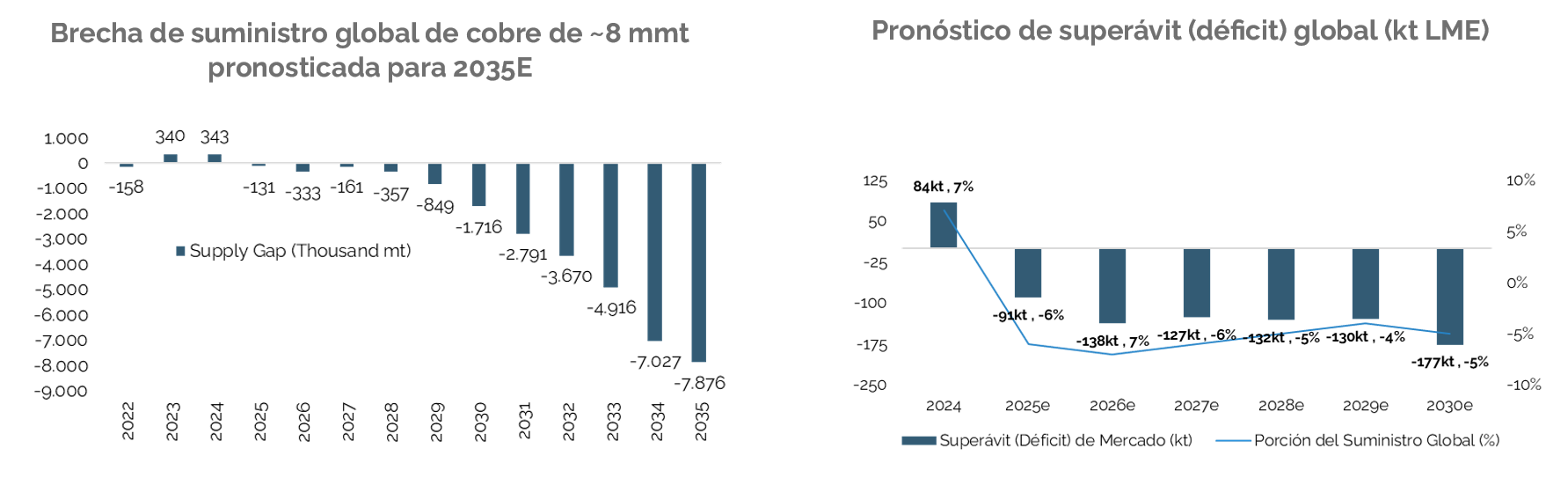
A esto se suma un soporte estructural relevante desde la economía real. Mantenemos una visión constructiva en cobre y litio, donde se observa una demanda estructural creciente frente a restricciones de oferta persistentes. En cobre, esto se traduce en déficits proyectados hacia la próxima década y revisiones al alza en precios; en litio, en un mercado que podría mantenerse en déficit hasta al menos 2030. Este entorno fortalece directamente los balances de emisores exportadores en USD.
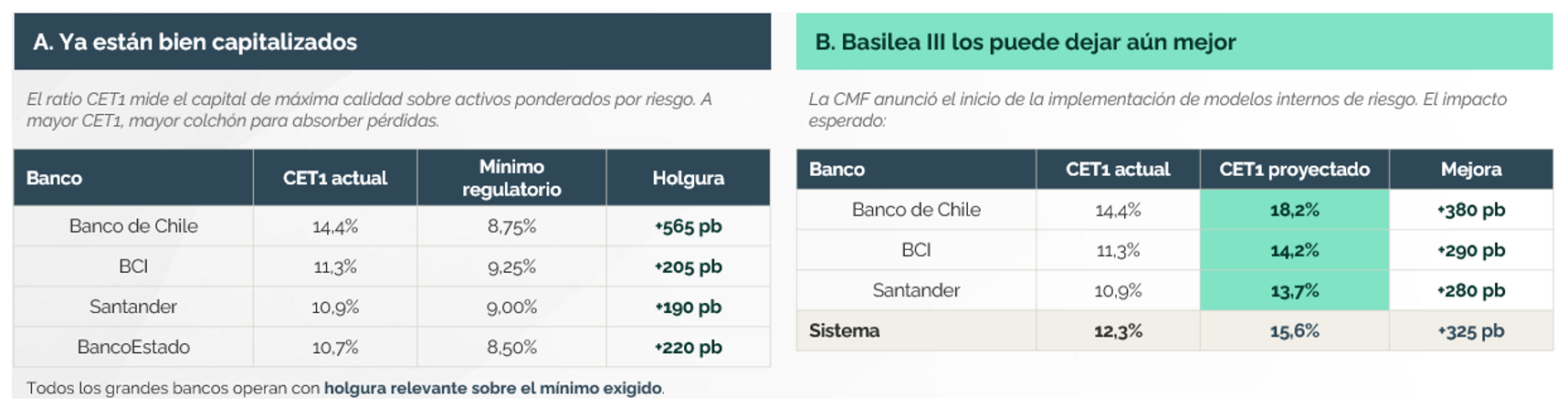
Dentro de este universo, el sector bancario sigue siendo el principal eje de la tesis. Los bancos chilenos combinan alta capitalización (con holguras relevantes sobre mínimos regulatorios), buena calidad de activos y rentabilidad sólida, junto con spreads aún atractivos en términos relativos.
A esto se suma la implementación de Basilea III como catalizador estructural, el cual reduce las exigencias de capital de reserva — al exigirles guardar menos como colchón, los bancos quedan con más capital disponible para prestar y crecer, fortaleciendo aún más sus balances.
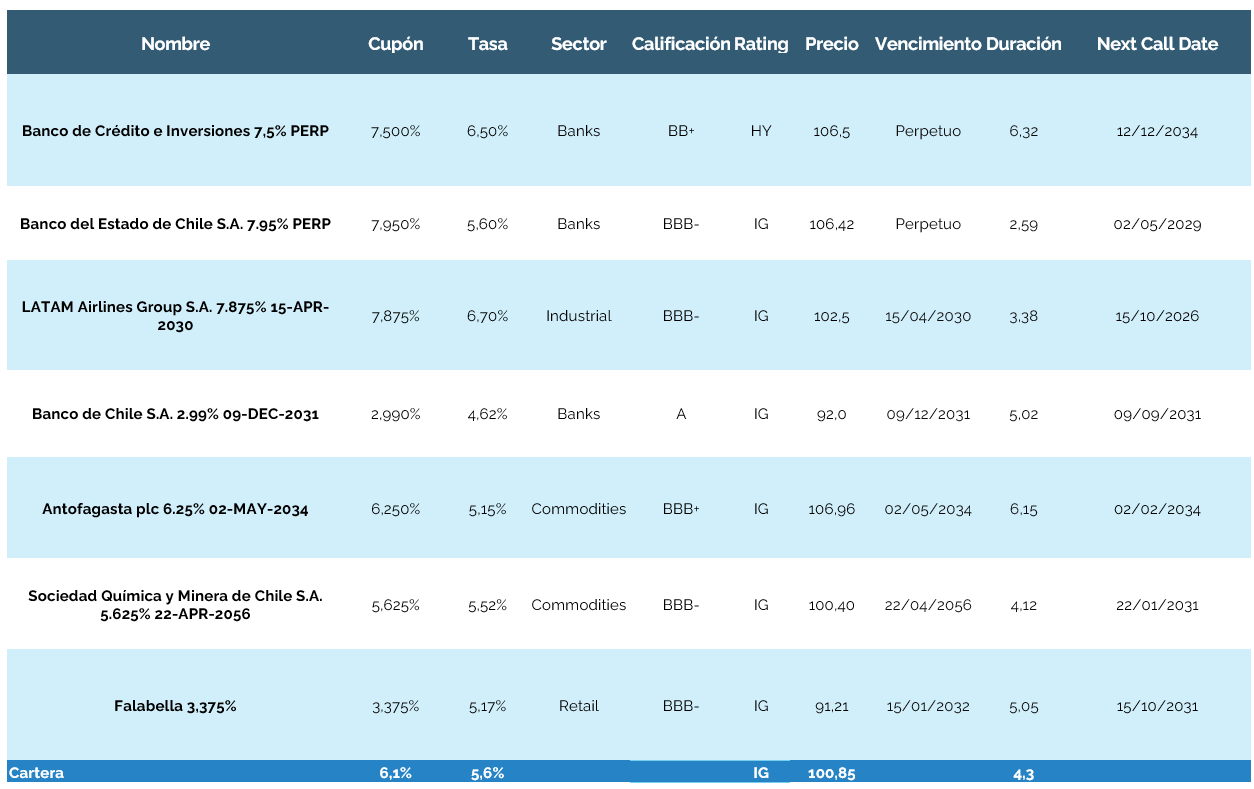
Con esta visión de fondo, hemos ajustado la selección de emisores para capturar mejor las oportunidades actuales. Se mantiene un núcleo relevante en bancos, donde seguimos viendo el mejor balance entre riesgo y retorno, y se incorpora exposición a cobre (Antofagasta), litio (SQM) y retail (Falabella, tras recuperar grado de inversión). En paralelo, se reduce exposición en emisores donde el retorno ya no compensaba de igual forma el riesgo.
En definitiva, la evidencia es clara: la tesis se validó en resultados, los fundamentos se han consolidado y el entorno sigue siendo favorable.
En un contexto donde los spreads aún ofrecen valor relativo y los principales drivers permanecen intactos, la deuda corporativa chilena en USD continúa siendo una alternativa atractiva dentro de la renta fija global.
Felipe de Solminihac
Jefe de Estrategia