Fynsa


Luego de años de turbulencias políticas, crisis sanitarias y presiones sociales, Chile comienza a estabilizar sus fundamentos macroeconómicos y financieros, consolidándose nuevamente como una plaza atractiva dentro de los mercados emergentes. Esta mejora gradual, y la posibilidad de un giro promercado y fiscalmente más austero tras las elecciones de noviembre —que podría actuar como catalizador positivo para los activos locales— sumado a la evolución más favorable del mercado financiero tras la reforma de pensiones, abre una oportunidad concreta en el mercado de deuda corporativa chilena en dólares, con un énfasis particular en el segmento bancario, que combina sólidos fundamentos con spreads atractivos tanto en términos absolutos como relativos.

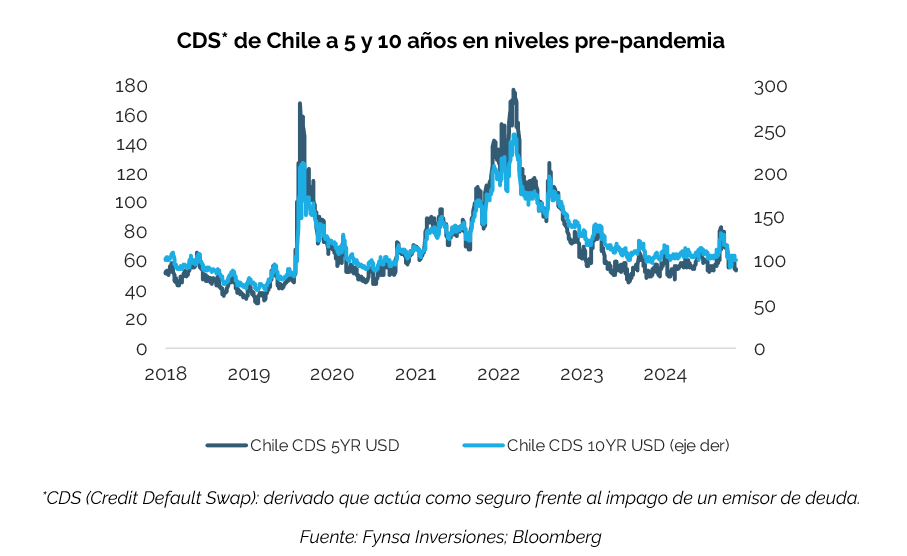
Chile ha sido reconocido por su institucionalidad y disciplina fiscal. Desde los 2000, la regla estructural del gasto público permitió mitigar los ciclos económicos, fomentar el ahorro y responder en tiempos de crisis (la regla del superávit estructural, actualmente conocida como regla de balance cíclicamente ajustado). Esta tradición se ha fortalecido con el Consejo Fiscal Autónomo y la reciente Ley de Responsabilidad Fiscal (2024), que fija metas de déficit y un ancla explícita para la deuda pública.
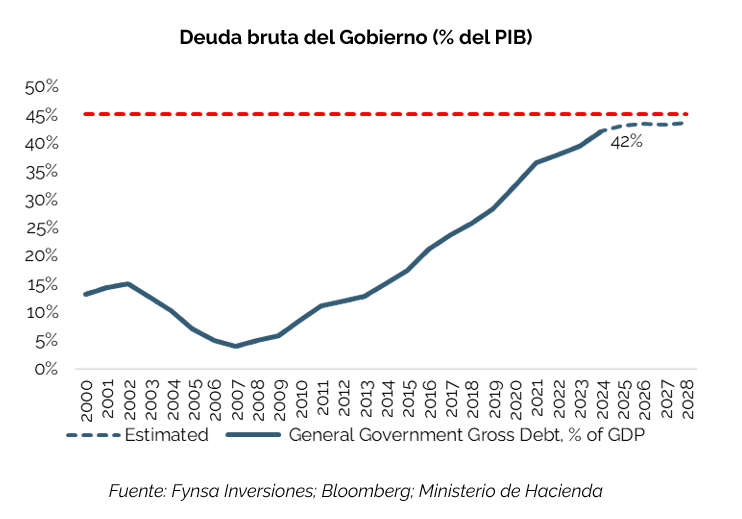
Aun así, el país ha vivido una década fiscal desafiante: entre 2007 y 2024, la deuda bruta del Gobierno Central aumentó de 3,9% a 41,9% del PIB, acercándose al umbral “prudente” de 45% definido por el propio Ministerio de Hacienda. A esto se suma una alta rigidez del gasto, con un 92% del presupuesto 2025 ya comprometido legalmente (según la Dirección de Presupuesto – Dipres), lo que restringe los márgenes de maniobra para el ajuste. Por el lado de los ingresos, medidas estructurales como reformas tributarias o un repunte significativo del crecimiento tampoco parecen viables en el corto plazo.
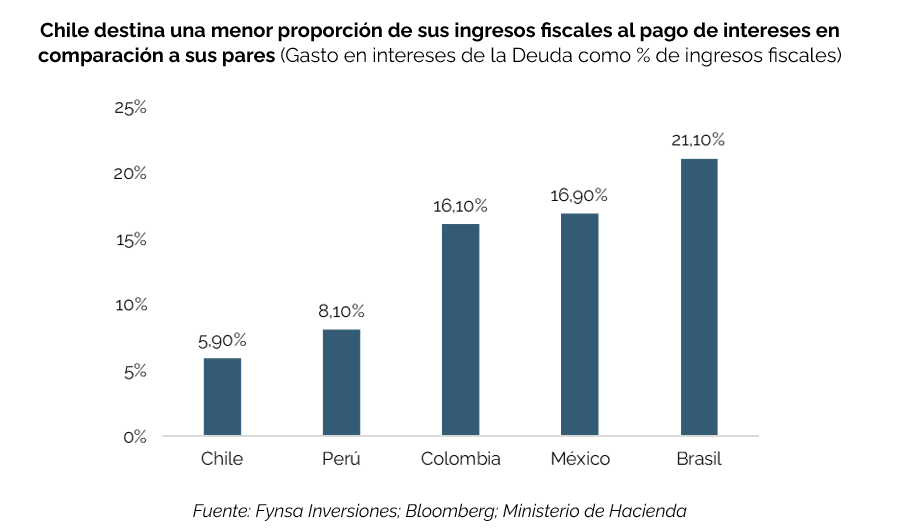
No obstante, hay señales de mejora. El déficit fiscal comenzó a disminuir —de un peak de 3,9% del PIB en 2024 a 2,7%— gracias a recortes en el gasto primario, incluso en un año electoral. Las estimaciones apuntan a una estabilización del déficit entre 1,5% y 2% del PIB, lo que, si bien está sobre la meta oficial de 1%, sigue siendo manejable bajo un crecimiento moderado y un entorno externo más benigno.
Mirando a futuro, hay razones para anticipar una mejora adicional. Las elecciones presidenciales de noviembre de 2025 podrían marcar un punto de inflexión. Las encuestas actuales favorecen a figuras de la oposición con posturas pro-inversión y fiscalmente responsables, lo que contrasta con un oficialismo menos definido en términos económicos. Un cambio político en esa dirección podría impulsar la eficiencia del gasto, contener el déficit estructural y reactivar la inversión privada, actuando como catalizador para los activos locales.
Este escenario también ha sido reconocido por los mercados internacionales. El 23 de enero de 2025, Fitch Ratings ratificó la nota crediticia de Chile en “A-” con perspectiva estable, destacando el “balance soberano relativamente sólido” y una deuda pública como porcentaje del PIB menor que la de sus pares. Además, valoró la gobernanza, la credibilidad macroeconómica y avances como la reforma de pensiones, considerada como un factor que puede contribuir a un mayor desarrollo del mercado de capitales local.
Fitch proyectó que la deuda pública crecerá de forma acotada, de 41,9% en 2024 a 42,6% en el mediano plazo, muy por debajo de la mediana para países con calificación A (55,1%). Esto respalda la visión de que Chile conserva fundamentos macroeconómicos robustos, con margen de mejora si se concreta un entorno político más estable, fiscalmente más austero y orientado al crecimiento.
En este contexto, la deuda corporativa chilena en USD emerge como una alternativa especialmente atractiva en términos de tasa, riesgo y retorno. Empresas emisoras de deuda en Chile, particularmente aquellas clasificadas como Investment Grade (IG), presentan fundamentos financieros sólidos, con balances robustos, niveles de apalancamiento acotados y una adecuada cobertura de intereses.
Además, las compañías chilenas vienen mostrando un buen “momentum” en sus resultados operativos y financieros, con una recuperación sostenida en márgenes y generación de caja, lo que contribuye a fortalecer su capacidad de pago y mantener estables sus métricas de crédito.
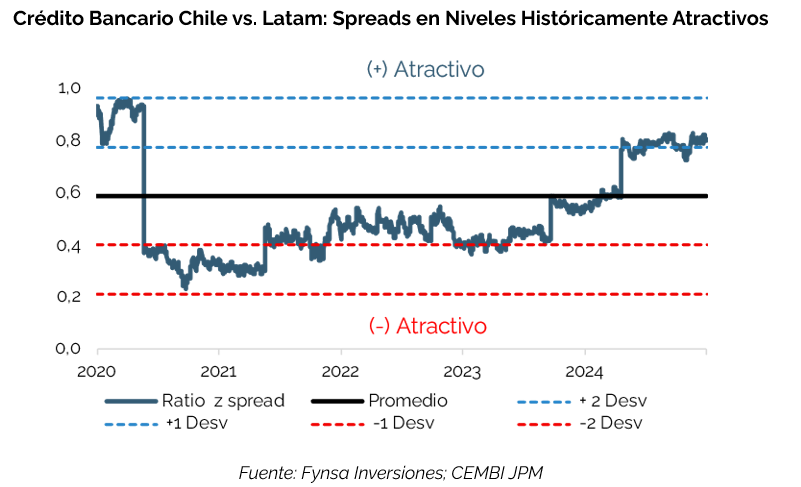
Desde una perspectiva cuantitativa, el spread promedio del crédito corporativo IG chileno frente a Latam se encuentra alrededor de una desviación estándar por encima de su promedio de 10 años, lo que representa una clara señal de valor relativo. Esta prima no parece estar justificada por deterioros fundamentales, sino más bien por incertidumbres temporales que podrían disiparse con un entorno político más claro tras las elecciones presidenciales de noviembre.
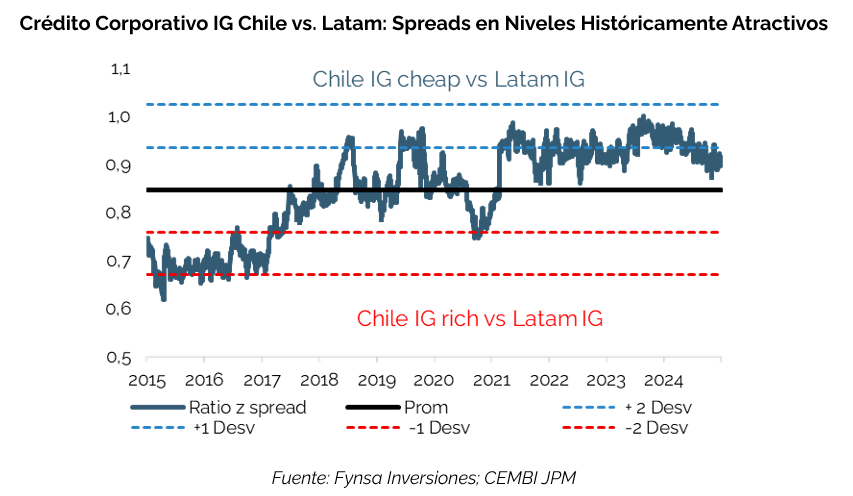

A esto se suma un posible ciclo de compresión de spreads si se concreta un giro promercado, lo que abriría espacio para revalorizaciones en bonos corporativos. Dada la resiliencia de las compañías chilenas y el apetito internacional por crédito emergente bien estructurado, esta clase de activos podría beneficiarse significativamente en un escenario base moderadamente constructivo.
Dentro de nuestra visión positiva sobre el crédito corporativo chileno en USD, el sector bancario destaca como el segmento con mayor convicción. Concentra nuestra preferencia debido a sus fundamentos sólidos y spreads históricamente atractivos. Las emisiones en dólares realizadas en el marco de Basilea III por parte de los bancos chilenos combinan alto carry con emisores de elevada calidad crediticia.
Al cierre del 1T25, los principales bancos del país —Banco de Chile, Banco Estado y BCI—mantienen una sólida posición financiera, con CET1 sobre 10,7% (Banco de Chile en 14,6%) y ROEs que alcanzan hasta 22,5% en Santander. La morosidad se mantiene controlada (NPLs entre 1,4% y 4,2%), respaldada por altos niveles de cobertura y provisiones voluntarias (Banco de Chile: 11,7% del patrimonio). Esta combinación de calidad de activos, rentabilidad y capitalización sólida refuerza su perfil como emisores confiables dentro del universo IG y High Yield regional.
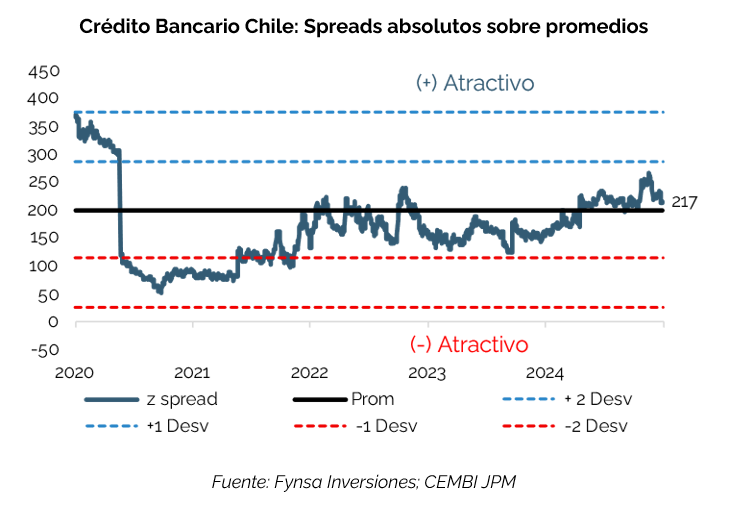
En términos de spreads, estos bonos bancarios chilenos se encuentran por sobre su promedio histórico, lo que refleja un atractivo relevante. Y desde una mirada relativa, los spreads frente a comparables de Latam superan en más de una desviación estándar su promedio de 5 años, algo que no parece justificado por los fundamentos crediticios actuales. Esta brecha ofrece una clara oportunidad de compresión en un entorno más constructivo. En un mundo donde los spreads globales se han comprimido significativamente, encontrar instrumentos con este tipo de carry ajustado por riesgo es cada vez más difícil.
Conclusión
La deuda corporativa chilena en USD se posiciona hoy como una alternativa muy competitiva dentro del universo de mercados emergentes. Las mejoras macroeconómicas, el compromiso con la sostenibilidad fiscal y un potencial giro político promercado y fiscalmente austero abren espacio para una revalorización en instrumentos de crédito.
Este escenario se ve reforzado por la fortaleza estructural de las compañías emisoras, que vienen con buen “momentum” en sus resultados operativos y presentan fundamentos financieros sólidos, con balances robustos, niveles de apalancamiento acotados y una adecuada cobertura de intereses
En particular, el segmento bancario ofrece oportunidades excepcionales, con emisores sólidos, estructuras atractivas y spreads históricamente altos, tanto en términos absolutos como relativos. Este es un momento oportuno para revisitar la exposición a activos chilenos en USD, especialmente en emisores bien posicionados para beneficiarse de un entorno más constructivo.
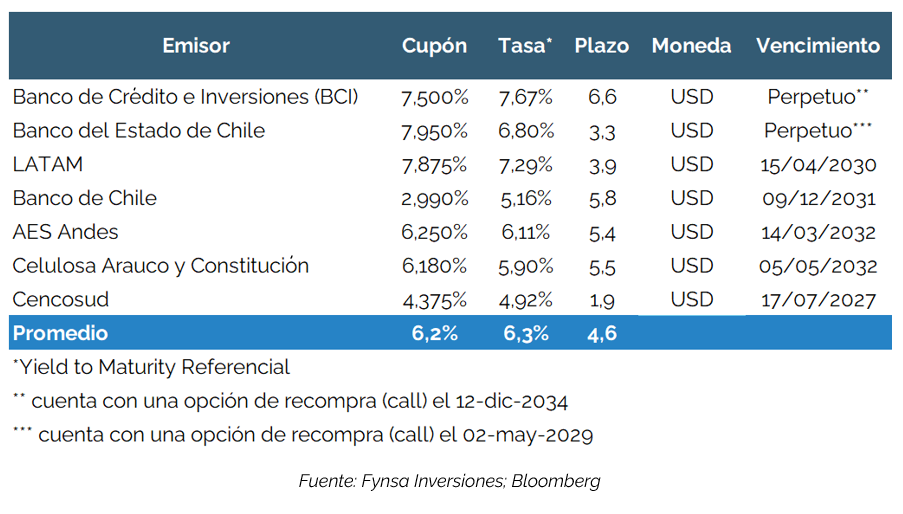
Para finalizar, adjunto una selección de emisiones corporativas chilenas en USD que destacan por su alta calidad crediticia, spreads atractivos y tasas absolutas elevadas.
Felipe de Solminihac
Jefe de Estrategia Finanzas y Negocios Corredora de Bolsa