Fynsa

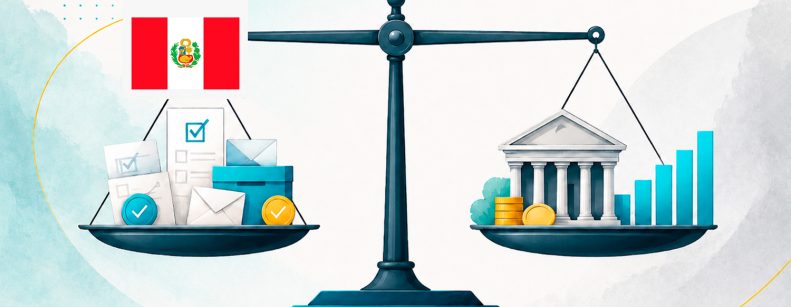
On Sunday, June 7, Peru held the second round of its presidential election, marking the end of a highly competitive political cycle. As of this writing, the National Office of Electoral Processes (ONPE) has counted over 98% of the votes, and the results show an exceptionally close race. The final outcome will depend on the counting of overseas votes and the review of election records in the coming days.
Market reaction: transition and expected caution
As is typical in any emerging market facing uncertainty, the local market has experienced temporary volatility. In the first trading sessions following the election, key indicators for international investors —such as the MSCI Peru Index and sovereign bonds— have shown moderate adjustments, typical of a market that is “pricing in” short-term uncertainty until the official announcement of the results.
The anchor of stability: fundamentals remain intact
For international investors, the analysis should not focus on the immediate political situation, but rather on the country’s structural foundations. Regardless of the presidential system adopted by the executive branch, Peru has institutional safeguards that ensure the operational continuity of its economy:
The current lull is a natural part of the democratic process. The true value of the Peruvian market for foreign capital lies in its resilience: an economy that, backed by independent technical institutions, continues to operate and generate value regardless of political cycles.