Fynsa

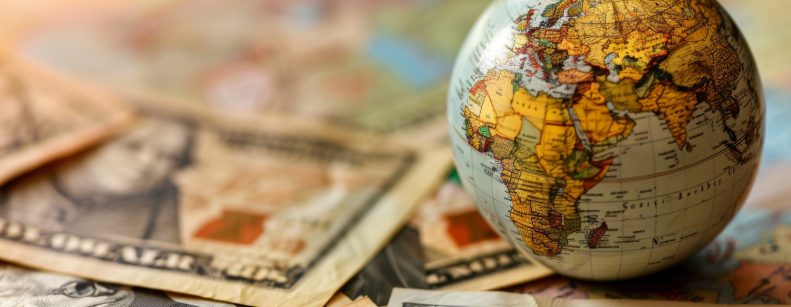
Despite occasional turbulence in the U.S. economy, political crises and a growing debate about the emergence of other currencies that could eclipse the U.S. dollar, the U.S. currency continues to remain the anchor currency of the global economy, the U.S. currency continues to remain the anchor currency of the global economy. What are the fundamentals of its strength? Bloomberg recently published an analysis to explain. Here are some of the key aspects of it:
The size of the U.S. economyThe U.S. economy, which is equivalent to the sum of the economies of China, Japan and Germany combined, is home to the world's largest and most liquid capital market. The U.S. stock market is by far the largest of any and is where the leading global companies are listed. Its bond market is even bigger: the treasury bond market alone totals US$27 trillion.
Its stability. The strength of U.S. institutions, the rule of law and the independence of the Federal Reserve are some of the reasons why investors trust the dollar. Added to this is the economic stability of the country, one of the few in the world that has never gone into default or been devastated by hyperinflation.
Your incumbent position. The change of currencies that have served as reserves in the world is the result of long processes and has been the consequence of major global crises. Today the global economy is more intertwined than ever and has been articulated around the dollar. Replacing the dollar would require not only a major catastrophe, but also a massive change in the way international transactions are conducted.
What could jeopardize the dollar's current supremacy? According to Bloomberg, one of the risk factors is the politicization of federal government spending authorizations in Congress, which, because of the country's political polarization, has brought the Treasury to the brink of default on several occasions in the last decade. which, because of the country's political polarization, has brought the Treasury to the brink of default several times in the last decade. There is also the risk that the United States will abuse the power granted by the dollar's status as the global reserve currency.
What could be the alternatives to the dollar? First, according to Bloomberg, there is the euro, which is the second global currency, considering the volume of international transactions associated with this currency, its weight in reserves and the size of its capital market. However, as a currency, it is new and has already faced turbulence due to unsustainable debt levels in some countries of the Eurozone bloc.
The Chinese yuan is another candidate mentioned as a potential replacement for the dollar. But despite the explosive growth of the Chinese economy, it is still US$4 trillion smaller than the U.S. economy. More importantly, it has a small capital market compared to the U.S. and not enough liquid assets to absorb funds from global investors. China has a strict capital control system and has limited yuan liquidity outside the country. The limited independence of its institutions also leaves investors at the mercy of decisions made by the central government.
What about bitcoin? For Bloomberg cryptocurrencies are too new and do not yet show the stability and level of acceptance needed to become an alternative to the dollar. to become an alternative to the dollar.
The dollar in the global economy: