Fynsa


En declaraciones preparadas en un evento en el Club Económico de Nueva York (VER), el presidente de la FED, Jerome Powell, enfatizó que los datos recientes “muestran un progreso continuo” hacia los objetivos del doble mandato de la Reserva Federal de máximo empleo y estabilidad de precios, y recalcó que el FOMC “está procediendo con cuidado”, a la luz de “las incertidumbres y los riesgos, y de lo lejos que hemos llegado” en el ciclo de ajuste.
En lo económico, el cambio más notable del discurso de Powell es cuando hace referencia a que “los indicadores de crecimiento salarial muestran una disminución gradual hacia niveles que serían consistentes con una inflación del 2% a lo largo del tiempo”.
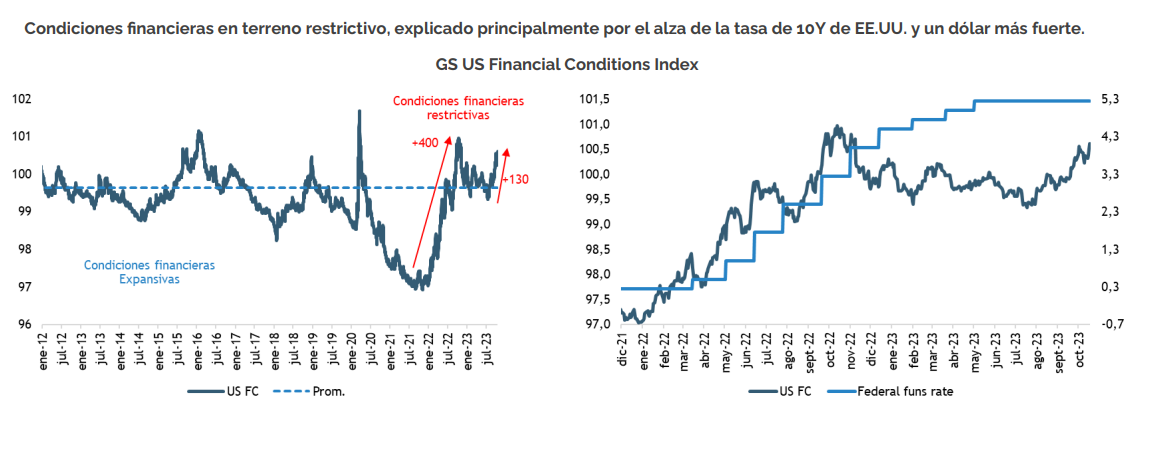
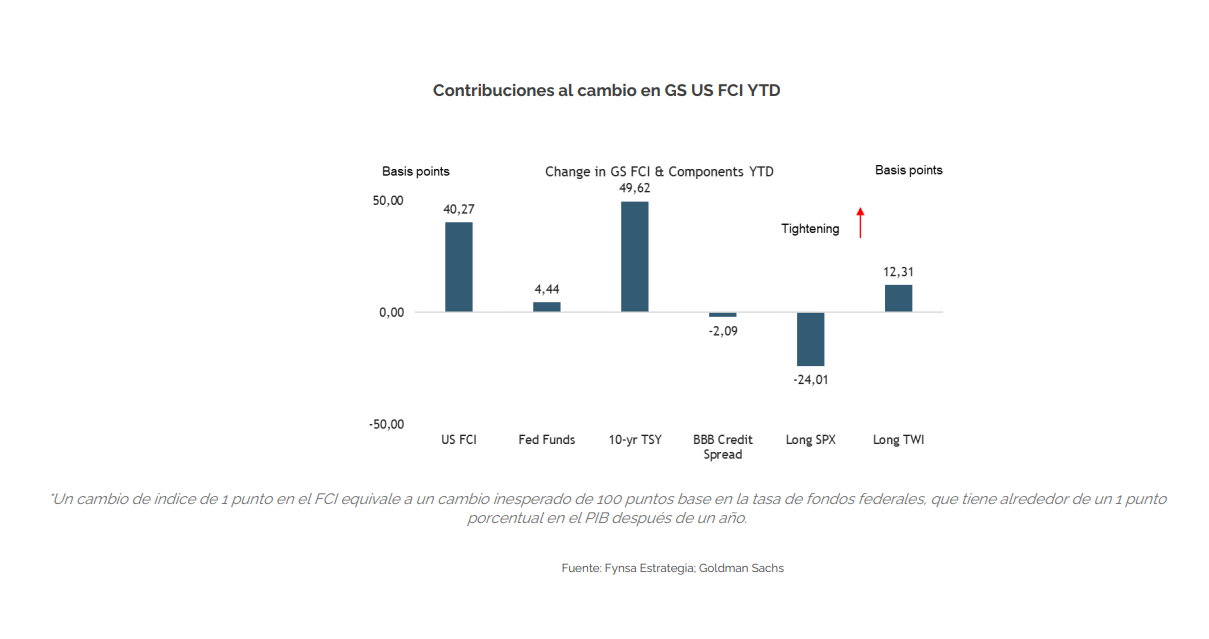
Respecto a las condiciones de mercado, en la sesión de preguntas y respuestas posterior al discurso, Powell interpretó que el reciente aumento de los rendimientos a largo plazo se debe principalmente a la prima por plazo (diagnóstico compartido por nosotros: VER MÁS) más que a un cambio en las expectativas sobre la trayectoria de las tasas de interés a corto plazo. Como tal, representa un puro endurecimiento de las condiciones financieras no motivado por una mejora de las perspectivas económicas. Debido a esto, “en el margen”, es posible que la Reserva Federal necesite hacer menos para endurecer las condiciones financieras (ver gráficos).
Hacia adelante, si bien Powell “mantuvo viva” la opción de aumentar las tasas en reuniones posteriores ante evidencia adicional de un crecimiento persistentemente superior a la tendencia, o de que la rigidez del mercado laboral ya no está disminuyendo, dado que habrá poca “evidencia adicional” importante desde ahora hasta la reunión del 1 de noviembre, parece que las tasas se mantendrán sin cambios después de la próxima reunión.
Esto también es respaldado por los comentarios recientes no solo del presidente Powell, sino también de otros participantes del FOMC, entre ellos, el vicepresidente Jefferson y los presidentes Williams, Barkin, Harker, Bostic, Daly y Goolsbee, que han sugerido que era probable que el FOMC dejara sin cambios la tasa de los fondos federales en su reunión de noviembre, y que la tasa de fondos federales probablemente había alcanzado su punto máximo en este ciclo de ajuste.
Finalmente, con un treasury a 10 años en EE. UU bordeando el 5%, reafirmamos nuestra convicción de que los actuales niveles de tasas de interés son atractivos en términos históricos y recomendamos considerar moverse de manera gradual fuera del efectivo hacia vencimientos más largos y bonos corporativos (VER)