


Fynsa


Infrastructure in the United States is undergoing an unprecedented transformation driven by a number of innovative and strategic factors. But before delving into these changes, it is important to understand what private infrastructure is and why invest in it.
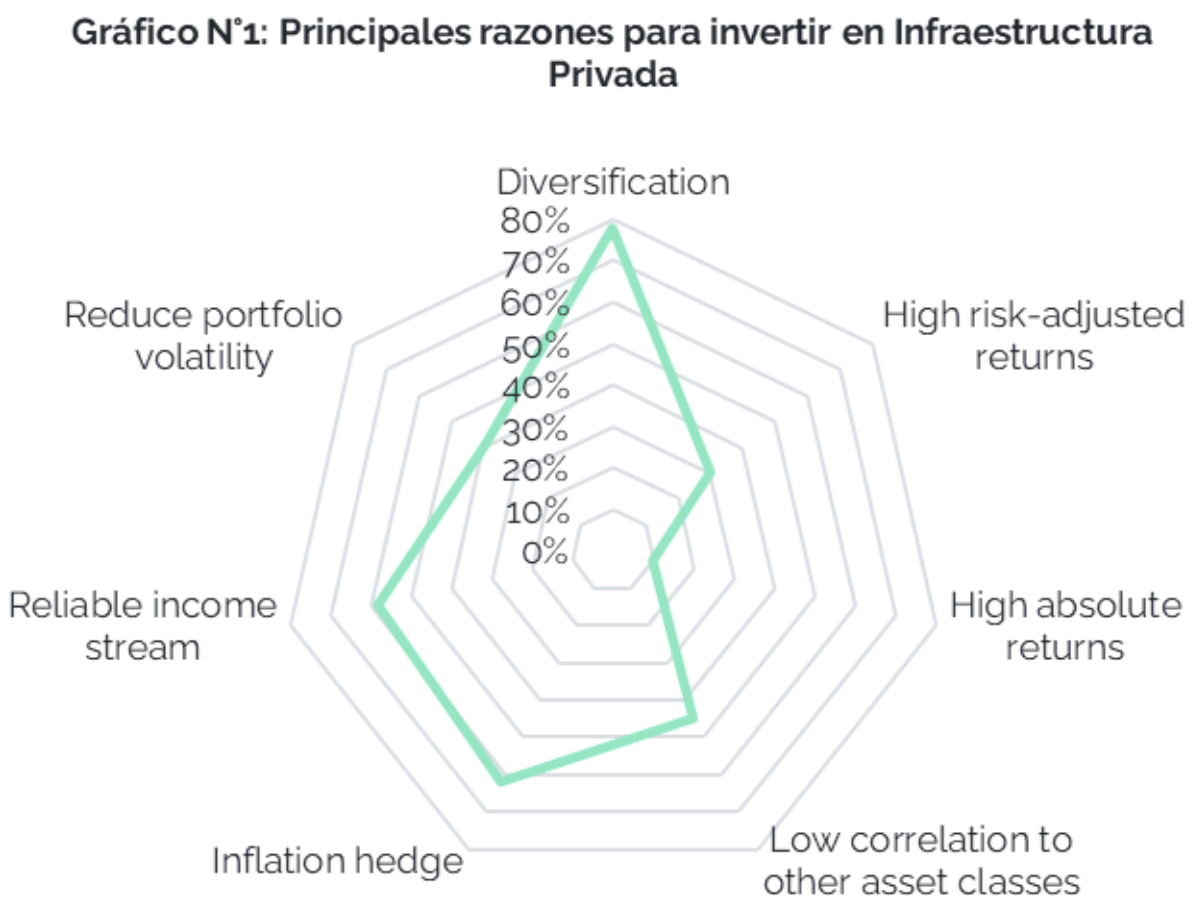
Private infrastructure refers to investments made by non-governmental entities in facilities, services and structures essential to the functioning and economic productivity of a society. This market encompasses a wide variety of industries and sectors, classified into economic infrastructure (such as transportation, energy and telecommunications) and social infrastructure (such as hospitals and schools). Private infrastructure offers numerous benefits, including portfolio diversification, reduced volatility, stabilized cash flows and protection against inflation (Graph N°1).
Now, with a better understanding of this asset class, we can address the following question: What are the regulatory and technological changes that are benefiting private infrastructure in the U.S. today?
Nearshoring promotes the investment in the modernization and expansion of existing infrastructure, improving roads, ports, railroads and airports to facilitate the efficient movement of goods within the country and between neighbors such as Mexico and Canada. According to U.S. Department of Transportation data, it is estimated that more than $2.6 billion is needed in infrastructure investments to address maintenance and modernization needs throughout the country over the next decade.
In addition, nearshoring encourages the construction of new industrial facilities and logistic centers in strategic areasThe company's activities have been a driving force for job creation and local economic growth. These new facilities require additional infrastructuresuch as power grids, wastewater treatment systems and telecommunications, thus generating more infrastructure investment opportunities.
By promoting the regionalization of supply chains, nearshoring strengthens infrastructure resilience and security by reducing dependence on distant sources of supply that are vulnerable to disruption. This is especially important in a world where geopolitical risks and events such as the COVID-19 pandemic can significantly affect the flow of goods.
Another relevant change is AI, which is emerging as a transformative tool to strengthen the country's infrastructure. AI can improve the efficiency and management of existing infrastructure by analyzing large volumes of data in real time. This allows the identification of patterns and trends that help predict and prevent failures in critical infrastructure such as bridges, roads, power grids and water supply systems. This approach not only reduces maintenance and repair costs, but also increases the safety and reliability of the infrastructure.
In addition, AI can optimize the planning and design of new infrastructure. Using advanced optimization and simulation algorithms, AI helps engineers and urban planners make more informed decisions about the location, design and management of infrastructure projects. A report by the American Society of Civil Engineers (ASCE) indicates that the use of AI in infrastructure planning and design reduces construction costs and speeds up lead times.
Finally, it is important to highlight the energy independence that the United States has achieved in recent years, where the country produces more energy than it consumes and exports more than it imports (Graph No. 2).
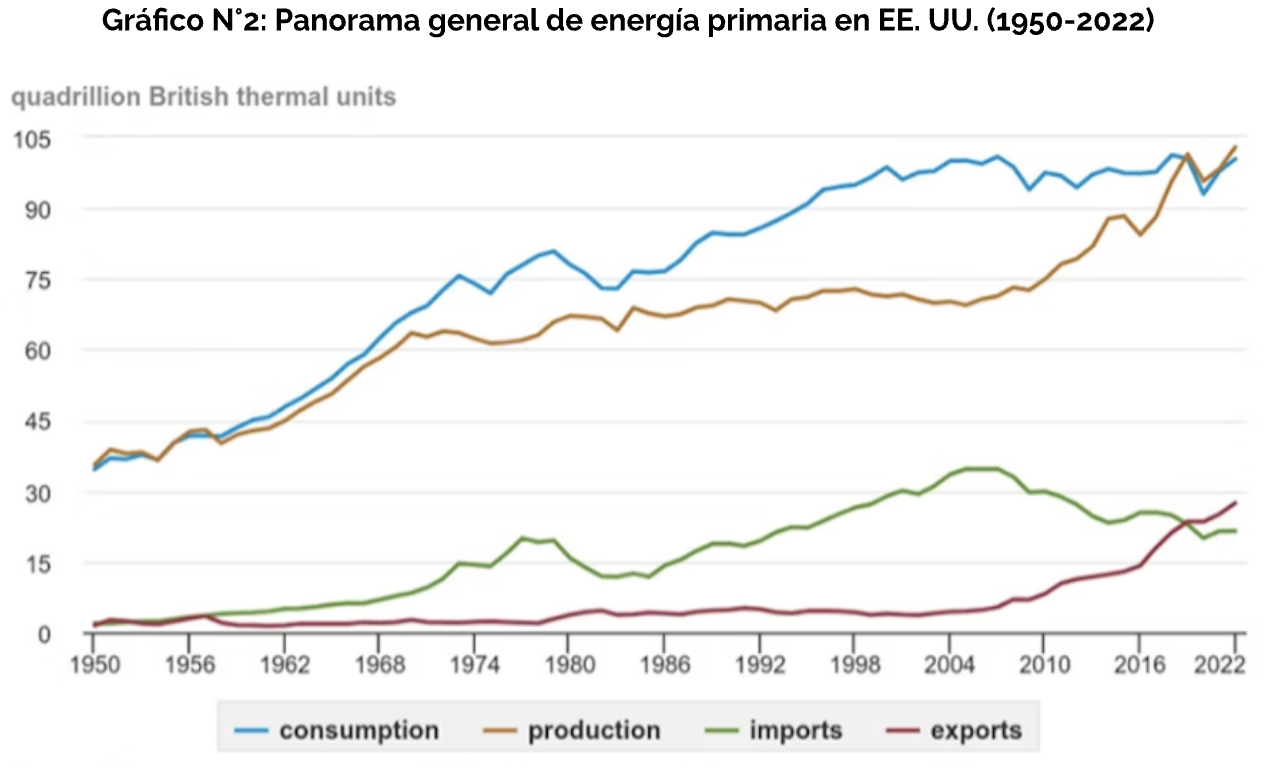
This independence reduces the country's vulnerability to movements in energy prices and availability in the global market. By relying less on energy imports, the United States can mitigate the negative impacts of shocks in international markets and protect against potential supply disruptions.
In addition, energy independence encourages investment in the modernization and diversification of the country's energy infrastructure, energy independence encourages investment in the modernization and diversification of the country's energy infrastructure. This includes expanding renewable energy generation capacity, improving energy efficiency in buildings and industries, and building new energy storage and distribution infrastructure. These investments not only promote energy security, but also create jobs and stimulate economic growth across the country. According to the International Energy Agency's (IEA) Renewables 2021 report, the United States was the second largest investor in renewable energy in 2020, with a total investment of more than $55 billion.
In conclusion, regulatory and technological changes such as nearshoring, artificial intelligence and energy independence are transforming infrastructure in the U.S. These changes offer increased efficiency, safety, resilience and opportunities for economic growth. Adapting to and embracing these trends will allow investors to take full advantage of emerging opportunities in U.S. infrastructure, building a robust and sustainable portfolio for the future.
Felipe De Soliminihac
Fynsa Investment Strategist


