Fynsa


La correlación y el comportamiento entre el precio de los distintos activos y las variables económicas son un tema de gran interés. Uno de los vínculos más estudiados en los mercados financieros en Chile es la correlación entre el tipo de cambio local y el precio del cobre. Esta relación no solo es de suma relevancia para los inversores, sino que también para la economía chilena.
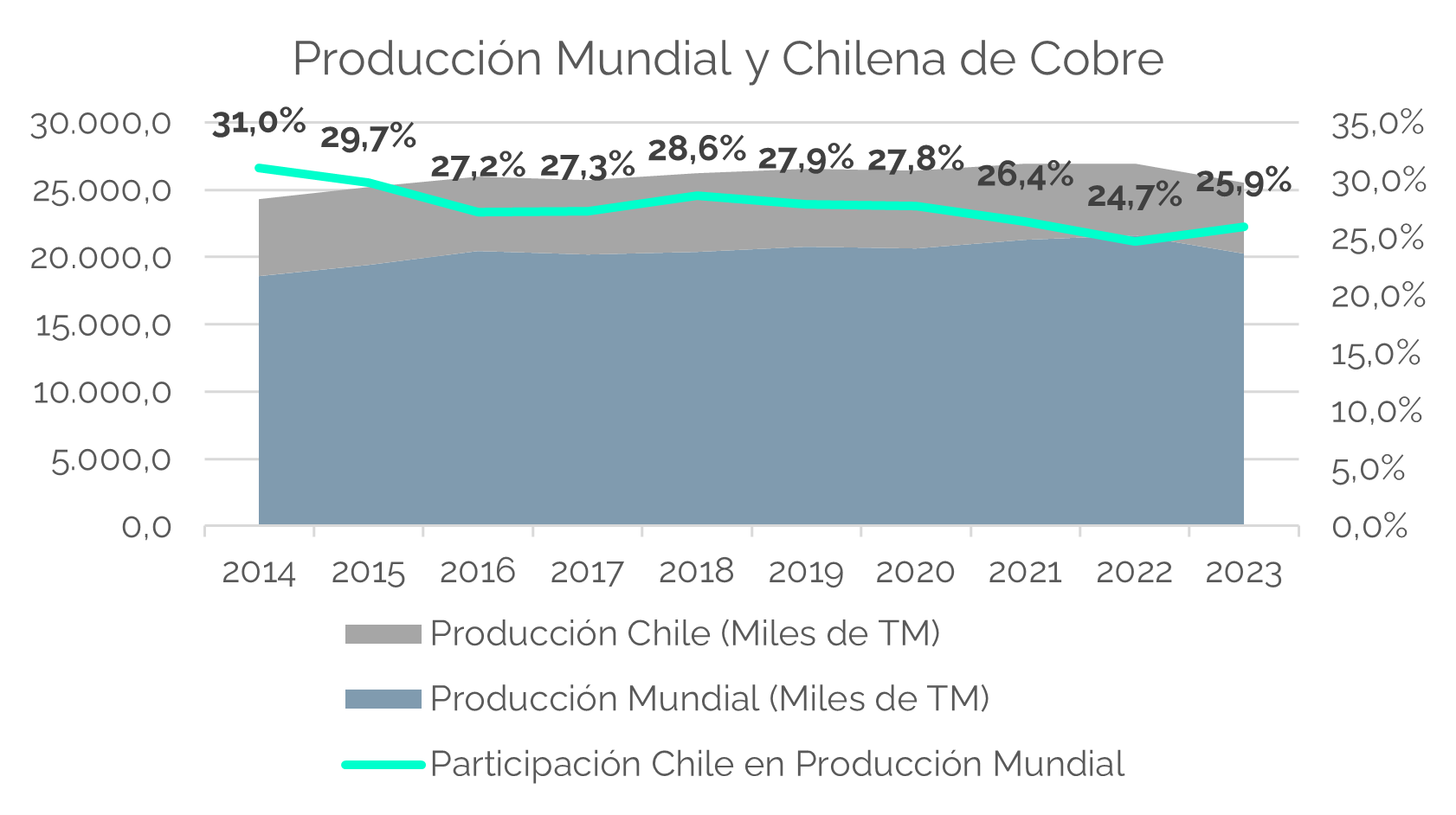
El cobre es un metal precioso con amplias aplicaciones industriales que van desde la construcción hasta la electrónica, e incluso en la emergente y creciente fabricación de automóviles eléctricos, la que es intensiva en cobre. En ese sentido, Chile se posiciona como el principal productor mundial de cobre, con una importante participación en el mercado global de este metal. Según datos de Cochilco, la producción chilena de cobre representó un 25,9% de la producción mundial en 2023, con una producción que alcanzó las 5,25 millones de toneladas.
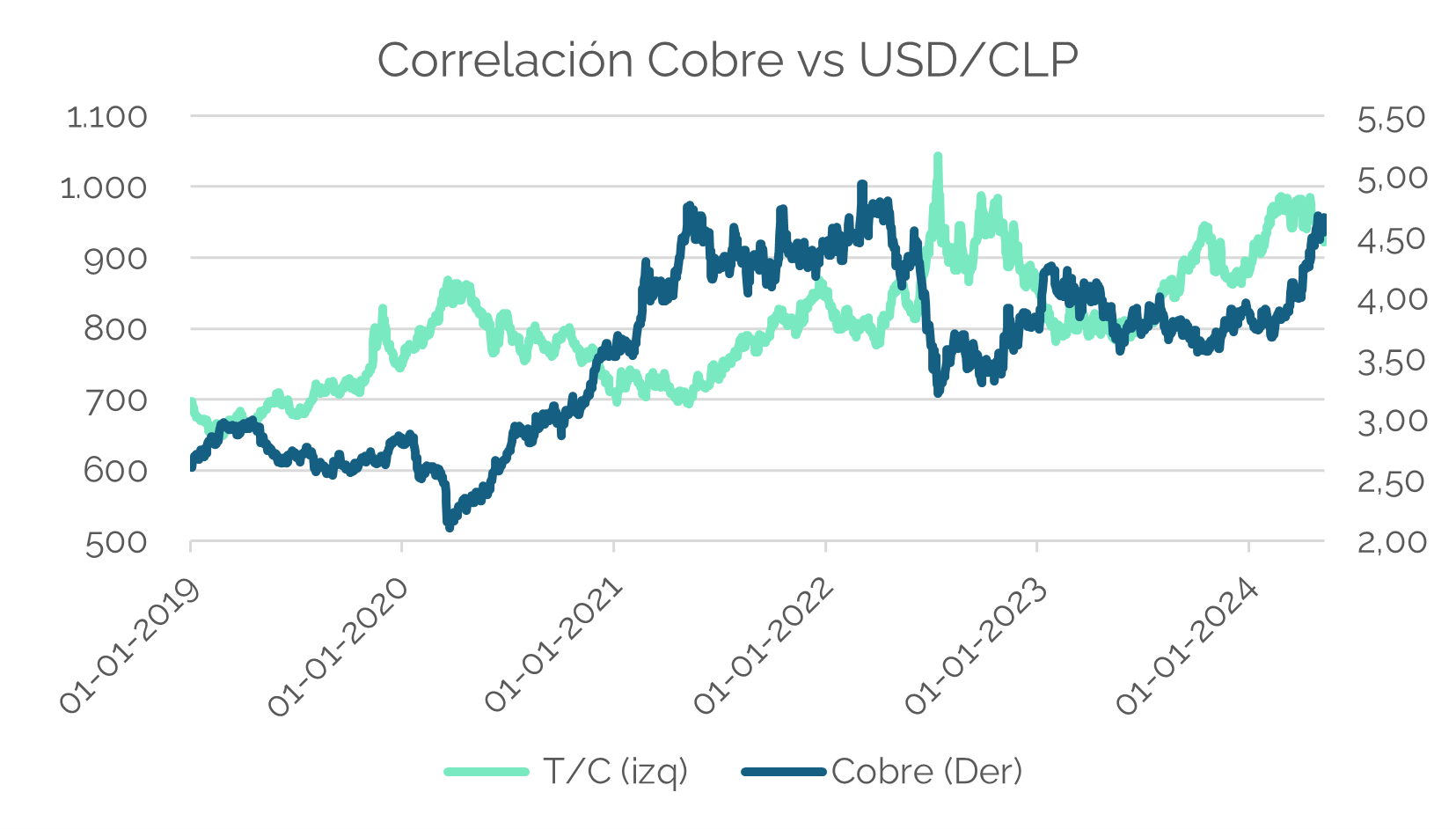
La relación entre el precio del cobre y el USD/CLP es compleja y se ve influenciada por varios factores, pero el principal responde a la importancia y a la ponderación que este metal tiene dentro de las arcas fiscales y al flujo de dólares a nivel nacional.
Como la moneda de cambio del cobre es el dólar, a mayor precio del cobre, mayor cantidad de dólares ingresan al país, aumentando la oferta o la cantidad de esta moneda en la economía local, lo que hace caer su precio. Al contrario, a menor precio del cobre, menor es la cantidad de dólares que ingresan al país en un determinado tiempo, lo que hace más escaso el ingreso de dólares a las arcas fiscales, haciendo aumentar el tipo de cambio.
De esta forma, cuando el precio del cobre se mueve en un sentido, la cotización del USD/CLP se mueve en el sentido contrario, lo que se conoce como correlación inversa.
Esta correlación que, históricamente ha sido consistente, durante los últimos meses venía desvaneciéndose, y si bien el precio del cobre viene en aumento desde hace meses, esto no había tenido un impacto significativo en la cotización del tipo de cambio local. Esto, ya que los movimientos del tipo de cambio venían respondiendo más a las expectativas que tiene el mercado sobre los movimientos de tasas por parte del banco central de EE.UU.
Inflación persistente y rally del cobre: ¿Hacia dónde va el dólar?
La persistencia de la inflación a nivel global generó que las expectativas del mercado apunten a que la Reserva Federal de EE.UU. disminuirá el ritmo de recortes de tasas. Esto implica que en EE.UU. el ente emisor, que aún no ha iniciado los recortes de tasas en este ciclo monetario, podría incluso no realizar recortes en su tasa de referencia en lo que va de año.
Sin embargo, la correlación histórica entre el precio del cobre y la cotización local del dólar ha vuelto a tomar ponderancia, y junto a un importante rally del cobre, el tipo de cambio local ha mostrado una importante apreciación. Durante los primeros 21 días de mayo, el precio del cobre se había apreciado un 12,4%, hundiendo al tipo de cambio en un -7,6%, el que pasó de cotizar en niveles de $960 a cierre de abril a niveles de $888.
Con esto en consideración el mercado se divide: ¿Hacia dónde apunta el dólar? ¿Seguiremos viendo un tipo de cambio en caída de la mano del rally del cobre? La correlación entre ambas variables ha demostrado ser históricamente fuere. La demanda estructural a largo plazo de este metal podría aumentar de manera importante en los próximos años de la mano de mayores desarrollos eléctricos, como la electromovilidad. A su vez, las grandes compañías mineras siguen sin realizar grandes inversiones para aumentar su capacidad productiva y la oferta, aumentando las posibilidades de que veamos un descalce entre la oferta y demanda de cobre en algunos años, generando mayores alzas en el precio del metal.
O bien, ¿veremos un tipo de cambio alcista ante una mayor persistencia de la inflación en EE.UU.? La mayor persistencia de la inflación en EE.UU., como ha venido siendo la tendencia, va a generar que la Fed siga postergando su decisión de recortes en la tasa de interés, aumentando los diferenciales de tasas entre EE.UU. y Chile, lo que impulsaría a un mayor tipo de cambio local.
Veremos en los próximos meses qué pasa…
José Pablo González
Portfolio Manager Deuda Privada