Fynsa


A la humanidad le tomó 50.000 años para que la población del mundo alcanzara la cifra de los 1.000 millones de habitantes. A contar de allí, el crecimiento se disparó. Desde 1960, el mundo añadió 1.000 millones de habitantes nuevos cada diez o veinte años. Sin embargo, los tiempos están cambiando nuevamente. El crecimiento de la población, que era de más del 2% a fines de los 60, está cerca de 1% y seguirá descendiendo, con una tasa de 0,5% esperada para la mitad de este siglo.
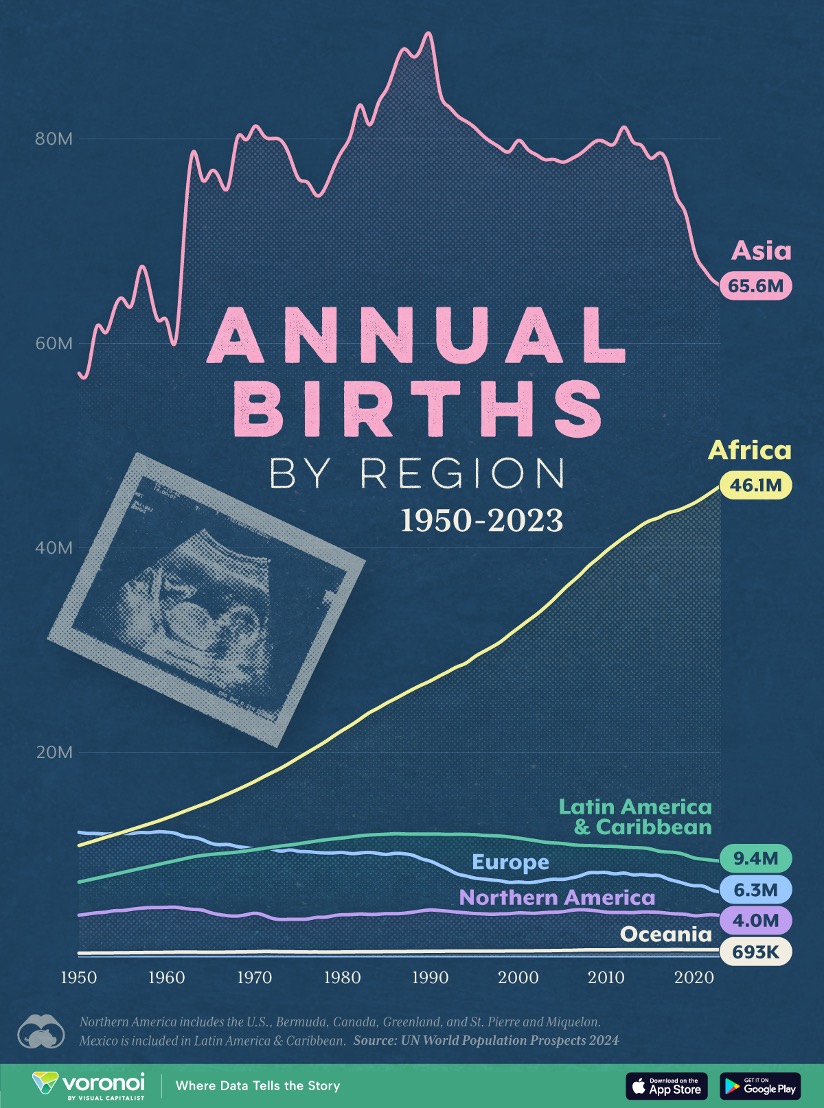
Asimismo, estamos viviendo un importante cambio en la distribución de la población mundial en términos geográficos y de desarrollo. Si hace algunas décadas Asia era vista como la principal zona de crecimiento demográfico, esto ha cambiado radicalmente. El número de niños nacidos cada año en el continente asiático ha descendido de casi 85 millones a principios de los ’90 a 65 millones en 2023. América Latina y Europa también evidencian una declinación, mientras que América del Norte (excluyendo a México, que está incorporado en el grupo latinoamericano) se ha mantenido bastante estable. La excepción a esta tendencia es África, que ha mostrado un constante crecimiento en los últimos 75 años, como se puede apreciar en la infografía de Visual Capitalist.
Si bien el envejecimiento de la población ha desplazado al crecimiento demográfico como punto principal de preocupación, ambos fenómenos tienen profundas repercusiones en multitud de aspectos determinantes para el bienestar y el progreso económico. Entre ellos, calibrar los retos y las oportunidades que el crecimiento de la población en África tendrá para el mundo será una de las claves para le economía global en los próximos años.