Fynsa

En un mundo impulsado por la electrificación, la inteligencia artificial y la transición energética, los elementos de tierras raras (REE, por sus siglas en inglés) se han transformado en uno de los activos más estratégicos del siglo XXI. Estos 17 minerales, entre ellos el neodimio, disprosio y terbio, son esenciales para la fabricación de chips, baterías, turbinas eólicas, vehículos eléctricos y sistemas de defensa, configurando el nuevo corazón tecnológico de la economía global.
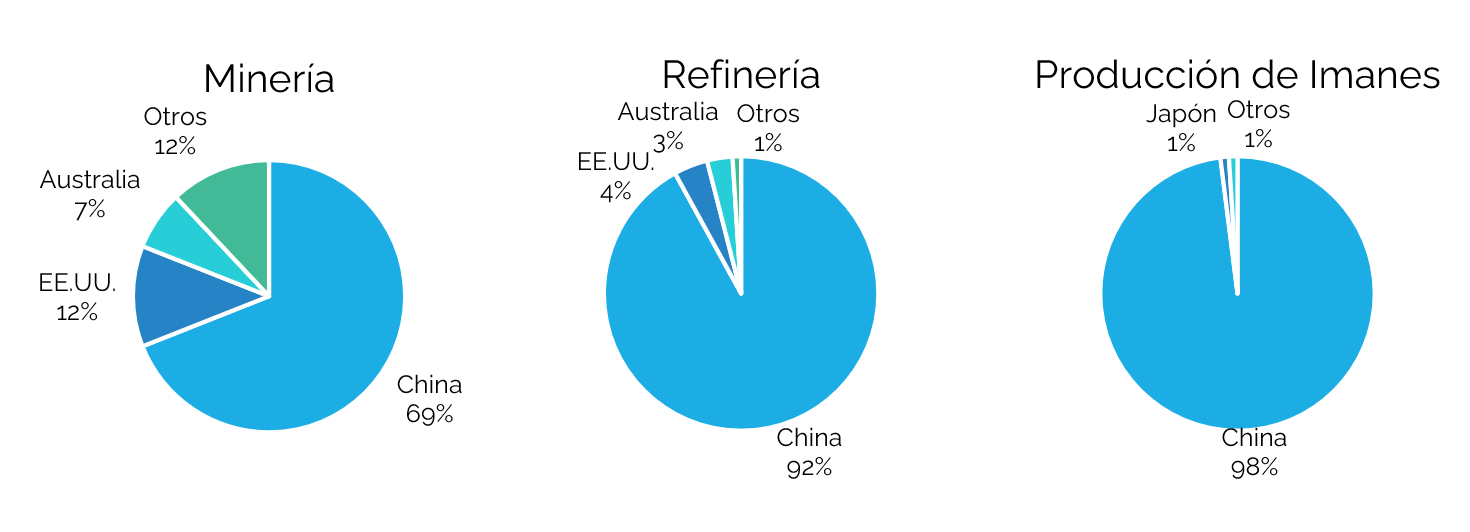
Sin embargo, su relevancia va mucho más allá de la industria. Hoy, las tierras raras son el epicentro de una disputa geopolítica silenciosa que enfrenta a China con Occidente. Beijing controla aproximadamente el 69% de la extracción global, el 92% del refinado químico y casi el 98% de la producción de imanes permanentes, un monopolio que abarca toda la cadena de valor, desde la mina hasta los componentes avanzados. En palabras simples, China no solo posee las reservas: domina el conocimiento técnico, la infraestructura y la capacidad de procesamiento que el resto del mundo perdió hace décadas.
Durante 2025, este dominio se convirtió en un instrumento de poder. En abril, el gobierno chino impuso controles de exportación sobre siete elementos críticos, ampliados en octubre a doce metales y tecnologías de refinado. Las exportaciones cayeron más de 30% interanual, afectando a sectores clave como el automotriz, el aeroespacial y los semiconductores.
El impacto no fue solo económico: evidenció la vulnerabilidad estructural de las economías occidentales, dependientes de un solo proveedor para materiales fundamentales. Frente a ello, países como Estados Unidos y Australia han intensificado sus esfuerzos por construir cadenas de suministro independientes, lideradas por empresas como MP Materials (EE.UU.), Lynas (Australia) e Iluka Resources (Australia). Sin embargo, replicar el nivel técnico de China en refinado e imanes requerirá años de inversión y desarrollo.
El verdadero valor de las tierras raras no radica en su precio -el mercado total apenas supera los USD 6.500 millones– sino en su capacidad de generar o detener billones en producción industrial. Una disrupción del 10% en el suministro podría generar pérdidas cercanas a USD 150.000 millones, afectando cadenas de valor completas. Es lo que los analistas llaman un riesgo asimétrico: un insumo pequeño que sostiene industrias gigantes.
La situación recuerda al rol del petróleo en el siglo XX. Pero a diferencia del crudo, las Tierras Raras no son un recurso energético, sino un recurso tecnológico, indispensable para la competitividad y la defensa. Su control define quién liderará la próxima revolución industrial.
El conflicto por los minerales críticos marca el fin de una era de complacencia industrial. Gobiernos y empresas han comenzado a tratar la seguridad de los suministros como un componente de seguridad nacional, destinando subsidios e incentivos para diversificar el origen de materiales clave.
Al mismo tiempo, crecen los esfuerzos por el reciclaje y la sustitución tecnológica, que hoy aportan cerca de un tercio de la oferta global. Sin embargo, estas soluciones aún son insuficientes frente al dominio chino y a la velocidad con que se expande la demanda global.
Las tierras raras se han convertido en el nuevo petróleo de la economía global: un recurso de bajo valor nominal, pero de impacto estratégico inmenso. En 2025, más que nunca, la competencia global por el control de los materiales críticos está definiendo no solo la economía, sino también el equilibrio de poder del futuro.
Equipo de Inversiones Corredora de Bolsa