Fynsa


La presión sobre los grandes fondos de deuda privada dejó de ser una discusión teórica. En 2026, Blue Owl, Blackstone y BlackRock enfrentaron un alza brusca en solicitudes de salida, reabriendo el debate sobre la promesa de liquidez en vehículos que invierten en activos esencialmente ilíquidos.
La deuda privada fue durante años uno de los grandes ganadores del ciclo financiero: tasas atractivas, acceso a crédito directo y una narrativa de estabilidad frente a la volatilidad de los mercados públicos. Pero en 2026 apareció la grieta más incómoda del modelo: la liquidez. En el primer trimestre, inversionistas pidieron rescates por más de US$10.000 millones en grandes fondos de deuda privada, y en promedio solo cerca de 70% de esas solicitudes pudo ser atendido.
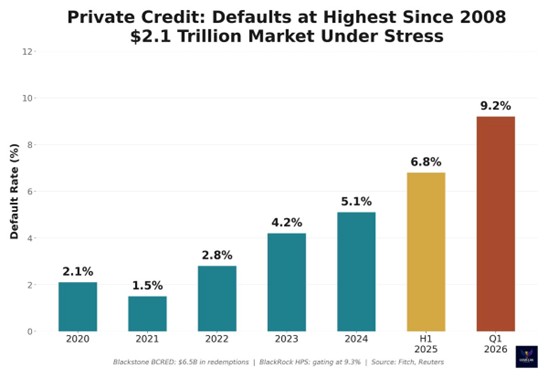
El problema no es solo el monto, sino lo que revela. Muchos de estos vehículos fueron comercializados como alternativas “semilíquidas”, con ventanas periódicas de rescate. Sin embargo, sus carteras están compuestas por préstamos privados, difíciles de vender rápido y sin el soporte de un mercado secundario profundo. Cuando suben las solicitudes de salida, el descalce entre la liquidez prometida y la liquidez real queda expuesto. Adicionalmente a esto, se ha revisado que la tasa de default dentro de la industria ha mostrado mayores signos de estrés, llegando a máximos históricos en un mercado que se ha expandido fuertemente en los últimos años. Se asocia este crecimiento con créditos ligados al rubro de tecnología, el cual ha presentado problemas para cubrir sus obligaciones. Los fondos han optado por prorrogar estos créditos aún sin visión de cuándo podrán ser atendidos por los deudores.
Blue Owl se transformó en uno de los casos más emblemáticos. En febrero, la firma restringió los rescates en uno de sus fondos de crédito privado para inversionistas, Blue Owl Capital Corporation II, eliminando la posibilidad de solicitar reembolsos trimestrales y reemplazándola por distribuciones periódicas de capital financiadas con pagos de préstamos, ventas de activos u otras transacciones.
No fue un episodio aislado. BlackRock limitó rescates en su HPS Corporate Lending Fund luego de recibir solicitudes equivalentes a 9,3% del patrimonio, pero mantuvo el tope de recompra en 5%. Blackstone, por su parte, enfrentó pedidos récord de rescate por 7,9% en BCRED, equivalentes a unos US$3.800 millones, y optó por ampliar su capacidad de recompra para evitar un cierre total.
La señal es relevante porque afecta al corazón del crecimiento reciente de la industria: el canal de inversionistas de altos patrimonios y redes de wealth management. Durante años, esos flujos alimentaron la expansión de fondos no transados y vehículos evergreen. Hoy, ese mismo capital luce más sensible, más táctico y menos dispuesto a tolerar incertidumbre sobre valuaciones, exposición sectorial o tiempos de salida.
La pregunta de fondo no es si la deuda privada desaparecerá. No lo hará. Sigue siendo una fuente relevante de financiamiento corporativo y una clase de activo con espacio en portafolios diversificados. Pero sí cambió el estándar de análisis. Ya no basta con mirar yield, seniority o historial de defaults. Ahora importa, y mucho, cómo está estructurada la liquidez del fondo, qué porcentaje del capital puede salir al mismo tiempo y cuánto depende el manager de la confianza del inversionista retail.
Pese a la tensión, por ahora no se trata de un riesgo de contagio comparable al de la banca tradicional. El propio FMI ha señalado que, aunque el sector tiene vulnerabilidades relevantes, los riesgos inmediatos para la estabilidad financiera parecen contenidos, y que la mayor parte de los fondos de deuda privada presenta poco descalce de plazos porque financia préstamos de largo plazo con capital también de largo plazo. La Reserva Federal, a su vez, sostiene que los bancos lucen bien posicionados para absorber eventuales usos de líneas de crédito por parte de estos vehículos: incluso en un escenario hipotético de fuertes drawdowns, el impacto agregado estimado sobre capital y liquidez bancaria sería limitado. Además, la estructura de estos fondos tiende a aislar las pérdidas dentro del propio vehículo: las líneas bancarias suelen ser senior y garantizadas, mientras que el equity de los inversionistas y la deuda subordinada absorben primero el golpe. En otras palabras, en un escenario severo, los más expuestos serían los inversionistas de esos fondos —no el sistema financiero en su conjunto—, salvo que se produjera un shock extremo, simultáneo y mucho más amplio del que hoy contemplan los reguladores.
El mercado entra así en una nueva etapa. La deuda privada seguirá teniendo un rol relevante, con inversionistas más cautelosos para medir sus necesidades de liquidez, con mayor foco en los activos que manejan, industrian donde se concentran los fondos y procesos de underwriting. El tiempo mostrará cómo los diversos managers estructuraron sus activos y si se podrán sostener mientras están “under pressure”.
Esteban Fuentes
Portfolio Manager Deuda Privada Fynsa AGF