Fynsa

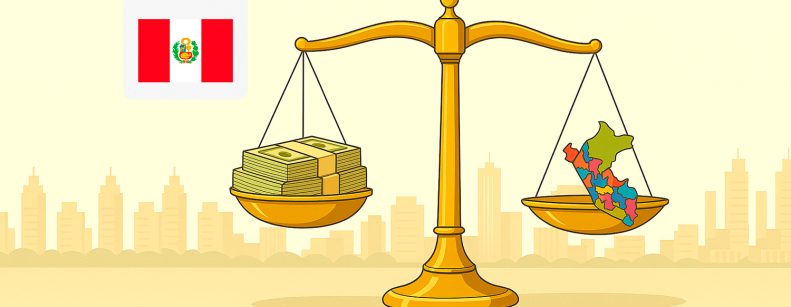
The exchange rate has remained stable in 2025, fluctuating between S/ 3.35 and S/ 3.50, well below the levels observed in years of high uncertainty. This behavior has been surprising, considering the local political context: the new government of President José Jerí, tensions with Congress and a still fragile business confidence environment. However, several structural and conjunctural factors are sustaining the sol's strength against the dollar.
Peru continues to benefit from a favorable external environment. The prices of copper, gold and zinc -main export products- have remained high, even with episodes of volatility. Copper, for example, trades on average above USD 4/lb, boosting the trade balance. Between January and June 2025 alone, traditional exports exceeded USD 30 billion, generating an abundant supply of dollars in the local market.
The US dollar index (DXY) has fallen more than 7% so far this year on expectations of rate cuts by the Federal Reserve. This trend has favored many emerging currencies, including the sol, which has been able to remain strong without the need for aggressive intervention. The global context of a weak dollar has acted as a buffer against domestic factors of uncertainty.
The Central Reserve Bank of Peru (BCRP) has maintained a prudent and effective monetary policy. With more than USD 74 billion in net international reserves as of October 2025, the BCRP has been able to intervene when necessary, both in the spot and forward markets. In addition, it has been gradually reducing its reference rate -currently at 4.25%- without generating volatility. Its credibility has contributed to contain exchange rate expectations.
In addition to trade flows, there has been a greater availability of dollars in the domestic market. Export companies, investment funds and institutional players have liquidated foreign currency to cover local obligations or take advantage of attractive yields in soles. Likewise, the reduced pressure for foreign exchange hedging has reduced the demand for dollars, reinforcing the stability of the exchange rate.
Despite partial support for President José Jerí (45% approval rating in October, according to IPSOS) and the fragmentation of Congress, there have been no massive capital outflows. Economic agents seem to have internalized the political noise as part of the baseline scenario, without aggressively dollarizing their portfolios. This contrasts with past episodes, in which uncertainty had an immediate impact on the exchange rate.
In a year marked by political tensions, the sun has shown resilience. This strength is explained by solid external fundamentals, prudent monetary policy and a significant supply of dollars in the economy. While the political landscape continues to raise questions, the foreign exchange market in 2025 reflects an economy still anchored in its macroeconomic fundamentals.
Sources: BCRP (2024-2025), IPSOS (2025), Bloomberg Terminal (2025), Moody's Local Peru (2025), Gestión (2025), Semana Económica (2025), Diario El Comercio (2025).