Fynsa


Don Alberto, un empresario entusiasta, miraba su libreta de ideas con una mezcla de orgullo y frustración. Durante meses había preparado con cuidado su proyecto: un complejo de bodegas logísticas que prometía generar empleo y movimiento económico en su región. Tenía los terrenos, los contratos firmados y un equipo listo para comenzar. Solo faltaba una cosa: el financiamiento.
Golpeó puertas, explicó flujos y garantías. Pero su solicitud seguía detenida, archivada en alguna carpeta bajo la etiqueta “en evaluación”.
Un día, Don Alberto se encontró con su viejo conocido, Don Otto, en la fila del café. Don Otto, con su clásico entusiasmo, propuso su solución genial:
—¡Ya sé, Don Alberto! Si los bancos no prestan, el gobierno debería crear un gran fondo estatal que financie todos los proyectos directamente. Así se acaba el problema del crédito y la inversión despega de una vez.
Don Alberto suspiró.
—Otto, eso sería como vender el sillón evitar una infidelidad. El problema no es la falta de dinero, sino cómo lo canalizamos. El capital existe; lo que falta es cómo hacerlo llegar a donde se necesita.
A pocas cuadras de allí, un fondo de deuda privada analizaba casos como el de Don Alberto: empresas con proyectos sólidos, flujos previsibles y activos reales, pero fuera del alcance del crédito tradicional.
Estos fondos, alimentados por capital institucional, estaban reemplazando la burocracia por diligencia, y el “no califica” por una evaluación más cercana a la realidad del negocio.
Semanas después, Don Alberto firmó el contrato de financiamiento con ese fondo. El proyecto se levantó, los empleos llegaron y, por primera vez, el capital había encontrado un camino diferente.
La historia de Don Alberto refleja un verdadero dolor de cabeza para muchos empresarios.
Mientras los bancos endurecen su apetito de riesgo y priorizan perfiles cada vez más estandarizados, la deuda privada ha surgido como un canal alternativo, ágil y pragmático, capaz de conectar capital institucional con empresas reales.
Lejos de ser una tendencia pasajera, la deuda privada llegó para quedarse. Ofrece soluciones como estructuras a medida, plazos adaptados a los flujos del negocio y una comprensión más profunda del riesgo.
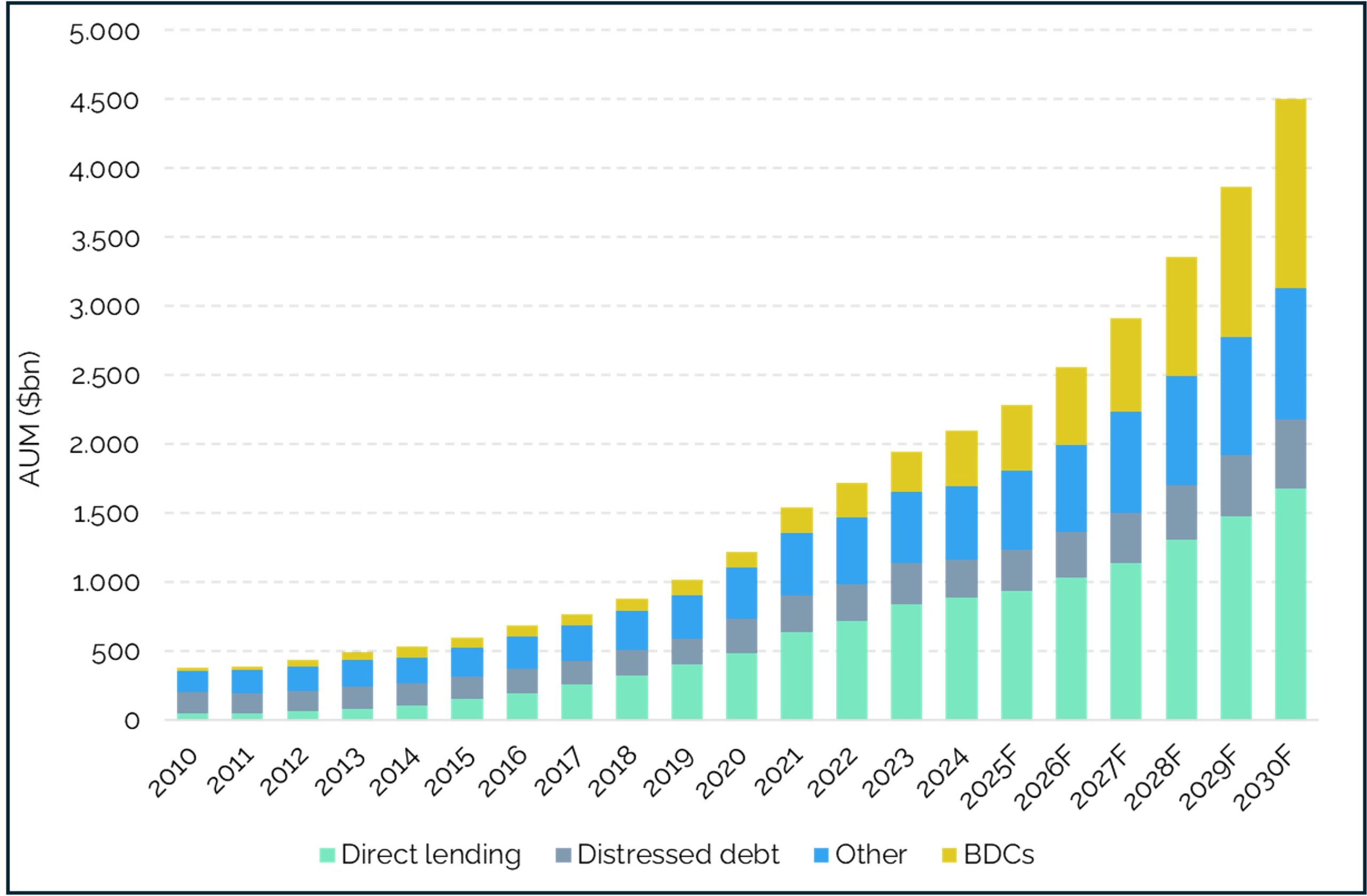
El crecimiento global de la deuda privada se ha cuadriplicado en 10 años, pasando de un mercado de US$500bn en el 2015 a más de US$2.300bn en 2025 y se espera que supere los US$4.500bn en 2030. Dejando en evidencia la transformación estructural en cómo se financia el desarrollo.
El desafío, entonces, no es reemplazar a la banca, sino complementarla.
Porque la economía necesita de ambos: la estabilidad del crédito tradicional y la innovación del financiamiento alternativo. Y en esa intersección, donde el capital vuelve a moverse con propósito, es donde realmente comienza el crecimiento.
Jaime Cruz
Porfolio Manager Deuda Privada USA Fynsa AGF