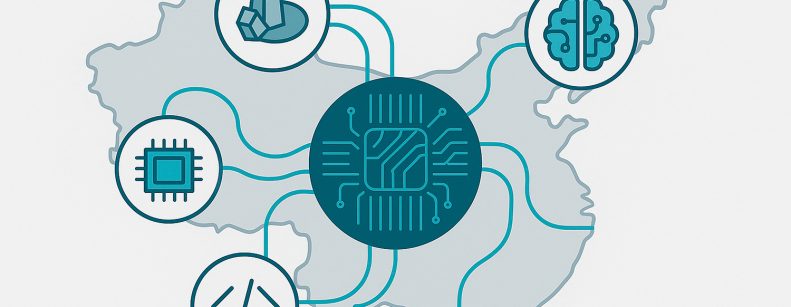
China ya no busca solo alcanzar a Occidente en materia tecnológica: está rediseñando las reglas del juego. Detrás de su ambición por la autosuficiencia digital se esconde una estrategia meticulosamente integrada que conecta desde las materias primas críticas hasta la inteligencia artificial más avanzada. Este ecosistema —que une software, hardware, robótica y control de minerales— constituye la base de un nuevo modelo económico orientado a la resiliencia, la soberanía tecnológica y el liderazgo global.
El cerebro digital: IA como motor macroeconómico
- El desarrollo de la inteligencia artificial se ha convertido en el núcleo del plan tecnológico chino. Modelos como DeepSeek AI, que rápidamente se popularizó tras su lanzamiento, marcan el comienzo de una fase de inversión sin precedentes. Solo el próximo año, las principales tecnológicas del país invertirán más de 70.000 millones de dólares, con un aumento proyectado de 38% en el CAPEX de desarrolladores de IA para 2025.
- El cambio más relevante no está solo en el monto, sino en la dirección: gran parte de estas inversiones se destinan ahora al hardware nacional, desplazando la dependencia de chips extranjeros. En paralelo, la IA está emergiendo como un pilar de productividad frente al envejecimiento poblacional, compensando la prevista contracción del 25% de la fuerza laboral en los próximos 25 años.
- Las proyecciones sugieren que la adopción de IA podría elevar el PIB de China en 0,2 a 0,3 puntos porcentuales hacia 2030, con un gasto total equivalente al 1% del PIB anual. En otras palabras, la IA no solo representa innovación tecnológica: es una respuesta económica estructural.
La columna vertebral física: energía limpia e infraestructura
- Para que la inteligencia digital funcione, necesita una base energética gigantesca. Y allí China posee una ventaja difícil de igualar: controla el 90% del mercado solar upstream, el 85% de la capacidad de baterías y el 60% de la producción global de electrolizadores. Esta supremacía le permite garantizar energía barata y estable para alimentar su creciente red de centros de datos, cuya demanda eléctrica aumentará 30% solo este año.
- La convergencia entre energía limpia e inteligencia artificial crea un ciclo virtuoso: la expansión de los centros de datos impulsa la producción de paneles y baterías, y el liderazgo en energías limpias permite sostener el auge de la IA a menor costo. China está construyendo un ecosistema autosuficiente donde cada eslabón refuerza al otro.
La inteligencia materializada: robótica y automatización
- La tercera etapa del ecosistema chino es la materialización de la inteligencia. La robótica y la automatización avanzada representan la fusión entre el software y el hardware, transformando la productividad industrial.
- El mercado de robotaxis podría superar los USD 47.000 millones para 2035, mientras los humanoides industriales comienzan a desplegarse en manufactura y logística, cubriendo brechas laborales y potenciando la eficiencia.
- Más que una exhibición tecnológica, estos desarrollos buscan sostener el crecimiento económico en un país que envejece y mantener la competitividad en sectores estratégicos.
El fundamento oculto: dominio sobre minerales críticos
- Debajo de todo este engranaje yace un factor invisible pero decisivo: el control del refinado de minerales estratégicos. China domina el 92% de las tierras raras, el 96% del grafito y más del 70% del litio, asegurando una posición inigualable en las cadenas de suministro globales. Esta dependencia estructural confiere al país un poder de negociación geopolítica que trasciende el comercio: puede, literalmente, decidir el ritmo de avance tecnológico del resto del mundo.
- En conjunto, estos cuatro pilares —IA, hardware, robótica y minerales— forman un ciclo económico cerrado que busca blindar a China ante presiones externas y consolidar su rol como potencia tecnológica. Lo que comenzó como una estrategia industrial es hoy una reconfiguración profunda del modelo económico chino, centrado en la eficiencia sistémica, el control de los recursos y la soberanía digital.
Bajada de inversión
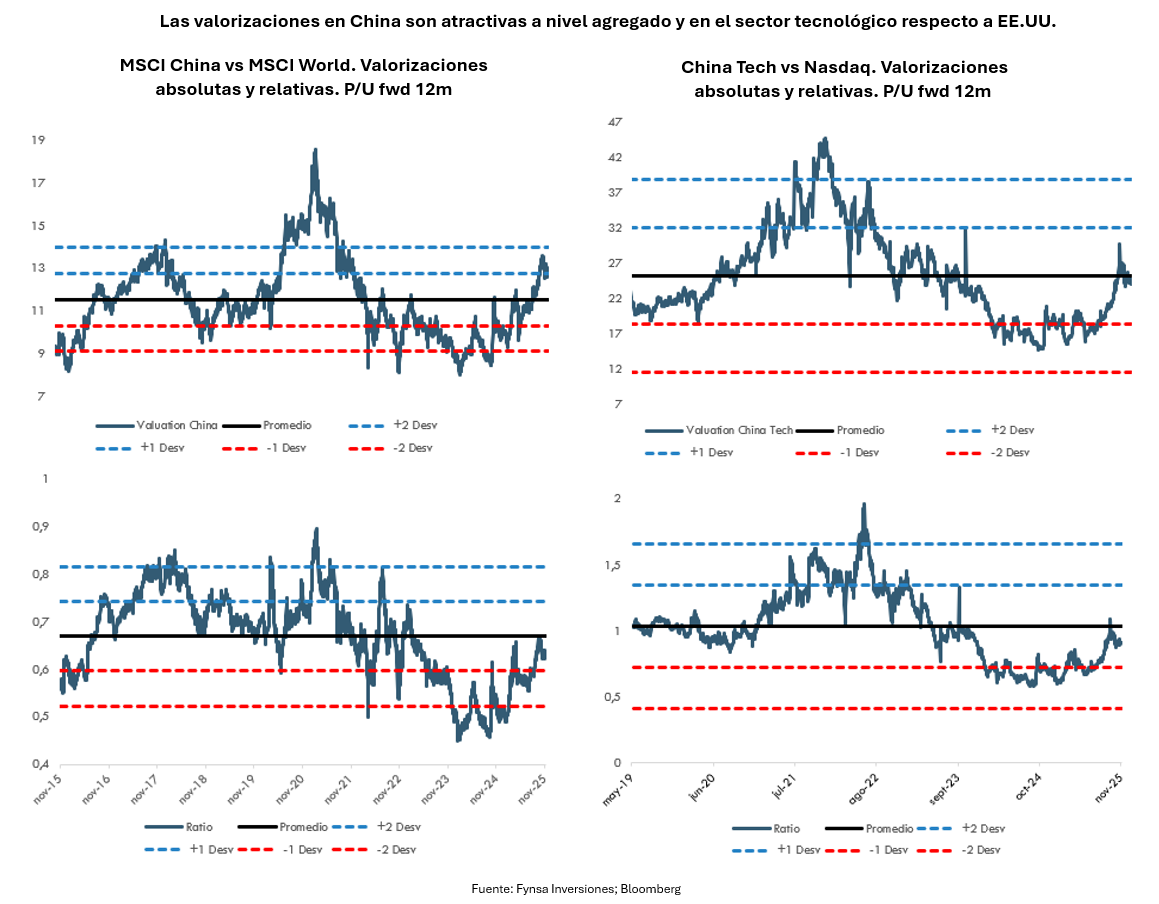
- Consideramos el sector tecnológico chino entre los más atractivos a nivel mundial. La tendencia de la IA ha demostrado ser favorable y el sector ha experimentado un repunte de más del 39% en lo que va de año (CQQQ ETF), prácticamente del doble del Nasdaq 100 en EE.UU.
- Creemos que el impulso estratégico de China hacia la autosuficiencia tecnológica y la innovación está sentando las bases para que este repunte continúe. Los sectores tecnológicos impulsan actualmente la mayor parte del rendimiento del MSCI China (MCHI ETF +38% Ytd), y las empresas líderes están generando sólidas ganancias gracias a los avances en inteligencia artificial, la nube y el desarrollo nacional de chips (las utilidades esperadas se han revisado al alza en +36% en los últimos 12 meses).
- Nuestra visión positiva del sector tecnológico chino, y del mercado chino en general, también debería ser favorable para los índices de mercados emergentes (EM). Los recortes de tasas de la Fed y la depreciación del dólar estadounidense deberían ofrecer un respaldo general, mientras que la resiliencia de las monedas de los EM y las tendencias macroeconómicas favorables también podrían contribuir a atraer nuevos flujos y justificar valoraciones más altas. Las valoraciones siguen siendo atractivas frente a sus pares globales, con el MSCI EM cotizando a aproximadamente 14 veces las ganancias futuras (un descuento del 30% respecto al MSCI ACWI). Los mercados emergentes han rentado un 28% en 2025, eso es el doble del S&P 500.
DISCLAIMER.
Equipo de Inversiones Corredora de Bolsa
Previo
La transición climática transforma el trabajo
Noviembre 7, 2025 - 2 min
Siguiente
Too Big to Fail: el riesgo invisible de la inteligencia artificial
Noviembre 14, 2025 - 2 min