Fynsa

El otro día estaba aburrido y empecé a revisar algunas publicaciones en redes sociales, llamándome poderosamente la atención la siguiente noticia, donde podemos ver cómo históricamente el último trimestre del año en el mercado americano tiende a tener los mejores retornos. Los datos lo respaldan: desde hace décadas el cuarto trimestre ha sido el de mejores retornos bursátiles. Uno tiende a pensar en estas situaciones pensando en inversores comprando antes de las fiestas, y también ajustando carteras para tener “la mejor foto posible” en todos los reportes anuales.
Con esa información en bandeja, suena muy tentador invertir en esta época… es como si el calendario te guiñara el ojo y te dijera “Invierte ahora”. La idea de esta nota es invitar a hacer una pausa y pensarlo dos veces.
Aunque los números históricos pinten un cuadro bonito, en el corto plazo las inversiones, especialmente los fondos accionarios, pueden contener ruido, volatilidad y riesgos asociados hacia adelante que uno es incapaz de ver si se queda mirando el espejo retrovisor. La obsesión con patrones de corto plazo es como tratar de predecir el futuro con una bola de cristal rota. Lo importante, tal como comentamos en newsletters anteriores, es mantener el foco en el largo plazo donde las tendencias reales emergen y el ruido se diluye. Vamos a sumergirnos en nuestro tema de hoy, un estudio bastante interesante que graficará estos conceptos.
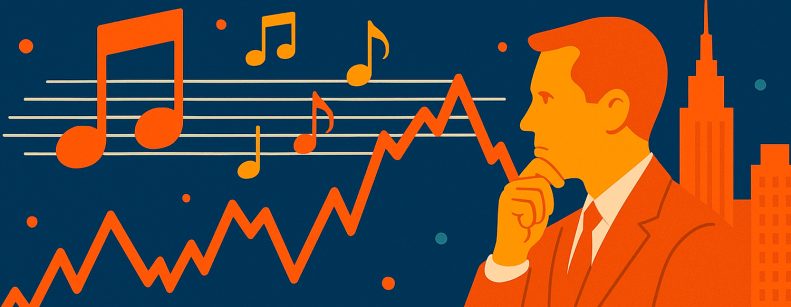
¿Qué tiene que ver el baile con las inversiones? Imagina la siguiente situación: estás en una fiesta, suena tu playlist favorita, y de repente piensas: “¿Y si el ritmo de estas canciones predice cómo va a ir la bolsa mañana?”. Suena absurdo, pero para algunos podría no serlo. En 2012, Philip Maymin, profesor y experto en finanzas, publicó un estudio titulado “Music and the Market: Song and Stock Volatility” en el North American Journal of Economics and Finance.
Básicamente, analizó casi 50 años de datos, desde 1958 hasta 2007, comparando la música más popular del Billboard Top 100 con el comportamiento del S&P 500, el índice estrella de la bolsa estadounidense. ¿Qué midió exactamente? La “volatilidad” de la música, o sea, cuánto variaban los beats por minuto (BPM) en las canciones top del año. Los BPM son como el pulso de una canción: un rock and roll de los 60 podría tener BPM estables y predecibles, mientras que un hip-hop de los 90 varía mucho.
Maymin encontró una correlación negativa bastante llamativa: cuando la música popular era más “uniforme” (baja varianza en BPM), la bolsa tendía a ser más volátil (mayores subidas y bajadas en los retornos). Y viceversa: en épocas de música caótica, el mercado se calmaba un poco. Algunos ejemplos para visualizar esto: En los años 70, con la crisis del petróleo y la inflación desbocada, la música pop (piensa en disco y funk) tenía ritmos variados y complejos, y la bolsa (de punta a punta), mantuvo niveles similares. En cambio, en los 80, con el boom Reagan y música más predecible como el pop sintetizado, el mercado volvió al crecimiento esperado. Maymin hasta sugiere que la música refleja el “sentimiento colectivo” de la sociedad: si la gente está estresada por la economía, prefiere canciones calmantes y uniformes, lo que coincide con mercados nerviosos.
Entonces, ¿ponemos música y salimos a comprar?
El estudio es fascinante, pero ilustra lo absurdo que es hacer correlaciones sin poder predictivo real en el corto plazo. Maymin mismo admite que esto es más una curiosidad estadística que una herramienta para traders. Es como esos mitos de “vende en mayo y vete” o “el efecto Super Bowl” (donde si gana un equipo de la NFL, la bolsa sube… En serio, hay estudios sobre eso). La gente ve patrones en todos lados porque nuestro cerebro ama las historias, pero en la realidad, estas correlaciones son espurias: no causan nada, solo coinciden por casualidad. Intentar usarlas para decisiones de corto plazo es como apostar en la ruleta basándote en el color de la camisa del croupier, un juego donde terminarás pagando sin entender por qué no hay retornos.
Ejemplos como estos hay miles, como correlaciones entre la longitud de las faldas de las mujeres y el rendimiento bursátil (busca el “Hemline Index” si no me crees), o el número de piratas y el calentamiento global. Todos muy interesantes y divertidos, pero inútiles para predecir los próximos movimientos. El punto es que, en el corto plazo, el mercado está influido por noticias impredecibles, emociones humanas y algoritmos que reaccionan en milisegundos. Obsesionarte con estos “patrones” te distrae de lo verdaderamente importante: la constancia, la inversión a largo plazo y la diversificación.
Al final del día, que llegue el último trimestre siempre es interesante para ver si confirmamos o no nuevamente la teoría. Sí, hay tendencias, pero en el corto plazo, fácilmente se puede pasar ruido como algo más. Lo importante es mantener el foco en el largo plazo: construir un portafolio sólido, ignorar las fluctuaciones diarias y dejar que el tiempo haga su magia. Como dice Nassim Nicholas Taleb, académico, estadístico y trader de opciones: “Las personas piensan que la inteligencia consiste en notar qué cosas son relevantes; sin embargo, en este mundo complejo, la inteligencia real consiste en ignorar lo que es irrelevante”.
La próxima vez que escuches música, sólo disfrútala. Nada mejor que tener un “rally” en tu playlist, y una inversión a largo plazo que sea consistente.
Gabriel Haensgen
Co-Portfolio Manager Fondos Financieros Fynsa AGF