Fynsa


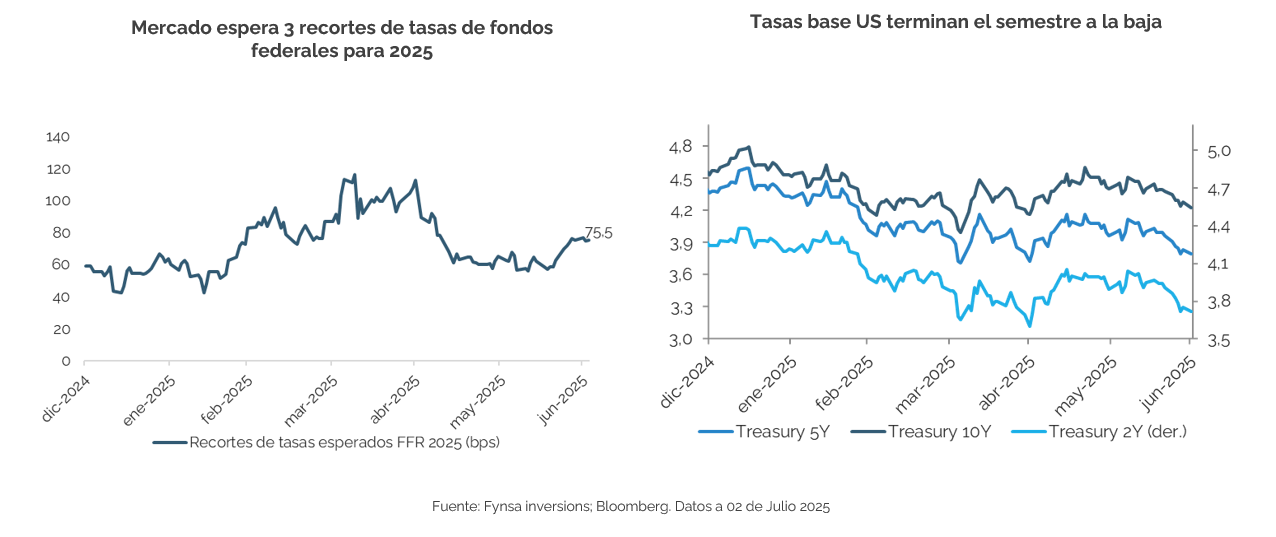
Estamos terminando un mes y semestre positivo para las bases americanas, aunque con mucha volatilidad de punta a punta.
Gran parte de la caída en los rendimientos de los treasuries ha ocurrido en las últimas 4 semanas, a medida que las expectativas de recorte de tasas por parte de la FED han aumentado a 3 recortes para este año (creemos que serán 2 en el mejor de los casos, pero no se sorprenda si es solo uno).
Cierta debilidad del mercado laboral y datos entrantes más benignos de inflación están detrás de estos movimientos, aunque persiste el riesgo de que la inflación entrante aumente de manera relevante en el segundo semestre a medida que mayores aranceles terminen traspasándose a precios.
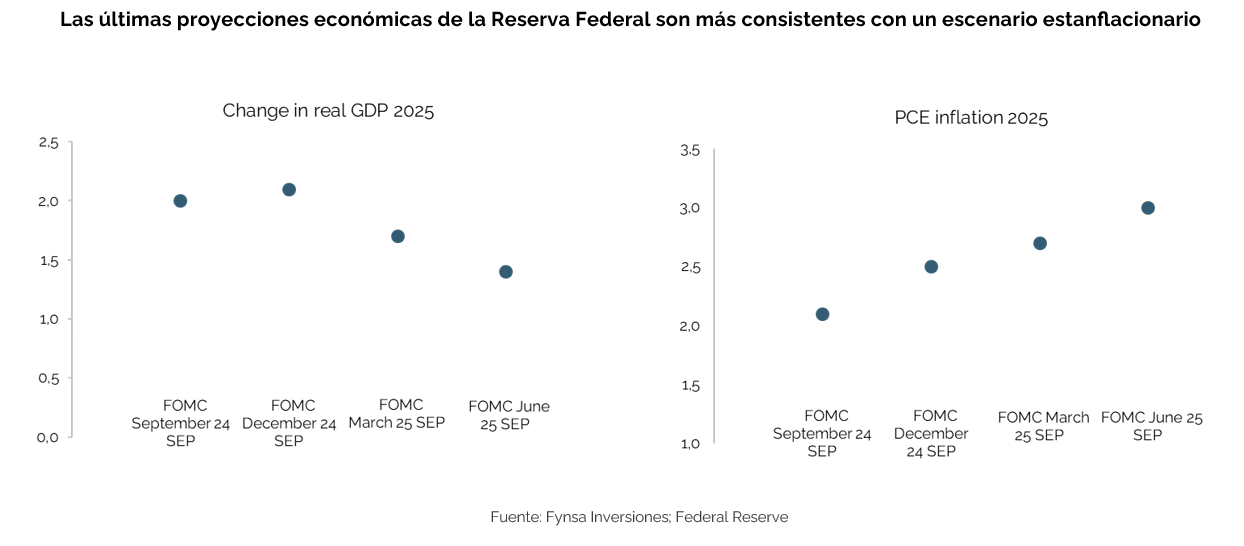
En efecto, la propia Reserva Federal en su reunión de junio, elevó la estimación mediana de la inflación subyacente, al final de este año del 2,8% al 3,1% (que sigue sobre la meta del 2.0%).
Por lo demás, seguimos pensando que el proyecto fiscal de Trump, en el mejor de los casos, seguirá agregando volatilidad en las bases americanas en la parte larga de la curva, y en el peor de los casos, presión alcista a medida que el déficit fiscal se consolida y las primas por plazo aumentan. (VER)
Así entonces, después de una caída de 30 pb en el rendimiento del treasury a 10 años durante el primer semestre, somos escépticos de que veamos una consolidación aún más bajista.
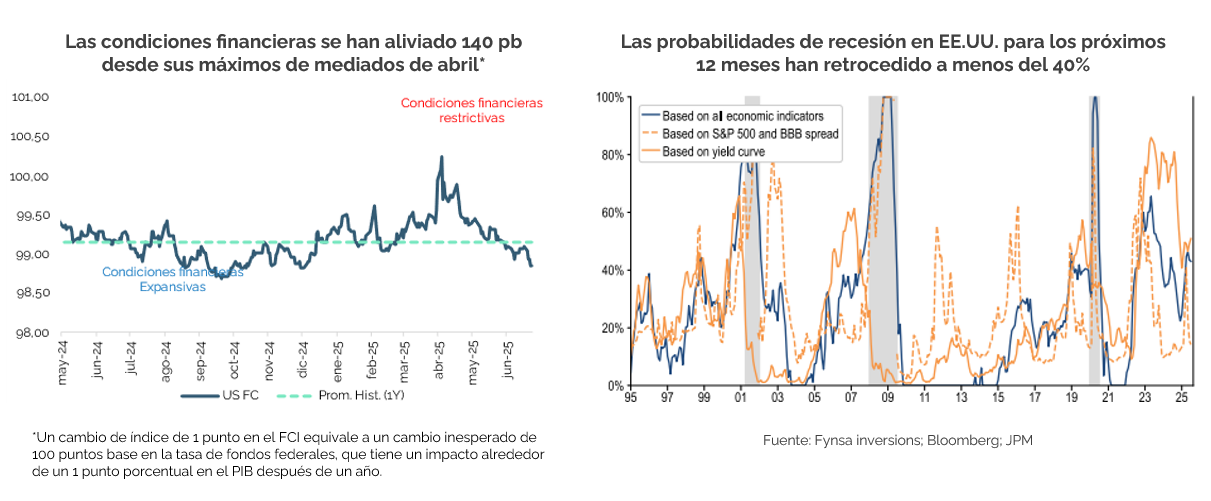
Seguimos recomendando un posicionamiento en la parte media de la curva (hasta 5 años) tanto soberana como en crédito investment grade, donde si bien los spreads están comprimidos en términos históricos vemos pocos riesgos al alza, toda vez que los balances corporativos son sólidos y las probabilidades de recesión han retrocedido.
Eso en términos de balance del 1S25 y nuestra primera aproximación de cara al segundo semestre el año para los mercados de renta fija. A continuación, profundizaremos en los distintos escenarios para la tasa de fondos federales en adelante y sus implicancias de mercado.
Muchos sugieren que los recortes de tasas de la Fed podrían permitir que los mercados ignoren cualquier posible desaceleración de la actividad, pero no todos los escenarios de flexibilización de la Fed podrían ser positivos para los mercados.
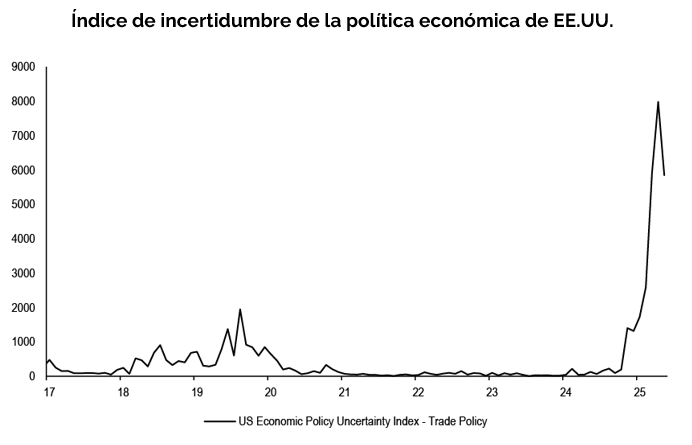
Respecto a las negociaciones comerciales, el flujo de noticias ha sido en general positivo. El antecedente más reciente han sido las declaraciones del secretario de Comercio estadounidense, Howard Lutnick, sobre el progreso del acuerdo comercial entre Estados Unidos y China. Sin embargo, es importante tener en cuenta que el resultado neto sigue siendo un panorama arancelario mucho más alto que el que hemos tenido en décadas. Según estimaciones de JP Morgan, podríamos terminar con un arancel efectivo sobre las importaciones estadounidenses del 17,5 % una vez concluidas todas las investigaciones de la sección 232, frente al 2,3 % de principios de año.
Así entonces, si la Fed recorta las tasas a pesar del aumento de la inflación, podría poner en peligro su credibilidad. Esto se debe especialmente a que el presidente Trump ha instado con vehemencia a la Fed a reducir las tasas de interés. Si los inversionistas empiezan a dudar de la independencia de la Fed, esto podría provocar un aumento significativo de las primas por riesgo.

Con todo, vemos probable algún recorte en el segundo semestre, pero menos de lo que está implícito hoy en los precios. Las últimas proyecciones económicas de la Reserva Federal son más consistentes con un escenario estanflacionario con un crecimiento más débil y una mayor inflación en la segunda parte del año. Si esta perspectiva cobra fuerza, los mercados no tienen un precio para aquello y los inversionistas se sentirán decepcionados.