Fynsa


En México, la inversión de impacto ya es un mercado relevante, pero todavía pequeño. Según el informe de ANDE, existen entre US$1.700 y US$2.200 millones en activos bajo gestión (AUM) y 130 actores identificados que operan en este segmento. A nivel global, GIIN estima US$1.571 billones en activos de este tipo, con un crecimiento compuesto de 21% desde 2019.
Los sectores que concentran más inversión de impacto en México son:
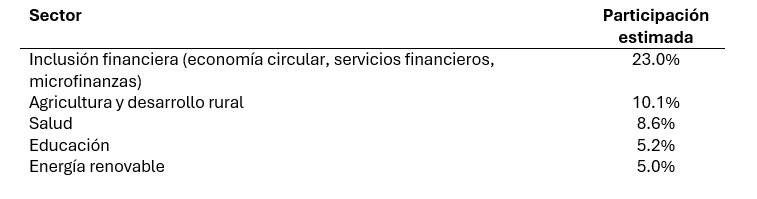
Hacia 2030, los sectores con mayor potencial en el país serían:
Inclusión financiera: el eje más transversal
La inclusión financiera será probablemente uno de los ejes más relevantes de este tipo de inversión en México hacia 2030, tanto para personas como para MiPyMEs. No sólo por razones sociales, sino porque existe una brecha de mercado enorme aún sin atender.
En este contexto, la apuesta busca que personas y empresas accedan a crédito, ahorro, seguros, pagos digitales, historial e información financiera, de manera asequible y sostenible, especialmente para sectores históricamente excluidos. Los inversionistas buscan retornos financieros, pero también métricas de impacto como bancarización, reducción de informalidad, crecimiento de ingresos, empleo y resiliencia económica, además de inclusión de mujeres y zonas rurales.
¿Por qué México es una gran oportunidad?
El país tiene una de las brechas financieras más grandes de la OCDE. Según la Encuesta Nacional de Inclusión Financiera (ENIF) y el Banco Mundial, aproximadamente el 49% de los adultos aún no tiene cuenta formal ni uso financiero profundo. Gran parte de la nación sigue operando en efectivo, la penetración del crédito formal es reducida —sobre todo en mujeres y zonas rurales— y una proporción significativa de la fuerza laboral continúa en la informalidad.
Las MiPyMEs son donde probablemente esté la mayor oportunidad de generar impacto: representan el 99% de las empresas, generan más del 70% del empleo, pero enfrentan enormes barreras de acceso a financiamiento. La brecha para este segmento se estima en decenas de miles de millones de dólares. Muchos negocios no tienen historial crediticio y operan informalmente, lo que les impide acceder al crédito tradicional y eleva sus costos financieros. Esto posiciona a México como un mercado atractivo para las fintech que utilizan tecnología para construir modelos de scoring alternativos y análisis crediticio más eficiente.
Si el país logra acelerar su transformación digital acompañada de una mejora regulatoria —en particular en open finance—, podría consolidarse como uno de los principales mercados de inversión de impacto en América Latina. La inclusión financiera será, en ese escenario, el sector más escalable y con mayor capacidad de combinar retorno e impacto social medible.