


Fynsa

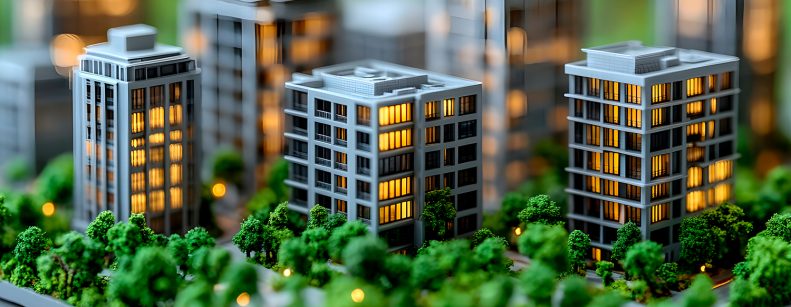
El concepto de edificio multifamily (o de renta residencial) se refiere a construcciones concebidas desde su origen exclusivamente para el arriendo. A diferencia de los edificios tradicionales —donde las unidades se venden a múltiples propietarios—, en el multifamily todo el inmueble pertenece a un único dueño, típicamente un fondo de inversión o una compañía de seguros. Esta propiedad única permite una gestión centralizada, más eficiente y con estándares homogéneos de calidad.
Los edificios multifamily se emplazan generalmente en zonas estratégicas de las ciudades, especialmente cerca de estaciones de metro y servicios urbanos. Cuentan con mayores niveles de seguridad, accesos diferenciados para mudanzas, amenities modernos y una oferta de unidades disponibles amobladas o sin amoblar. En promedio, estos edificios albergan entre 150 y 200 departamentos, predominando las tipologías de 1 dormitorio y 1 baño. El público objetivo suele ser joven, profesional y con ingresos medios a altos.
Este modelo se ha consolidado como una forma dominante de vivienda urbana en países desarrollados como Estados Unidos, Canadá y parte de Europa, donde la renta residencial se considera una solución estructural frente al encarecimiento del acceso a la propiedad. La tendencia también ha cobrado fuerza en mercados emergentes de América Latina —como México, Colombia y Brasil—, con iniciativas lideradas por fondos institucionales y desarrolladores especializados.
En Chile, el concepto comenzó a madurar a partir de la década de 2010, impulsado por la profesionalización del mercado de arriendo y la búsqueda de modelos de inversión inmobiliaria más estables. La alta demanda por viviendas bien ubicadas, junto al encarecimiento de los créditos hipotecarios post pandemia, ha posicionado al multifamily como una alternativa cada vez más relevante.
De acuerdo con el último reporte de Colliers, el mercado multifamily chileno cerró 2024 con 163 edificios operativos, totalizando un inventario acumulado de 38.981 unidades. Esto representa un crecimiento anualizado del 26%, considerando un horizonte anualizado de tres años desde la fecha, evidenciando el dinamismo del sector. Sólo en el último trimestre de 2024 se incorporaron 2.233 nuevas unidades, correspondientes a ocho nuevos edificios.
En cuanto a la distribución geográfica del inventario actual, la comuna de Santiago lidera con un 29,6% del total de unidades, seguida por Estación Central (12,4%), La Florida (9,4%), Independencia (9,1%) y San Miguel (8,3%). Estas zonas destacan por su buena conectividad, equipamiento urbano y un perfil demográfico alineado con la oferta de arriendo.
Respecto a las tipologías, las unidades de 1 dormitorio y 1 baño (1D-1B) predominan con un 44% del mercado, seguidas por las de 2 dormitorios y 2 baños (2D-2B), que representan el 24%. Estas configuraciones también concentraron la mayor parte de las nuevas unidades ingresadas durante el año.
La superficie promedio de los departamentos multifamily fue de 41,7 m² útiles, considerando todas las tipologías. Las unidades 1D-1B promedian 26,7 m², mientras que las 2D-2B se situaron en 55,3 m². Las unidades más grandes, como las de 3 dormitorios y 2 baños, alcanzaron los 75,2 m².
En cuanto a precios de arriendo, el valor promedio fue de 0,265 UF/m², con variaciones según tipo de unidad. Las de tipo estudio registraron el valor más alto (0,40 UF/m²), seguidas por las 1D-1B (0,34 UF/m²) y las 2D-2B (0,30 UF/m²).
En términos de ocupación, la industria muestra cifras saludables: la ocupación general se ubicó en un 88%, mientras que la ocupación en régimen —aquella que refleja edificios ya estabilizados— se mantuvo en 92%. Comunas como San Miguel y Quinta Normal destacaron con tasas superiores al 97%, en parte porque no registraron nuevos ingresos durante el trimestre, favoreciendo así una mayor estabilidad del stock disponible.
De esta forma, el mercado multifamily continúa consolidándose como una alternativa frente a las condiciones estructurales del sector inmobiliario chileno. La combinación de tasas hipotecarias elevadas, restricciones al acceso al crédito y una brecha creciente entre los precios de las viviendas y los ingresos reales ha impulsado una mayor demanda por soluciones habitacionales en arriendo. Frente a este escenario, el modelo multifamily se posiciona como una opción sólida.
Desde la mirada del inversionista institucional, este segmento ofrece flujo constante de ingresos, menores niveles de vacancia frente a otros activos inmobiliarios y una operación escalable y profesional. Para los arrendatarios, en tanto, se trata de una alternativa habitacional moderna, bien ubicada y gestionada con eficiencia.
Frente a este escenario, el modelo multifamily no sólo se consolida como una respuesta a las limitaciones del mercado habitacional chileno, sino que también ofrece ventajas claras tanto para inversionistas como para arrendatarios, marcando un punto de inflexión en la forma de habitar y desarrollar ciudad.
Sebastián Mahave
Analista Senior Fondos Inmobiliarios Fynsa AGF


