Fynsa


En mi último artículo (“Vacas vs. expertos: el secreto está en el pasto”), exploramos la dificultad de ganarle al mercado, lo (todavía) más desafiante que es mantener retornos consistentes en el tiempo y algunas malas prácticas comunes para mostrar estos logros de forma artificial. Lo hicimos desde una mirada lúdica, utilizando, entre otros ejemplos, dos historias de Warren Buffett: su conocida analogía sobre lanzar monedas y su famosa apuesta contra un grupo de gestores de inversión activa.
Días después de publicar esa nota, el 3 de mayo, Warren Buffett anunció que dejará su rol como CEO de Berkshire Hathaway a fin de año. Aunque seguirá como presidente del directorio y accionista mayoritario, la noticia —que sorprendió incluso a sus 94 años— marcó un hito simbólico: el cierre de una era para uno de los inversionistas más influyentes de la historia.
Aprovechando este momento, vale la pena repasar su legado y continuar con el punto que mencionamos antes: la importancia de la consistencia en el tiempo… y —por qué no decirlo— el poder del tiempo.
Una historia de valor… compuesto
Buffett finalizó sus estudios en 1951, donde tuvo como mentor a Benjamin Graham, con quien luego trabajó. En 1965, compró una participación en Berkshire Hathaway, entonces una textilera en crisis. Desde ahí, la transformó en lo que hoy es: un holding valorado en más de USD 1,15 billones (es decir, más de un millón de millones de dólares).
¿Lo más increíble? Entre 1965 y 2024, Berkshire Hathaway generó un retorno acumulado de 5.502.284%, frente al 39.054% del S&P 500 en el mismo periodo. Eso equivale a un retorno anual compuesto del 19,9%, comparado con el 10,4% del índice.
En palabras simples: quien haya invertido USD 100 con Buffett en 1965, hoy sería millonario. Un caso extraordinario de creación de valor para los accionistas, y uno que catapultó a Buffett al podio de las personas más ricas del planeta.
La fórmula ganadora
A este punto, bien conviene volver a señalar los elementos que finalmente fueron el combo vencedor:
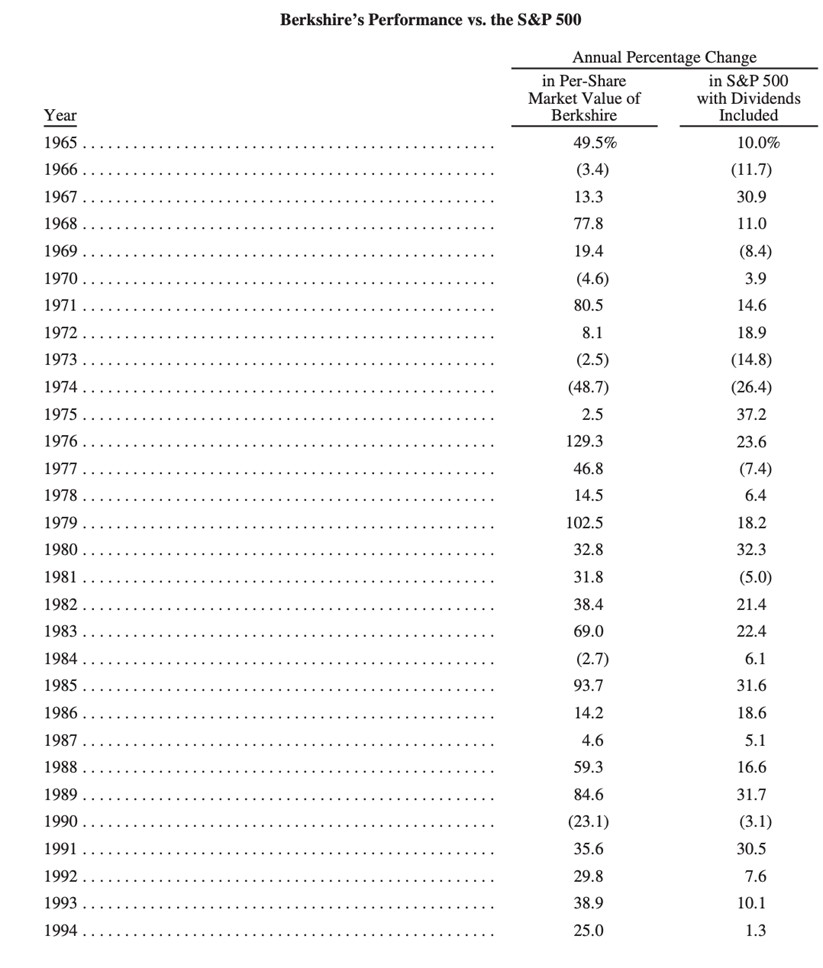
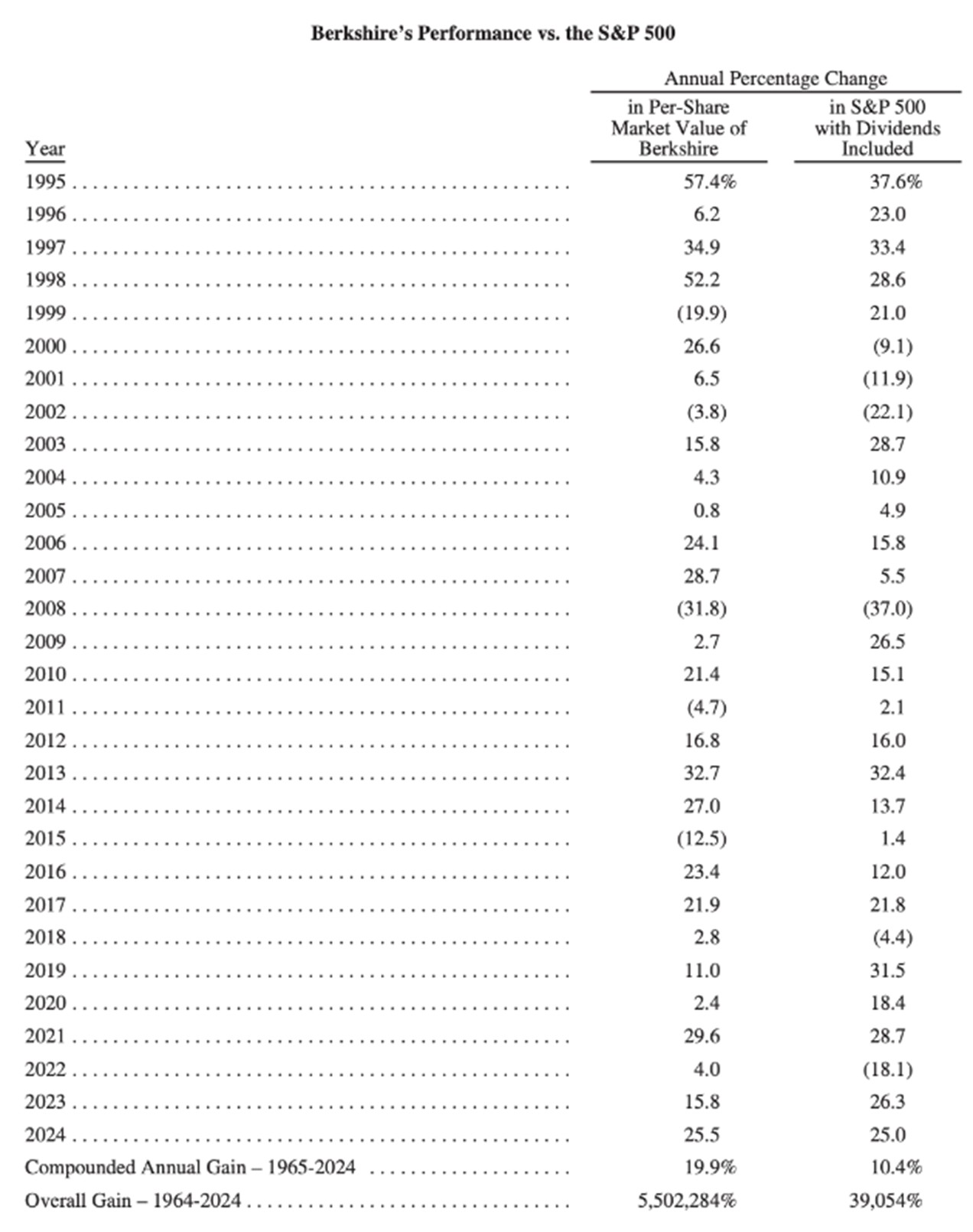
Los retornos negativos existieron. A veces, incluso fueron mayores que los del índice. Pero lo que distingue a Berkshire es la capacidad de mantener una estrategia firme en el tiempo, con disciplina y resiliencia. La consistencia no significa no fallar: significa mantenerse en el juego y permitir que el efecto compuesto haga su trabajo.
60 años es una eternidad en los mercados. Y lograr buenos retornos desde el inicio permite construir una base sólida. Tan sólida, que incluso si las acciones de Berkshire cayeran un 99% el primer día bursátil de 2025, la gestión completa de Buffett aún habría superado al S&P 500.
¿Y en los últimos años?
Es cierto: si observamos los retornos desde 2003 a la fecha, Berkshire no ha logrado superar al índice. Pero el contexto importa. Si, en cambio, analizamos los datos hasta 2002, Berkshire acumulaba un retorno de 587.000%, frente al 3.662% del S&P 500.
Por favor, tómense un tiempo para jugar con estos números todo lo necesario.
Si hubiésemos invertido los USD 100 señalados al inicio en Berkshire Hathaway, a 2003 tendríamos cerca de USD 600 mil, mientras que, si lo hubiéramos hecho en S&P 500, tendríamos cerca de USD 4 mil.
Si actualizamos ese número hasta hoy, a pesar de que Berkshire Hathaway ha rentado menos que S&P 5000, tendríamos más de USD 5,5 millones, mientras que en S&P 500, cerca de USD 40 mil.
En otras palabras, el activo que rentó menos nos habría generado USD 4,9 millones de dólares y el que rentó más, alrededor de USD 36 mil. Ese juego numérico, aunque básico, nos permite reafirmar la importancia de la composición de retornos, y la importancia de la consistencia.
Confiar en el proceso
En renta variable, los retornos varían. A veces se gana, a veces se pierde. Lo que nos deja Buffett no es una fórmula mágica para vencer al mercado, sino una lección más profunda: confiar en el proceso, tener paciencia y mantenerse fiel a una estrategia sólida puede dar frutos extraordinarios.
Para terminar, retomo una línea del inicio que vale repetir: “Cualquier persona que hubiera confiado en Buffett invirtiendo 100 dólares cuando asumió la dirección de Berkshire Hathaway, hoy sería millonario”.
Gabriel Haensgen
Analista Senior Fondos Financieros Fynsa AGF