Fynsa


En las últimas décadas, el sistema financiero —tanto global como local— ha evolucionado más allá de los marcos regulatorios tradicionales. Uno de los fenómenos más relevantes en este proceso es el crecimiento del shadow banking o sistema bancario en la sombra: una red de intermediarios financieros que operan fuera del marco regulatorio convencional, como el que en Chile establece la Comisión para el Mercado Financiero (CMF). Su expansión está estrechamente vinculada al aumento sostenido de la deuda privada en economías desarrolladas y emergentes, incluyendo Chile.
¿Qué es el Shadow Banking?
El shadow banking se refiere a un conjunto de instituciones financieras no bancarias que cumplen funciones similares a las de la banca tradicional —como otorgar crédito—, pero sin estar sujetas a la misma regulación ni supervisión. Entre ellas se encuentran:
Estas entidades captan recursos en el mercado y los canalizan hacia el crédito, a menudo asumiendo mayores riesgos y sin los requisitos de capital o liquidez exigidos a los bancos. Esta falta de visibilidad es lo que da origen al término “shadow” o “en la sombra”.
Crecimiento global del Shadow Banking
Tras la crisis financiera de 2008, el sistema bancario tradicional fue sometido a una regulación más estricta, incluyendo la implementación de Basilea III, orientada a fortalecer la gestión de riesgos. Estas medidas limitaron la capacidad de los bancos para otorgar crédito y encarecieron los préstamos, lo que llevó a muchos a buscar financiamiento en el sector no regulado.
Según el Financial Stability Board (FSB), en 2023 el shadow banking representaba cerca del 50% de los activos financieros globales, y su participación sigue creciendo. En mercados emergentes, como Asia y América Latina, este crecimiento ha sido especialmente acelerado, impulsado por el dinamismo económico, la baja bancarización y el avance de las tecnologías financieras.
Deuda Privada
El auge del shadow banking ha ido de la mano con un aumento sostenido de la deuda del sector privado no financiero. Según el Fondo Monetario Internacional (FMI) y el Banco de Pagos Internacionales (BIS), esta deuda ha alcanzado niveles históricos en muchas economías. En China, por ejemplo, supera el 200% del PIB, impulsada en gran medida por vías de financiamiento paralelo.
Situación en Chile
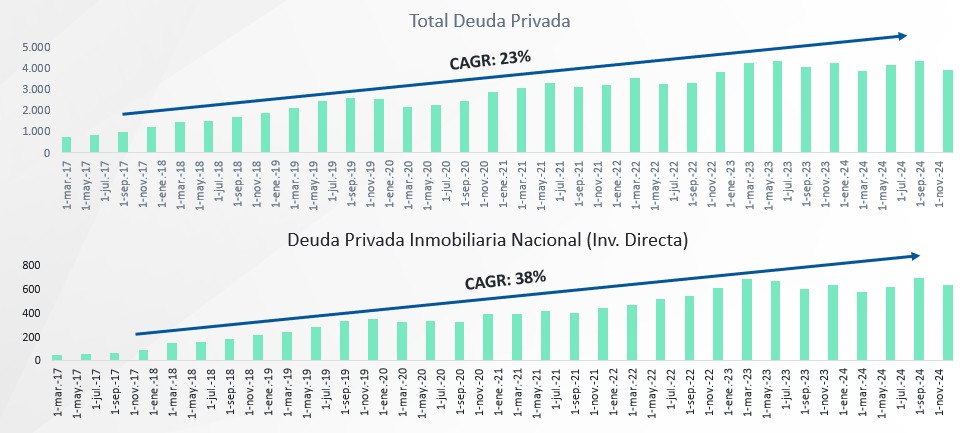
Pese a contar con un sistema financiero sólido y regulado, Chile ha visto un crecimiento sostenido del shadow banking en la última década. Entre los actores más activos destacan:
Riesgos y desafíos
El crecimiento del shadow banking y de la deuda privada conlleva riesgos importantes:
En Chile, parte de estos riesgos están siendo abordados con la reciente entrada en vigor de la Ley Fintech, que busca mejorar la supervisión y transparencia del sector.
La Deuda Privada como alternativa de inversión
Además de ofrecer financiamiento fuera del sistema bancario, la deuda privada se ha consolidado como una opción atractiva para inversionistas que buscan diversificar sus carteras.
Este tipo de activos ha ganado espacio en los portafolios, al permitir desplazar favorablemente la frontera eficiente de una asignación tradicional 60/40 (60% renta variable, 40% renta fija), gracias a su combinación de retornos atractivos y menor volatilidad esperada.
La deuda privada incluye instrumentos indexados a la inflación, con comportamiento acíclico, respaldo en activos reales y una amplia variedad de plazos: desde facturas a 30 días hasta leasings habitacionales a 40 años.
José Pablo González
Portfolio Manager Deuda Privada Fynsa AGF