Fynsa


Durante el mes de abril, el dato de inflación tuvo una variación mensual de 1,3%, algo por debajo del 1,5% que esperaba el mercado, y de momento no se observa evidencia aún de traspaso de los precios de la energía más altos hacia otras categorías de la canasta, lo que se refleja en presiones subyacentes aún contenidas.
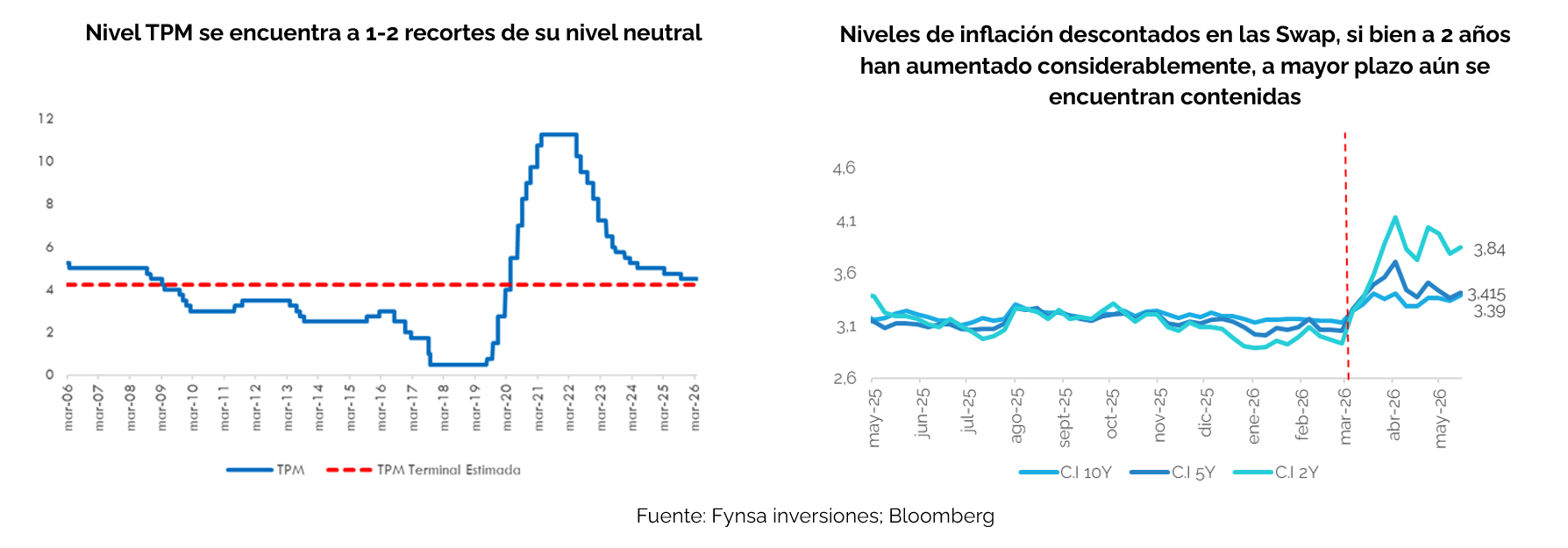
El aumento en precios de las energías explicó gran parte de la variación, esto a través de la categoría de transporte, que contribuyó con 1 punto porcentual al dato mensual. Al excluir ese efecto, la variación se ubicó en 0,3%, alineada con la media histórica del mes. Esto debería contribuir a moderar las probabilidades de un alza en la TPM, escenario que el mercado de tasas mantiene parcialmente incorporado.
No obstante, los niveles de devengo inflacionario en el corto plazo continúan altos, los forwards de inflación estiman un nivel de 4,5% para 2026, por lo que estimamos que el Banco Central optará por mantener una posición cautelosa antes de cualquier nuevo movimiento de tasas. La razón es clara: la incertidumbre en torno al conflicto geopolítico sigue siendo elevada, y el BCCh necesita mayor certeza sobre su desenlace. Cabe recordar que nos encontramos a tan solo 1-2 recortes de la TPM para llegar a su nivel neutral, lo que reduce la urgencia de actuar en el corto plazo.
En términos de estrategia de renta fija, mantenemos una alta convicción en la UF, pero a través de estrategias activas capaces de aprovechar las oportunidades entre distintos tramos de la curva. Favorecemos bonos bancarios de alta calidad, especialmente en duraciones de 3 a 5 años, donde la relación riesgo-retorno es más atractiva que en alternativas corporativas comparables. Para perfiles conservadores, el tramo de 1 a 3 años sigue ofreciendo protección inflacionaria con menor volatilidad.
En renta variable, a niveles relativos de retornos, Chile ha quedado rezagado respecto a bolsas Latam y EM, un diferencial explicado por tres factores: el deterioro de los términos de intercambio por efecto del petróleo, la desaceleración de la actividad económica y el aumento en las expectativas de tasas de descuento.
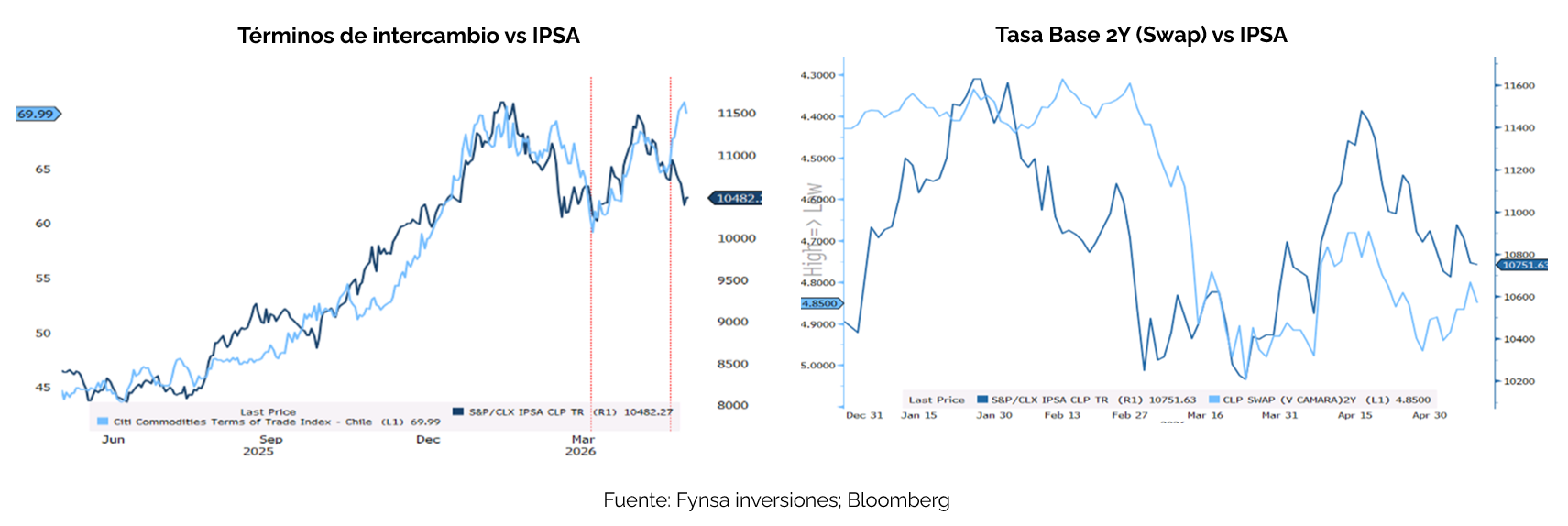
Creemos que estos tres factores tendrán un carácter transitorio más que estructural. En primer lugar, el cobre ya supera los US$6 la libra, lo que debería sostener una mejora gradual en los términos de intercambio a medida que el shock petrolero se disipe. En segundo lugar, una desescalada del conflicto reduciría tanto la prima de riesgo como la presión sobre las tasas de descuento y, en tercer lugar, la eventual aprobación de la reforma pro-inversión del gobierno del presidente Kast debiese impactar positivamente en el entorno corporativo.
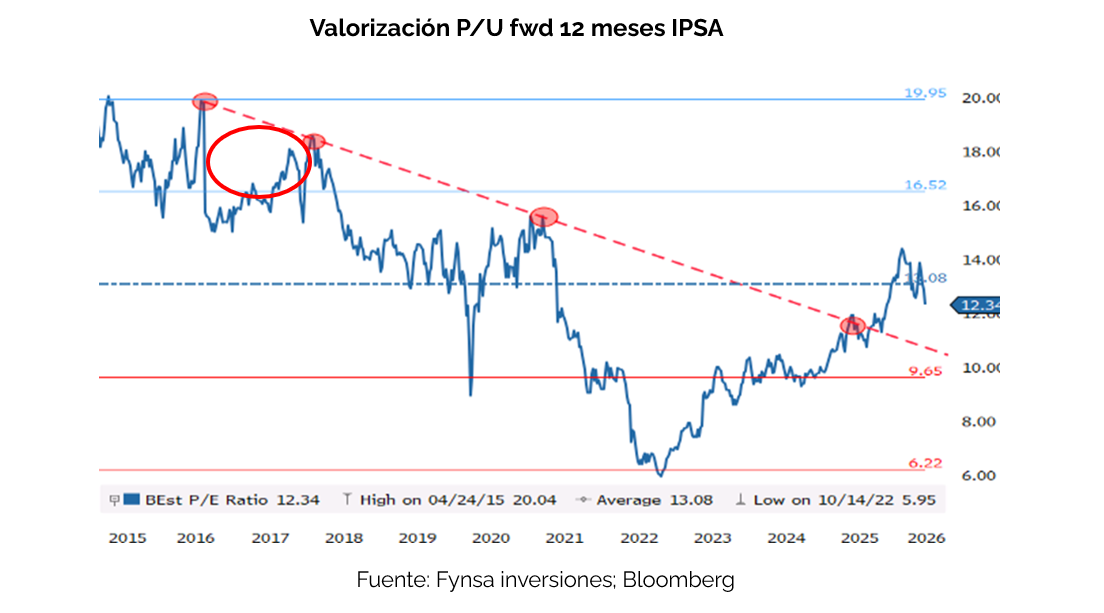
Por lo demás, las valorizaciones actuales se mantienen atractivas. El IPSA transa en torno a 12,3 veces utilidades futuras, por debajo del promedio de los últimos 10 años. Además, ese promedio nos parece castigado por dos eventualidades —el estallido social y la pandemia— que comprimieron significativamente los múltiplos. Creemos que apuntar a valorizaciones de 16 veces (promedio pre-crisis) en el mediano plazo parece razonable, toda vez que se cumplan catalizadores como el término del conflicto geopolítico y aprobación de reforma impulsada por el gobierno.
En términos sectoriales mantenemos convicción en commodities y bancos, respaldados por precios de exportación más altos (cobre, litio) y resultados corporativos positivos.
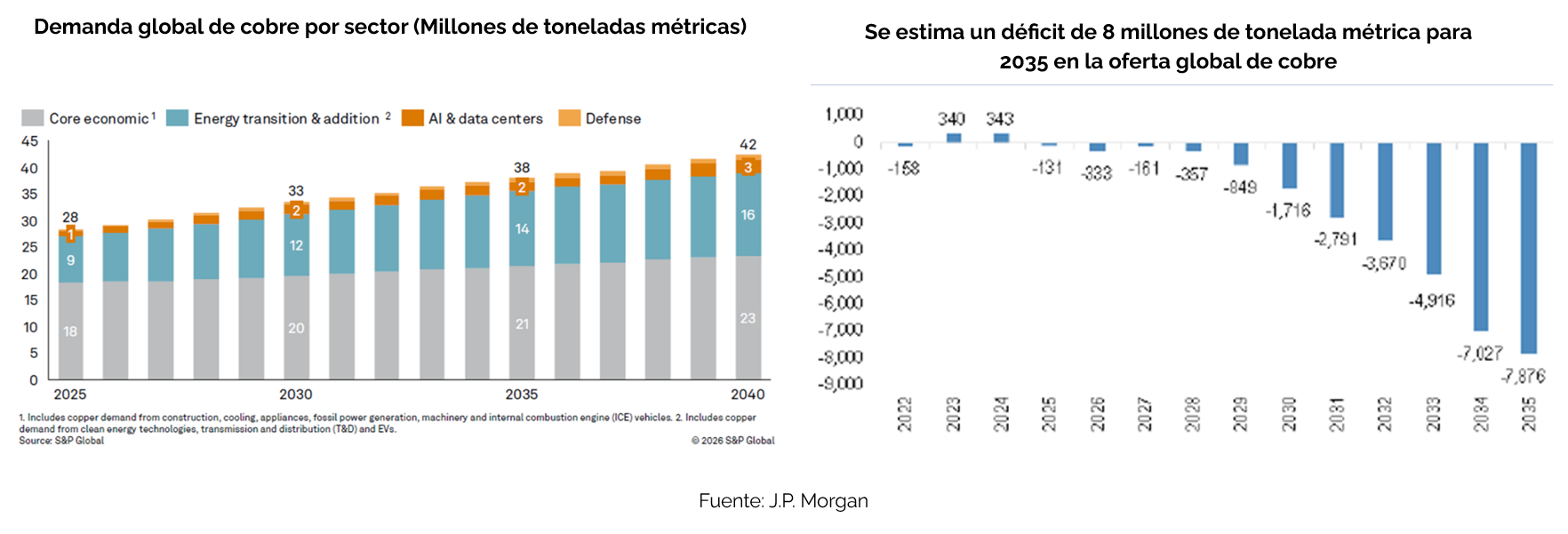
En commodities, nos parece que tendencias como transición energética y construcción de datacenters para inteligencia artificial continuarán aumentando demanda sobre materiales críticos como el cobre y litio, lo que en el mediano plazo podría generar un déficit.
En bancos, consideramos que la reciente debilidad de los precios de las acciones en las últimas semanas es injustificada y mantenemos una perspectiva positiva sobre los bancos chilenos, ya que como comentamos en la nota del 28 de marzo (VER MÁS), en un contexto de mayor inflación, los bancos tienden a beneficiarse a través de una mejora en sus márgenes, lo que se traduce en un impacto positivo en resultados. Dentro del sector, Banco de Chile aparece como el mejor posicionado, tanto por su mayor sensibilidad a inflación como por la calidad de su balance.
Los resultados del sector del mes de abril dan cuenta de esta dinámica. Por ejemplo, el Banco de Chile mostró un sólido desempeño mensual, impulsado por un robusto crecimiento del NII (+47% intermensual, +16% interanual), respaldado por una variación positiva de UF, que compensó con creces el aumento de los gastos. Junto con una tasa impositiva más baja, esto resultó en ganancias de CLP 131 mil millones y un ROAE del 29%.
Es probable que mayo sea un mes más sólido, dado que la variación de UF será del 1,2%, superior al 0,7% de abril. Creemos que el segundo trimestre de 2026 será el mejor del año.
Con todo esto, mantenemos una visión favorable en ambas clases de activos. Si bien la incertidumbre geopolítica invita a la prudencia, consideramos que los atractivos devengos que ofrece la renta fija y catalizadores positivos en el mediano plazo en renta variable ofrecen una buena oportunidad para posicionar portafolios en Chile para el resto del año.
Tomás Fernández
Analista de Administración de Carteras